Quotessence
Home / Authors / Jessamyn West Books
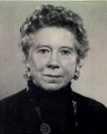
Jessamyn West

Jessamyn West Books

Writer

Cress Delahanty

A source page for quotes linked to Jessamyn West.
0 quotes

Related Quotes

“Roth wrote The Breast. Would you ask him how he could do this since he had never been a breast? Adams wrote Watership Down. Would you ask him how he could do this since he admitted his rabbit knowledge came from a book about rabbits? ... And those hobbits!... I am a bigger risk-taker than these others. The Hoosiers can contradict me. No rabbit, hobbit, or breast has been known to speak up in reply to their exploiters.”

“Eliza, I'm eighty years old. All my life I've been trying one way or another to do people good. Whether that was right or not, I don't know, but it comes over me now that I'm excused from all that. I loved Homer, but I tried to do him good. .. the way I see it now, that was wrong, that was where I's led astray. From now on, Eliza, I don't figure there's a thing asked of me but to love my fellow men. . . .No, Eliza, as far as I can see, there's not another thing asked of me, from this day forward.”

“He survived the singing. . .he survived the collection of money for the home guard, a flag drill and a speech. . .But he did not survive a recitation by a . . .child. When she reached the lines A man is dying in no-man's land, Before he goes, he asks for your hand. . . . Asa departed the rally. He was glad to escape, but he was no happier outside than he had been inside. He was not sure where the greater sickness lay, in himself, unable by love or war to feel himself united with his neighbors, or in his neighbors, united by the cause and in the manner they were. He looked up at the stars, winter's constellations setting in the west, summer's constellations marching up the eastern sky. They had the power to calm and ease, but to take that calm and ease on the first night of so many men's deaths seemed ignoble. Endure the pain, he told himself, star love is too easy. The stars ask nothing of you. He defended himself against his own abuse. "I ask a good deal of myself. What? In God's name, what? Tell me quickly," his suffering self demanded. "To know, to understand." It was a barren defense. He got no comfort out of it. He took what comfort he could get from the stars.”

“He had heard it said that some men are born for the sea, some for the mountains. And that they feel this destiny in their bones from the very beginning and fight their way toward their rightful places. All he had wanted was his own place, his own land, a chance to make his own living and be beholden to no one. . . .He felt strangled, . .like a man held down by weeds under water who suddenly breaks free and rises to the surface. He breathed in the air like life itself, sweeter than any food or drink he had ever tasted. He held his hands out into it; he would like to gather up a fistful of it, do more than breathe it.”

“When she had found [another]. . .taking over the task of helping the bride she had felt a great pang, first of jealousy and anger, and finally sorrow. And the sorrow was the heavier because she knew she had brought it on herself. It came to her then that the only real pleasures in life resulted from a feeling of success in relationships with others: in being daughter, wife, mother. And she knew she had not succeeded very well in any of these lines.”

“The Tract, which had been too busy fighting its own battles. . .to worry about Europe, was trying now in a single evening to anticipate wounds and bullets, losses and hatreds. In the moments in which they were able to do so, sudden silences, like a thickening of night's darkness, would settle upon the crowd. Though the air on the skin was as warm as summer, there was no summer for the ear, no summer sounds of katydids and locusts, cicadas and crickets. War had come overnight, but a real summer has to ripen. A war can be thought up, anyone can declare it, and death can be instant. But no amount of thought has ever produced a katydid, life cannot be declared, and summer takes a little time.”

“Lib had been working all day at the sewing machine, running up new house-dresses for the womenfolk. When Lib launched into a long seam, she pushed the treadle so fast the whole machine rocked like a boat. The needle ate up the goods like a prairie fire eating up grass. Lib hated sewing and she didn't propose to spend any more of her life than needed to be turning out house-dresses for the female inmates of the Rock County Poor Farm. When she hit a long seam the poor Singer hummed and whined. The seams Lib sewed were saw-toothed, but they were in to stay. She sewed a firm stitch and she put the stitches far from the edge. . .when she held up one of her uneven seams for inspection, she consoled herself by saying, "It'll never be seen on a galloping horse.”

“Mr. Birdwell," he asked, "how're you grounded in regard of religion? I have no mind to shake any belief of yours." "Grounded deep enough," Jess said, "so's nothing thee can say will matter." "When I's a child," Eli said, "I believed as a child but now I've come to maturer thinking." Jess looked into old Eli's eyes. they were like the screens a man sets across his windows, reflecting nothing, but hiding whatever lies beyond from sight. "God's only begotten son," said old Eli, leaning across the fence rail in his earnestness. "Why only one, Jess Birdwell? Why only one? And why a son? Whyn't a daughter? Something fishy there, Jess Birdwell, and the more you think on it, the plainer it becomes. Something mighty fishy.”

“Thee asked me where I'd been and how I'd fared. I've been quite a step. . . and fared mighty well the whole ways. If a man'd fared any better'n me it'd unsettled his mind. I've had two eyes and seen sights so pretty there's no words to duplicate them. I've drunk the wine of astonishment. . .standing still, gazing. I've had two feet and no better land anywhere to walk on. Green plush grass in spring, and leaves like a carpet in fall. I've smelled white clover in daytime and quenched my thirst with live spring-water. I've earned my bread in the sweat of my brow, and still do, hard-scrabble like any other man, but making out. I've had for wife the one woman I'd choose, and been free to lift my voice to God. Though mighty backward, I reckon, in making out what He's had to say to me. I've fared so well. . . .that a jot more'n I'd be crying.”

“What is it?" I asked. "Rain," she said. "It's too early for rain." "That's what you think. Open the door. You'll see." I turned off the air conditioner so that we could hear better, slid open the glass door -- and the soft thunder of rain falling onto sand curtained us in. Deaf, we would still have known it was raining: smell would have told us; the smell of dry earth watered, of dehydrated vegetation reconstituted, the smell of resurrection. The first rain in a dry land! It smells better than lilies in July, or the ocean, or the wind in sun-warmed pines, or the irrigated patch of alfalfa you reach after a long haul through dry hills. It is hard to smell that sweetness and believe in death.”

“The calendar gave him unmoving pools of quiet in which to rest. He spent hours looking at the calendar. It was time past and time to come, divided into neat little boxes, and the boxes named and numbered. He would look at a box ahead, say, February 25, 1917, and think, Inside that box, I and everyone else on earth, minus a few who will die before then and plus a few who will be born, will have our lives. Inside that box, each of my acts and feelings for that twenty-four hours awaits me. And because he was sick, there was not much he could do to prepare for or to control those acts which waited for him to become their center. . . . Most of the time, he was alone. He took deep breaths of the raw smell of seed potatoes, newly cut and bleeding their milky starch. He inhaled the sun-warmed scent of the creosote-stained redwood planks. The top quilt on his bed was pieced in a star design. Each star was made up of God knows how many pieces, and each piece was of a different color and design. The designs were a tanglewood maze of leaves and flowers and stars and branches. When he got tired of calendar quiet and of cataloging smells, he took up quilt-gazing. He didn't need a world a minute bigger than his room, an inch wider than his calendar, or an iota sweeter than his own breath. But he was the only one who knew this.”

“I seem to be the only person in the world who doesn't mind being pitied. If you love me, pity me. The human state is pitiable: born to die, capable of so much, accomplishing so little; killing instead of creating, destroying instead of building, hating instead of loving. Pitiful, pitiful.”

“One can write out of love or hate. Hate tells one a great deal about a person. Love makes one become the person. Love, contrary to legend, is not half as blind, at least for writing purposes, as hate. Love can see the evil and not cease to be love. Hate cannot see the good and remain hate. The writer, writing out of hatred, will, thus, paint a far more partial picture than if he had written out of love.”