Quotessence
Home / Authors / Philip Yancey
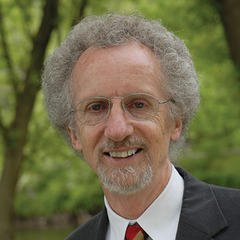
Philip Yancey

Philip Yancey Quotes

Author

Filter quotes by topic

Famous Philip Yancey Quotes

“Grace comes free of charge to people who do not deserve it and I am one of those people... Now I am trying in my own small way to pipe the tune of grace. I do so because I know, more surely than I know anything, that any pang of healing or forgiveness or goodness I have ever felt comes solely from the grace of God.”

“The Christian knows to serve the weak not because they deserve it but because God extended his love to us when we deserved the opposite. Christ came down from heaven, and whenever his disciples entertained dreams of prestige and power he reminded them that the greatest is the one who serves. The ladder of power reaches up, the ladder of grace reaches down.”

“Christians fail to communicate to others because we ignore basic principles in relationship. When we make condescending judgments or proclaim lofty words that don't translate into action, or simply speak without first listening, we fail to love - and thus deter a thirsty world from Living Water. The good news about God's grace goes unheard.”

“Henri Nouwen says, "When we come to realize that ... only God saves, then we are free to serve, then we can live truly humble lives." Nouwen changed his approach from "selling pearls," or peddling the good news, to "hunting for the treasure" already present in those he was called to love - a shift from dispensing religion to dispensing grace. It makes all the difference in the world whether I view my neighbor as a potential convert or as someone whom God already loves.”

“John Wesley taught that the gospel of Christ involved more than saving souls. It should have an impact on all of society, and his followers worked to accomplish just that. They were dispensing grace to the broader world, and in the process their spirit helped change a nation, saving it from the revolutionary chaos that had spread across Europe.”

“Politics deals with externals: borders, wealth, crimes. Authentic forgiveness deals with the evil in a persons heart, something for which politics has no cure. Virulent evil (racism, ethnic hatred) spreads through society like an airborne disease, one cough infects a whole busload. When moments of grace do occur, the world must pause, fall silent, and acknowledge that indeed forgiveness offers a kind of cure. There will be no escape from wars, from hunger, from misery, from rancid discrimination, from denial of human rights, if our hearts aren't changed.”

“Thunderously, inarguably, the Sermon on the Mount proves that before God we all stand on level ground: murderers and temper-throwers, adulterers and lusters, thieves and coveters. We are all desperate, and that is in fact the only state appropriate to a human being who wants to know God. Having fallen from the absolute Ideal, we have nowhere to land but in the safety net of absolute grace.”

“In the move The Last Emperor, the young child anointed as the last emperor of China lives a magical life of luxury with a thousand eunuch servants at his command. "What happens when you do wrong?" his brother asks. "When I do wrong, someone else is punished," the boy emperor replies. To demonstrate, he breaks a jar, and one of the servants is beaten. In Christian theology, Jesus reversed that ancient pattern: when the servants erred, the King was punished. Grace is free only because the giver himself has borned the cost.”

“One who has been touched by grace will no longer look on those who stray as "those evil people" or "those poor people who need our help." Nor must we search for signs of "loveworthiness." Grace teaches us that God loves because of who God is, not because of who we are.”

“We are all trophies of God's grace, some more dramatically than others; Jesus came for the sick and not the well, for the sinner and not the righteous. He came to redeem and transform, to make all things new. May you go forth more committed than ever to nourish the souls who you touch, those tender lives who have sustained the enormous assaults of the universe. (pp.88)”

“Jesus never met a disease he could not cure, a birth defect he could not reverse, a demon he could not exorcise. But he did meet skeptics he could not convince and sinners he could not convert. Forgiveness of sins requires an act of will on the receiver's part, and some who heard Jesus' strongest words about grace and forgiveness turned away unrepentant.”