Quotessence
Home / Authors / Rachel Kushner
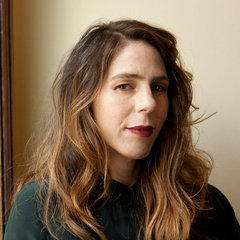
Rachel Kushner

Rachel Kushner Quotes

Writer

Filter quotes by topic

Famous Rachel Kushner Quotes

“I was a child but weirdly uninhibited. I talked to people and inserted myself in all kinds of absurd situations. I think some of those life experiences influenced me in terms of the main character of The Flamethrowers. But for the parts where the community of artists are speaking above her level of participation, that probably came more out of my experience of being in New York in the '90s as an adult.”

“As to the "traditional filler of twenty-first century realist fiction," maybe that is something I avoid. I don't relate to standard psychologizing in novels. I don't really believe that the backstory is the story you need. And I don't believe it's more like life to get it - the buildup of "character" through psychological and family history, the whole idea of "knowing what the character wants." People in real life so often do not know what they want. People trick themselves, lie to themselves, fool themselves. It's called survival, and self-mythology.”

“I do study Marcel Proust, for multiple technical virtuosities but also his swerve, as you say, between characters and in scenes. Certain films can help for that, too, in terms of understanding how multiple conversations at a table, or in a room, can take place and remain separate, and dissonant, and also gather themselves, accidentally, into a collective rhythm and an affect.”

“While it might be true that our reality would suggest that more writers would address these elemental issues of modern life - work, the marketplace, brutality, race - I'm not sure I have enough of a sense in aggregate of what the dominant novelists are doing to comment on why less do, or if less do. Maybe that's partly because I don't feel woven into any kind of fabric of contemporaries; I just read what I read, and do what I do.”

“I do not consciously reclaim. I am not those "some readers" and so I think it would be impossible for me to see my work that way, as reclaiming a preserve. I write in a way that is aimed at all levels - conscious and unconscious - at pleasing the kind of reader I am. Some of the authors I read are male, some are female, and some are even in between. And speaking of in between, maybe now is as good a moment as any to point out that there might be no "feminine" or "masculine" literary sensibility, or sensibility generally.”

“I'm happy to be a woman but much of it was learned over the course of life. Really thudded into me. You learn it. It's a kind of mastery and artistry. The deeper person underneath the scent of Diptyque Philosykos or whatever is much less gendered. Every person has a range. In fiction, you get to be it all. I'm as much the men in my book as I am the women. I write how I write and there is no mission to stake a claim.”

“There is no single formula for good sentence. An invisible integument that gives the sentence wholeness and musicality, sometimes. But other times, the formula is almost purely one of context. And yet other times, of sheer precision of meaning. This is a good sentence: "Just as he was settling into the warm mud of alcoholic gloom, Shrike caught his arm." "Warm mud of alcoholic gloom" is exact and right and accurate.”

“I guess I still feel that way and yet I'm slightly hesitant to insist on that idea, that it "better be fun for the writer." Or rather, that if it is, then the pleasure is a sign that it's good. Maybe I feel I've read that somewhere, other writers saying it, and I just think there is possibly no formula, and I don't like to read an interview with a writer where they just lay out the doxa of what quality is. It can seem brittle to do that.”

“It was not the case that one thing morphed into another, child into woman. You remained the person you were before things happened to you. The person you were when you thought a small cut string could determine the course of a year. You also became the person to whom certain things happened. Who passed into the realm where you no longer questioned the notion of being trapped in one form. You took on that form, that identity, hoped for its recognition from others, hoped someone would love it and you.”

“And here I arrive at my point. The point is that everyone has a different dream. The point is that it is a grave mistake to assume your dream is in any way shared, that it’s a common dream. Not only is it not shared, not common, there is no reason to assume that other people don’t find you and your dream utterly revolting.”