Quotessence
Home / Authors / Ralph Waldo Emerson
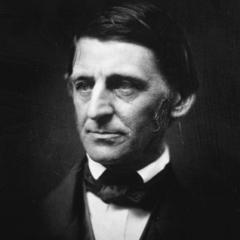
Ralph Waldo Emerson

Ralph Waldo Emerson Quotes

Essayist

Filter quotes by topic

Famous Ralph Waldo Emerson Quotes

“Without ambition one starts nothing. Without work one finishes nothing. The prize will not be sent to you. You have to win it. The man who knows how will always have a job. The man who also knows why will always be his boss. As to methods there may be a million and then some, but principles are few. The man who grasps principles can successfully select his own methods. The man who tries methods, ignoring principles, is sure to have trouble.”

“He who knows what sweets and virtues are in the ground, the plants, the waters, the heavens, and how to come at these enchantments - is the rich and royal man.”

“A garden is like those pernicious machineries which catch a man's coat-skirt or his hand, and draw in his arm, his leg , and his whole body to irresistible destruction.”

“When nature removes a great man, people explore the horizon for a successor; but none comes, and none will. His class is extinguished with him. In some other and quite different field, the next man will appear.”

“A man is known by the books he reads, by the company he keeps, by the praise he gives, by his dress, by his tastes, by his distastes, by the stories he tells, by his gait, by the notion of his eye, by the look of his house, of his chamber; for nothing on earth is solitary but every thing hath affinities infinite.”

“You think that your silence on certain topics, perhaps in the face of injustice, or unkindness, or mean-spiritedness, causes others to reserve judgement of you. Far otherwise; your silence utters very loud: you have no oracle to speak, no wisdom to offer, and your fellow men have learned that you cannot help them. Doth not wisdom cry, and understanding put forth her voice? We would be well to do likewise.”

“My son, a perfect little boy of five years and three months, had ended his earthly life. You can never sympathize with me; you can never know how much of me such a young child can take away. A few weeks ago I accounted myself a very rich man, and now the poorest of all.”

“The great object of Education should be commensurate with the object of life. It should be a moral one; to teach self-trust: to inspire the youthful man with an interest in himself; with a curiosity touching his own nature; to acquaint him with the resources of his mind, and to teach him that there is all his strength.”

“The poet alone knows astronomy, chemistry, vegetation, and animation, for he does not stop at these facts, but employs them as signs. He knows why the plain, or meadow of space, was strown with these flowers we call suns, and moons, and stars; why the deep is adorned with animals, with men, and gods; for, in every word he speaks he rides on them as the horses of thought.”

“Every man takes care that his neighbor shall not cheat him. But a day comes when he begins to care that he does not cheat his neighbor. Then all goes well. He has changed his market cart into a chariot of the sun.”

“I suffer whenever I see that common sight of a parent or senior imposing his opinion and way of thinking and being on a young soul to which they are totally unfit. Cannot we let people be themselves, and enjoy life in their own way? You are trying to make that man another you. One's enough.”

“In dealing with the State, we ought to remember that its institutions are not aboriginal, though they existed before we were born; that they are not superior to the citizen; that every one of them was once the act of a single man; every law and usage was a man's expedient to meet a particular case; that they all are imitable, all alterable; we may make as good; we may make better.”