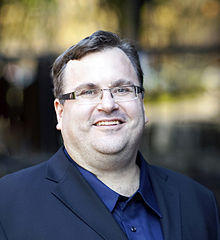
“When you think about being contrarian, you have to think about - how is it that smart people will disagree with me, disagree with me ...from a position of intelligence, and there is something that I know that they don't know, that will actually in fact play out to be true.” PeopleThinkingKnowsPlayFactsPositionSmartBeing TrueDisagreeSmart People Author:Reid Hoffman
“One of the challenges in networking is everybody thinks it's making cold calls to strangers. Actually, it's the people who already have strong trust relationships with you, who know you're dedicated, smart, a team player, who can help you.” PeopleThinkingKnowsHelpingStrongChallengesPlayerTeamColdSmartStrangerDedicatedNetworkingTeam Player Author:Reid Hoffman
“We understand that most of the middle class doesn't know what to do, doesn't feel like they have economic progress, and [Hillary Clinton] goes, "OK, I realize that's my top agenda item. That's the thing I need to do."” KnowsNeedsFeelsRealizingClassProgressEconomicMiddleClintonMiddle ClassAgendasItemsEconomic Progress Author:Reid Hoffman
“Most of the ethical dilemmas that I have faced have all been in the category of, you know, I know something and what's my obligation to disclose it. So, for example, you see people make a mistake in the contract that you're making between the businesses and do you disclose it or do you reveal it? And generally speaking, the way that I solve these is I kind of go through a list of, you know, what's the most, what are the obligations and constituencies and in what order?” PeopleKnowsWayKindOrderMistakeExampleSolveListsObligationEthicalContractsCategoriesDilemmaEthical Dilemmas Author:Reid Hoffman
“I find that the interesting challenges, because there's obvious things where, you know, don't be unethical, don't be evil, you know, don't break the law, don't do immoral things, those are all straightforward and don't create ethical dilemmas. The thing that's interesting is when you actually have multiple interests at stake and you have to kind of navigate your way through it.” KnowsWayKindLawEvilInterestChallengesInterestingBreakObviousEthicalStakesMultipleImmoralDilemmaStraightforwardNavigateUnethicalObvious ThingsEthical Dilemmas Author:Reid Hoffman
“Probably the biggest mistake that I made personally is I knew early on that I wanted to go into start-ups and creating kind of software that could help change the lives of millions of people. And basically what I did is I kind of went, okay, well, I need a set of titles and I need a checklist of skills, and I ran through all that, and that wasn't a useless thing, but what I didn't realize, and, you know, and no one gave me the right advice for doing this, is that actually your network, in essentially, is your career.” PeopleKnowsNeedsWellsKindMadeHelpingWantedRealizingMistakeCareersMillionsAdviceSkillsCreatingOkayUselessTitlesRanSoftwareBiggest MistakeChecklistsUseless Things Author:Reid Hoffman
“I was never given this advice, people aren't given this advice, focus on growing and maintaining relationships for your network, and that's key. And most of the advice tends to be, you know, discover your strengths, build up your resume, get a title, all of that stuff pales in comparison.” PeopleKnowsGivenStuffFocusGrowingAdviceKeysTitlesComparisonOver YouBe YouPaleMaintainingResumes Author:Reid Hoffman
“The first set of questions to ask yourself when you're doing cost cutting is relatively straightforward, which is, you know, can you use the necessity of cost cutting as an opportunity to do pruning or trimming for projects that aren't being as successful? But, you know, frequently those are the easy ones. I mean, there's always some kind of social costs internal to the company, but that's the easy way of looking at the future.” KnowsWayFirstsKindMeanUseAsksOpportunitySocialEasyCompanySuccessfulCuttingCostProjectsInternalsStraightforwardEasy WayPruningTrimming Author:Reid Hoffman
“Managing risk is a key variable, frankly, all aspects of life, business is just one of them, and one of the things that most people do in terms of managing risk, that's actually bad thinking, is they think they can manage risk to zero. Everything has some risk to it. You know, you drive your car down the street, a drunk driver may hit you. So what you're doing is you're actually trying to get to an acceptable level of risk.” PeopleThinkingKnowsTryingMayTermLevelsRiskStreetsCarKeysAspectManageDrunkJust OneDriversZeroAcceptableVariablesAspects Of Life Author:Reid Hoffman
“Well, well-run companies always have a focus on growth and the two lines, which includes profit. The key thing during, I think, tough times, is to make sure that you've covered the basis for when something, you know, essentially things taking longer, bad luck, adversity, other kinds of circumstances may occur. Make sure that you can monitor to win, it's potentially, you know, something is going to go wrong, monitor early enough, and then take appropriate action to essentially counteract that or shift your strategy or plan, even if in fact something is not working out as well as it is.” IfsThinkingKnowsWellsKindMayTwoEnoughFactsRunningActionWinningGrowthLinesCompanyFocusPlansKeysCircumstancesToughBasesAdversityLuckStrategyProfitWork OutAppropriateCoveredTough TimesBad LuckKey Things Author:Reid Hoffman
“Times of economic crises can change what the competitive landscape looks like, because when, for example, you have boom times, capital is easy to come by, growth is easy, sometimes what you focus on is, you know, how to accelerate in the boom. During economic crises, the question is, the companies that come out of, you know, that are sailing through that with the best liquidity, both assets on the balance sheet, making money, ability to grow their businesses, get a disproportionate competitive advantage.” KnowsLooksSometimesGrowsEasyGrowthAbilityCompanyKnow HowFocusEconomicExampleBalanceAdvantageCrisisMaking MoneyLandscapeAssetsSheetsSailingAccelerateCompetitive AdvantageEconomic CrisisLiquidityBalance Sheets Author:Reid Hoffman
“One of the really key things to look at in terms of crafting strategy when you're in an economic crises is how do you maximize essentially your liquidity position? Your ability to both take kind of profits and revenues and business and then convert that into a stronger lead. And so those companies that can do that can actually, you know, get a march on their competitors.” KnowsLooksKindTermCan DoAbilityCompanyEconomicPositionKeysStrongerCrisisStrategyProfitMarchCompetitorsRevenueEconomic CrisisKey ThingsLiquidity Author:Reid Hoffman
“The key thing in any kind of guiding of the business is how do you create a strong organization that is kind of accelerating into the future. And when you're in trouble, the question is, what are the techniques that you can, you know, trim, refinance, sell, et cetera, in order to get this business back to that characteristic.” KnowsKindOrderStrongTroubleKeysOrganizationSellsTechniqueCharacteristicsKey ThingsRefinance Author:Reid Hoffman
“The key thing for a CEO to keep their head in the game is recognize that there's turbulent times, plan for, you know, bad luck as well as good luck, keep people focused on what the key, you know, business wins are, and you know, provide the energy that people always need in order to, you know, to go into battle because, you know, work is hard and go into work and do that well. And provide a good leadership beacon for that. In other words, it's the same thing that makes good leadership in any other time.” PeopleKnowsNeedsWellsHardOrderGamesWinningEnergyPlansKeysBattleLuckFocusedCeoGood LuckBad LuckGood LeaderBeaconsGood LeadershipKey ThingsTurbulent Times Author:Reid Hoffman
“Everyone, you know, during crises times, is much more focused on, okay, how do we get the boat completely seaworthy, sailing along well, and everything going well? And so as long as you're communicating how the general strategy of the company and how the work they can do to add to that and to make that more successful and the thing that they can contribute to that, that is generally very motivating for employees in crisis times.” KnowsWellsLongCan DoCompanySuccessfulOkayCrisisStrategyAddCommunicateFocusedBoatEmployeeSailing Author:Reid Hoffman
“Because in our boom times, everything is growing, usually, you know, the kind of things that come to mind are Wild, Wild, West, or land grabs, you know, these sorts of things, in order to make something, you know, kind of to grow into the future and to get all the growth that you need to have. So you tend to hire a lot because you're running fast to the future.” KnowsNeedsMindKindRunningOrderGrowsGrowthGrowingLandWestWild WestRunning FastWild Wild West Author:Reid Hoffman
“The key thing that I find that when you're kind of in boom times and you're hiring bunches, if you can hire, you know, always maintain very high standards and even if you, you know, can't find enough of, you know, what is typically called A players, then don't hire the people. All right? So, you know, use that as a way of standards.” PeopleIfsKnowsWayKindEnoughUsePlayerKeysStandardsBunchHiringHigh StandardsKey Things Author:Reid Hoffman
“Boom and bust cycles are very difficult for businesses because you're hiring a bunch because you're planning for the future. And if the future is going to be very big, you need to hire people, or suddenly you go to boom to bust, then all of a sudden, you're kind of battening down the hatches and trying to sail, you know, through the storm, it's a different thing. So part of it is making good decisions about, well, how long is a boom cycle going to be, you know, don't plan on it going forever.” PeopleIfsKnowsNeedsTryingWellsKindLongDifferentBigsDifficultDecisionForeverPlansStormPlanningBunchDifferent ThingsCyclesBe YouSailHiringFuture PlansGood DecisionThrough The Storm Author:Reid Hoffman
“When thinking about how to deploy kind of professional and social networking into your business, it's really not a question of if, it's a question of when. And the reason is, just think about the fact that those businesses that adopt new technologies to operate efficiently and use them to get a competitive edge are the businesses that in fact, you know, it becomes one more competitive advantage. Whether it's a fax machine or a mobile phone or a new way of doing financing or any of these things, you know, these are key things to do.” IfsThinkingKnowsWayKindReasonFactsUseSocialTechnologyKeysAdvantageMachinesPhonesEdgesThings To DoNew WaysMobileNetworkingSocial NetworkingNew TechnologySocial NetworkFinancingCompetitive AdvantageMobile PhonesKey ThingsFaxFax Machines Author:Reid Hoffman
“People generally worry about social networking more than they need to. In kind of consumer internet investing and on social and professional networks, I kind of look at time spending and time efficiency. You know, time saving sites. So on time spending sites, things where you play lots of games or that sort of thing, you might worry about a productivity loss if people are spending a lot of time doing that. So if there's a lot of kind of addictive gaming going on during work hours, that won't be as helpful to you.” PeopleIfsKnowsNeedsLooksKindPlayMightGamesSocialHoursLossWorryInternetInvestingSpendingProductivitySavingConsumersHelpfulEfficiencySiteNetworkingSocial NetworkingSocial NetworkGaming Author:Reid Hoffman
“I think we realized the depth of frustration through the current political process. So we said, "OK, we know there's a serious problem here, we know we need to work on it," and now it's "Oh, we need to work on it a lot faster."” ThinkingKnowsNeedsSaidProblemPoliticalProcessSeriousDepthCurrentsFasterFrustration Author:Reid Hoffman