Quotessence
Home / Authors / Richard Rohr Books
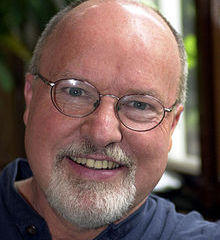
Richard Rohr

Richard Rohr Books

Priest

Just This

A source page for quotes linked to Richard Rohr.
0 quotes

Related Quotes

“Setting out is always a leap of faith, a risk in the deepest sense of the term, and yet an adventure too. The familiar and the habitual are so falsely reassuring, and most of us make our homes there permanently. The new is always by definition unfamiliar and untested, so God, life, destiny, suffering have to give us a push--usually a big one--or we will not go.”

“We actually respond to one another's energy more than to people's exact words or actions. In any situation, your taking or giving of energy is what you are actually doing. Everybody can feel, suffer, or enjoy the difference, but few can exactly say what it is that is happening. Why do I feel drawn or repelled? What we all desire and need from one another, of course, is that life energy called eros! It always draws, creates, and connects things.”

“In much of urban and Western civilization today, with no proper tragic sense of life, we try to believe that it is all upward and onward--and by ourselves. It works for so few, and it cannot serve us well in the long run--because it is not true. It is an inherently win-lose game, and more and more people find themselves on the losing side.”

“Your True Self is who you objectively are from the beginning, in the mind and heart of God, "the face you had before you were born," as the Zen masters say. It is your substantial self, your absolute identify, which can never be gained nor lost by any technique, group affiliation, morality, or formula whatsoever. The surrendering of our false self, which we have usually taken for our absolute identity, yet is merely a relative identity, is the necessary suffering needed to find "the pearl of great price" that is always hidden inside this lovely but passing shell.”

“That is why, though Jesus healed individuals, he simultaneously critiqued the systems that made them need healing. In fact, the best way to interpret most of his healing stories is to look at the whys. Why was a man chained in the cemetery (Luke 8:26–39)? Why were the women Jesus loved so often adulterers and prostitutes (John 8:1–11)? Why has a woman with chronic bleeding given all her money to doctors (Mark 5:26)? If you read these stories as if Jesus is only performing miraculous medical cures, you might think “Wow!” for five seconds. But when you ask why the healing was needed, you have a whole new way of seeing what needs to change, which is invariably the bigger power structure: the institutionalized evils that no longer look evil;”

“Any attempt to engineer or plan your own enlightenment is doomed to failure because it will be ego driven. You will only see what you have already decided to look for, and you cannot see what you are not ready or told to look for. So failure and humiliation force you to look where you never would otherwise. . . . So we must stumble and fall, I'm sorry to say.”

“The spiritual journey is a constant interplay between moments of awe, followed by a general process of surrender to that moment. We must first allow ourselves to be captured by the goodness, the truth, or beauty of something beyond and outside ourselves. Then we universalize from that moment to the goodness, truth, and beauty of the rest of reality, until our realization eventually ricochets back to include ourselves. This is the great inner dialogue we call prayer.”

“Metaphor is the only possible language available to religion because it alone is honest about Mystery. The underlying messages that different religions and denominations use are often in strong agreement, but they use different images to communicate their own experience of union with God. That should not shock or disappoint anyone, unless they are still kids shouting, "This is my toy, and the rest of you can't touch it!" Jesus who is always using metaphors, says, for example, " There are other sheep I have that are not of this fold, and these I have to lead as well. They too listen to my voice" (John 10:16a). He is quite obviously talking metaphorically by calling people sheep. He is also saying that sometimes the outsider to the "flock" hears as well as the insider. Furthermore, he says that he cares about and he respects the "other sheep," which means that we should too. These are crucial points, and who refuse to mine the metaphor will miss them.”

“If love is the soul of Christian existence, it must be at the heart of every other Christian virtue. Thus, for example, justice without love is legalism; faith without love is ideology; hope without love is self-centeredness; forgiveness without love is self-abasement; fortitude without love is recklessness; generosity without love is extravagance; care without love is mere duty; fidelity without love is servitude. Every virtue is an expression of love. No virtue is really a virtue unless it is permeated, or informed, by love.”

“What healthy religion is saying is that the real life is both now and later. You have to taste the Real first of all now. The constant pattern, however, is that most Christians either move both backwards (religion as nostalgia) or into the distant future (religion as carrot on the stick) and consistently avoid where everything really happens and matters—the present moment.”

“I have committed myself to joy. I have come to realize that those who make space for joy, those who prefer nothing to joy, those who desire the utter reality, will most assuredly have it. We must not be afraid to announce it to refugees, slum dwellers, saddened prisoners, angry prophets. Now and then we must even announce it to ourselves. In this prison of now, in this cynical and sophisticated age, someone must believe in joy.”

“Spirituality is about being ready. All the spiritual disciplines of your life - prayer, study, meditation or ritual, religious vows - are there so you can break through to the eternal. Spirituality is about awakening the eyes, the ears, the heart so you can see what's always happening right in front of you.”