Quotessence
Home / Authors / Robertson Davies Books
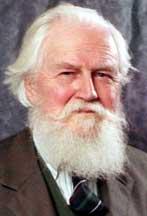
Robertson Davies

Robertson Davies Books

Novelist

Fifth business

A source page for quotes linked to Robertson Davies.
0 quotes

The Cunning Man

A source page for quotes linked to Robertson Davies.

0 quotes

Tempest-tost

A source page for quotes linked to Robertson Davies.

0 quotes

World of wonders

A source page for quotes linked to Robertson Davies.

0 quotes

The Rebel Angels

A source page for quotes linked to Robertson Davies.

0 quotes

High spirits

A source page for quotes linked to Robertson Davies.

0 quotes

The Manticore

A source page for quotes linked to Robertson Davies.

0 quotes

Related Quotes

“When it came time for me to go to bed, my mother beckoned me to her, and kissed me, and whispered, "I know I'll never have another anxious moment with my own dear laddie." I pondered these words before I went to sleep. How could I reconcile this motherliness with the screeching fury who had pursued me around the kitchen with a whip, flogging me until she was gorged with — what? Vengeance? What was it? Once, when I was in my thirties and reading Freud for the first time, I thought I knew. I am not so sure I know now. But what I knew then was that nobody— not even my mother— was to be trusted in a strange world that showed very little of itself on the surface.”

“Just about all men need a woman in one way or another, unless they’re very strange indeed. Tormenting you refreshes him. And you shouldn’t underestimate the gratitude all men feel for women’s beauty. Men who truly don’t like flowers are very uncommon and men who don’t respond to a beautiful woman are even more uncommon. It’s not primarily sexual; it’s a lifting of the spirits beauty gives. He’ll be in to torment you, and tease you, and enrage you, but really to have a good, refreshing look at you.”

“I wanted to get away,' said she; 'everybody wants to plague and worry me about nothing. They'll be all right tomorrow. What's worrying them?' 'They are sacrificing to our Canadian God,' said Solly. 'We all believe that if we fret and abuse ourselves sufficiently, Providence will take pity and smile upon anything we attempt. A light heart, or a consciousness of desert, attracts ill luck. You have been away from your native land too long. You have forgotten our folkways. Listen to that gang over there; they are scanning the heavens and hoping aloud that it won't rain tomorrow. That is to placate the Mean Old Man in the Sky, and persuade him to be kind to us.”

“At school I was a nuisance, for my father was now Chairman of our Continuation School Board, and I affected airs of near-equality with the teacher that must have galled her; I wanted to argue about everything, expand everything, and generally turn every class into a Socratic powwwow instead of getting on with the curriculum. Probably I made her nervous, as a pupil full of green, fermenting information is so well able to do. I have dealt with many innumerable variations of my younger self in classrooms since then, and have mentally apologized for my tiresomeness.”

“So -- I confess I have been a rake at reading. I have read those things which I ought not to have read, and I have not read those things which I ought to have read, and there is no health in me -- if by health you mean an inclusive and coherent knowledge of any body of great literature. I can only protest, like all rakes in their shameful senescence, that I have had a good time.”

“But one must remember that they were all men with systems. Freud, monumentally hipped on sex (for which he personally had little use) and almost ignorant of Nature: Adler, reducing almost everything to the will to power: and Jung, certainly the most humane and gentlest of them, and possibly the greatest, but nevertheless the descendant of parsons and professors, and himself a super-parson and a super-professor. all men of extraordinary character, and they devised systems that are forever stamped with that character.… Davey, did you ever think that these three men who were so splendid at understanding others had first to understand themselves? It was from their self-knowledge they spoke. They did not go trustingly to some doctor and follow his lead because they were too lazy or too scared to make the inward journey alone. They dared heroically. And it should never be forgotten that they made the inward journey while they were working like galley-slaves at their daily tasks, considering other people's troubles, raising families, living full lives. They were heroes, in a sense that no space-explorer can be a hero, because they went into the unknown absolutely alone. Was their heroism simply meant to raise a whole new crop of invalids? Why don't you go home and shoulder your yoke, and be a hero too?”

“I thought I was in love with Leola, by which I meant that if I could have found her in a quiet corner, and if I had been certain that no one would ever find out, and if I could have summoned up the courage at the right moment, I would have kissed her. But, looking back on it now, I know that I was in love with Mrs Dempster. Not as some boys are in love with grown-up women, adoring them from afar and enjoying a fantasy life in which the older woman figures in an idealized form, but in a painful and immediate fashion; I saw her every day, I did menial tasks in her house, and I was charged to watch her and keep her from doing foolish things. Furthermore, I felt myself tied to her by the certainty that I was responsible for her straying wits, the disorder of her marriage, and the frail body of the child who was her great delight in life. I had made her what she was, and in such circumstances I must hate her or love her. In a mode that was far too demanding for my age or experience, I loved her.”

“Now I want you to remember something because I don't think we shall meet again very soon. It is this; however fashionable despair about the world and about people may be at present, and however powerful despair may become in the future, not everybody, or even most people, think and live fashionably; virtue and honour will not be banished from the world, however many popular moralists and panicky journalists say so. Sacrifice will not cease to be because psychiatrists have popularized the idea that there is often some concealed, self-serving element in it; theologians always knew that. Nor do I think love as a high condition of honour will be lost; it is a pattern in the spirit, and people long to make the pattern a reality in their own lives, whatever means they take to do so. In short, Davey, God is not dead. And I can assure you God is not mocked.”

“And here before me stands a marvelously groomed little man who is pinning a hero's medal on me because some of his forebears were Alfred the Great and Charles the First, and even King Arthur, for anything I knew to the contrary. But I shouldn't be surprised if inside he feels as puzzled about the fate that brings him here as I. we are public icons, we two: he an icon of kingship, and I an icon of heroism, unreal yet very necessary; we have obligations above what is merely personal, and to let personal feelings obscure the obligations would be failing in one's duty. This was clearer still afterward, at lunch at the Savoy....; they all seemed to accept me as a genuine hero, and I did my best to behave decently, neither believing in it too obviously, nor yet protesting that I was just a simple chap who had done his duty when he saw it--a pose that has always disgusted me. Ever since, I have tried to think charitably of people in prominent positions of one kind or another. We cast them in roles, and it is only right to consider them as players, without trying to discredit them with knowledge of their off-stage life--unless they drag it into the middle of the stage themselves.”

“In later life I have been sometimes praised, sometimes mocked, for my way of pointing out the mythical elements that seem to me to underlie our apparently ordinary lives. Certainly that cast of mind had some of its origin in our pit, which had much the character of a Protestant Hell. I was probably the most entranced listener to a sermon the Reverend Andrew Bowyer preached about Gehenna, the hateful valley outside the walls of Jerusalem, where outcasts lived, and where their flickering fires, seen from the city walls, may have given rise to the idea of a hell of perpetual burning. He liked to make his hearers jump, now and then, and he said that our gravel pit was much the same sort of place as Gehenna. My elders thought this far-fetched, but I saw no reason then why hell should not have, so to speak, visible branch establishments throughout the earth, and I have visited quite a few of them since.”

“Schoolmastering kept me busy by day and part of each night. I was an assistant housemaster, with a fine big room under the eaves of the main building, and a wretched kennel of a bedroom, and rights in a bathroom used by two or three other resident masters. I taught all day, but my wooden leg mercifully spared me from the nuisance of having to supervise sports after school. There were exercises to mark every night, but I soon gained a professional attitude towards these woeful explorations of the caves of ignorance and did not let them depress me. I liked the company of most of my colleagues, who were about equally divided among good men who were good teachers, awful men who were awful teachers, and the grotesques and misfits who drift into teaching and are so often the most educative influences a boy meets in school. If a boy can't have a good teacher, give him a psychological cripple or an exotic failure to cope with; don't just give him a bad, dull teacher. This is where the private schools score over state-run schools; they can accommodate a few cultured madmen on the staff without having to offer explanations.”

“Need we go into details about what I said to Judy? I am no poet, and I suppose what I said was very much what everybody always says, and although I remember her as speaking golden words, I cannot recall precisely anything she said. If love is to be watched and listened to without embarrassment, it must be transmuted into art, and I don't know how to do that, and it is not what I have come to Zurich to learn.”

“I think a lot of people have unreasonable expectations because they never stop to consider what life actually has to offer them. They're always looking for some great epiphany from the skies. They never stop to consider the fact which human beings find hardest to recognize: "Maybe I'm not worthy of an epiphany.”

“Though thousands of people indulge themselves in it regularly, and even develop a taste for it, there is no doubt in my mind (and that of scientists whom I employ to prove it) that Work is a dangerous and destructive drug, and should be called by its right name, which is Fatigue.”

“The US, for historical reasons, mistrusts the concept of a welfare state, and this mistrust shows itself nakedly under present US government, which commits uncounted billions of the national wealth to what it calls defence, and is close-fisted in giving money to plans which would ameliorate the grinding poverty of a great part of its people. Quite simply, in Canada you could not get away with that.”

“Only in the theatre was it possible to see the performers and to be warmed by their personal charm, to respond to their efforts and to feel their response to the applause and appreciative laughter of the audience. It had an intimate quality; audience and actors conspired to make a little oasis of happiness and mirth within the walls of the theatre. Try as we will, we cannot be intimate with a shadow on a screen, nor a voice from a box.”

“It is in this matter that I fall foul of so many American writers on writing; they seem to think that writing is a confidence game by means of which the author cajoles a restless, dull-witted, shallow audience into hearing his point of view. Such an attitude is base, and can only beget base prose.”

“If I had to describe my remarks this evening frankly as if I were in police court and on oath, so to speak I should have to call it a ramble over several subjects, portions of which may seem to you to be impudent, and portions of which will be ignorant, and portions of which may contrive to be both at once.”

“Our forebears are deserving of tribute for one indisputable reason, if for no other: without them we should not be here. Let us recognize that we are not the ultimate triumph but rather we are beads on a string. Let us behave with decency to the beads that were strung before us and hope modestly that the beads that come after us will not hold us of no account simply because we are dead.”

“Of course, fairies are all imported in North America. We have no native fairies. The Little People do not long survive importation unless they go to California and grow large and beautiful, but haven't much flavour, like the fruit and the film stars.”

“That's the nub of the thing, you see seriousness of spirit. It doesn't mean heaviness of heart, or a lack of fantasy, but it does mean an awareness of influences that touch our lives, sometimes in ways that seem cruel and unfeeling, and sometimes in ways that open up a glory which can never be forgotten.”