Quotessence
Home / Authors / Romain Rolland Books
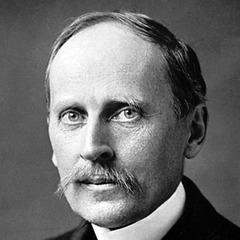
Romain Rolland

Romain Rolland Books

Dramatist

Jean Christophe

A source page for quotes linked to Romain Rolland.
0 quotes

Jean-Christophe

A source page for quotes linked to Romain Rolland.

0 quotes

Colas Breugnon

A source page for quotes linked to Romain Rolland.

0 quotes

Related Quotes

“His loyal and eager nature, brought for the first time to the test of love, gave itself utterly, and demanded a gift as utter without the reservation of one particle of the heart. He admitted no sharing in friendship. Being ready to sacrifice all for his friend, he thought it right and even necessary that his friend should wholly sacrifice himself and everything for him. But he was beginning to feel that the world was not built on the model of his own inflexible character, and that he was asking things which others could not give.”

“When Christophe at last made up his mind to go to bed, chilled in body and soul, he heard the window below him shut. And, as he lay, he thought sadly that it is cruel for the poor to dwell on the past, for they have no right to have a past, like the rich: they have no home, no corner of the earth wherein to house their memories: their joys, their sorrows, all their days, are scattered in the wind.”

“I lay there turning over the pages of my life, thinking of what I had done and left undone, and of the dreams from which I had awakened. How far off seem the bright visions of early boyhood, and how poor and bare the reality looks. I thought of all my expectations, and the small results of my labors; of my wife, who certainly cannot be called either good-natured or good-looking, of my sons who hardly seem to belong to me, with whom I have nothing in common:—of the faithlessness and folly of those around us, of our poor France torn by civil wars and religious persecutions; of my works of art scattered, life itself a handful of ashes, soon to be blown away by the breath of the Destroyer.—I put my face close up against the oak tree, and lay there weeping quietly all among the big roots which cradled me like a father’s arms; and I felt that he listened.”

“But Melchior was one of those men who always do the opposite of what is expected of them and of what they expect of themselves. It is not that they are not warned—a man who is warned is worth two men, says the proverb. They profess never to be the dupe of anything, and that they steer their ship with unerring hand towards a definite point. But they reckon without themselves, for they do not know themselves. In one of those moments of forgetfulness which are habitual with them they let go the tiller, and, as is natural when things are left to themselves, they take a naughty pleasure in rounding on their masters. The ship which is released from its course at once strikes a rock, and Melchior, bent upon intrigue, married a cook. And yet he was neither drunk nor in a stupor on the day when he bound himself to her for life, and he was not under any passionate impulse; far from it. But perhaps there are in us forces other than mind and heart, other even than the senses—mysterious forces which take hold of us in the moments when the others are asleep; and perhaps it was such forces that Melchior had found in the depths of those pale eyes which had looked at him so timidly one evening when he had accosted the girl on the bank of the river, and had sat down beside her in the reeds—without knowing why—and had given her his hand.”

“But perhaps there are in us forces other than mind and heart, other even than the senses - mysterious forces which take hold of us in the moments when the others are asleep; and perhaps it was such forces that Melchior had found in the depths of those pale eyes which had looked at him so timidly one evening when he had accosted the girl on the bank of the river, and had sat down beside her in the reeds - without knowing why - and had given her his hand.”

“A man who suffers can lessen his anguish by knowing whence it comes. By thought he can locate it in a certain portion of his body which can be cured, or, if necessary, torn away. He fixes the bounds of it, and separates it from himself. A child has no such illusive resource. His first encounter with suffering is more tragic and more true. Like his own being, it seems infinite. He feels that it is seated in his bosom, housed in his heart, and is mistress of his flesh. And it is so. It will not leave his body until it has eaten it away.”

“Christophe fancied that on the day of the Creation the Great Sculptor did not take very much trouble to put in order the scattered members of his rough-hewn creatures, and that He had adjusted them anyhow without bothering to find out whether they were suited to each other, and so every one was made up of all sorts of pieces; and one man was scattered among five or six different men; his brain was with one, his heart with another, and the body belonging to his soul with yet another; the instrument was on one side, the performer on the other. Certain creatures remained like wonderful violins, forever shut up in their cases, for want of anyone with the art to play them.”

“[Jean-Christophe’s father] was not a bad man, but a half-good man, which is perhaps worse—weak, without spring, without moral strength, but for the rest, in his own opinion, a good father, a good son, a good husband, a good man—and perhaps he was good, if to be so it is enough to possess an easy kindness, which is quickly touched, and that animal affection by which a man loves his kin as a part of himself. It cannot even be said that he was very egoistic; he had not personality enough for that. He was nothing. They are a terrible thing in life, these people who are nothing. Like a dead weight thrown into the air, they fall, and must fall; and in their fall they drag with them everything that they have.”

“His (Swami Vivekananda) words are great music, phrases in the style of Beethoven, stirring rhythms like the march of Handel choruses. I cannot touch these sayings of his, scattered as they are through the pages of books, at thirty years' distance, without receiving a thrill through my body like an electric shock. And what shocks, what transports, must have been produced when in burning words they issued from the lips of the hero!”

“The greatest book is not the one whose message engraves itself on the brain, as a telegraphic message engraves itself on the ticker-tape, but the one whose vital impact opens up other viewpoints, and from writer to reader spreads the fire that is fed by the various essences, until it becomes a vast conflagration leaping from forest to forest.”

“To a man whose mind is free there is something even more intolerable in the sufferings of animals than in the sufferings of man. For with the latter it is at least admitted that suffering is evil and that the man who causes it is a criminal. But thousands of animals are uselessly butchered every day without a shadow of remorse. If any man were to refer to it, he would be thought ridiculous. And that is the unpardonable crime.”

“If there is one place on the face of earth where all the dreams of living men have found a home from the very earliest days when man began the dream of existence, it is India.”