Quotessence
Home / Authors / William Shakespeare
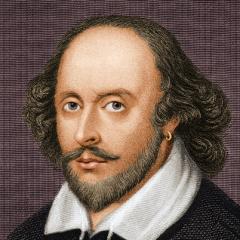
William Shakespeare

William Shakespeare Quotes

Poet

Filter quotes by topic

Famous William Shakespeare Quotes

“They can be meek that have no other cause. A wretched soul, bruised with adversity, We bid be quiet when we hear it cry; But were we burden’d with like weight of pain, As much, or more, we should ourselves complain: So thou, that hast no unkind mate to grieve thee, With urging helpless patience wouldst relieve me; But, if thou live to see like right bereft, This fool-begg’d patience in thee will be left.”

“If music be the food of love, play on; Give me excess of it, that, surfeiting, The appetite may sicken, and so die. That strain again! it had a dying fall: O, it came o'er my ear like the sweet sound, That breathes upon a bank of violets, Stealing and giving odour! Enough; no more: 'Tis not so sweet now as it was before. O spirit of love! how quick and fresh art thou, That, notwithstanding thy capacity Receiveth as the sea, nought enters there, Of what validity and pitch soe'er, But falls into abatement and low price, Even in a minute: so full of shapes is fancy That it alone is high fantastical.”

“if you read this line, remember not The hand that writ it, for I love you so, That I in your sweet thoughts would be forgot, If thinking on me then should make you woe. O! if, I say, you look upon this verse, When I perhaps compounded am with clay, Do not so much as my poor name rehearse; But let your love even with my life decay; Lest the wise world should look into your moan, And mock you with me after I am gone.”

“Look on beauty, And you shall see 'tis purchased by the weight; Which therein works a miracle in nature, Making them lightest that wear most of it: So are those crisped snaky golden locks Which make such wanton gambols with the wind, Upon supposed fairness, often known To be the dowry of a second head, The skull that bred them in the sepulchre. Thus ornament is but the guiled shore To a most dangerous sea; the beauteous scarf Veiling an Indian beauty; in a word, The seeming truth which cunning times put on To entrap the wisest.”

“In the old age black was not counted fair, Or if it were, it bore not beauty’s name. But now is black beauty’s successive heir, And beauty slandered with a bastard shame. For since each hand hath put on nature’s pow'r, Fairing the foul with art’s false borrowed face, Sweet beauty hath no name, no holy bow'r, But is profaned, if not lives in disgrace. Therefore my mistress' eyes are raven black, Her eyes so suited, and they mourners seem At such who, not born fair, no beauty lack, Sland'ring creation with a false esteem. Yet so they mourn, becoming of their woe, That every tongue says beauty should look so.”

“To the celestial, and my soul's idol, the most beautified Ophelia. Doubt thou the stars are fire. Doubt that the sun doth move. Doubt truth to be a liar. But never doubt I love. O dear Ophelia, I am ill at these numbers. I have not art to reckon my groans. But that I love thee best, O most best, believe it. Adieu. Thine evermore, most dear lady, whilst this machine is to him, Hamlet.”

“When, in disgrace with fortune and men's eyes, I all alone beweep my outcast state And trouble deaf heaven with my bootless cries And look upon myself and curse my fate, Wishing me like to one more rich in hope, Featured like him, like him with friends possess'd, Desiring this man's art and that man's scope, With what I most enjoy contented least; Yet in these thoughts myself almost despising, Haply I think on thee, and then my state, Like to the lark at break of day arising From sullen earth, sings hymns at heaven's gate; For thy sweet love remember'd such wealth brings That then I scorn to change my state with kings. a”

“As an unperfect actor on the stage, Who with his fear is put besides his part, Or some fierce thing replete with too much rage, Whose strength's abundance weakens his own heart; So I, for fear of trust, forget to say The perfect ceremony of love's rite, And in mine own love's strength seem to decay, O'ercharg'd with burden of mine own love's might. O, let my books be then the eloquence And dumb presagers of my speaking breast; Who plead for love, and look for recompense, More than that tongue that more hath more express'd. O, learn to read what silent love hath writ: To hear with eyes belongs to love's fine wit.”

“Mad world, mad kings, mad composition! John, to stop Arthur’s title in the whole, Hath willingly departed with a part; And France, whose armour conscience buckled on, Whom zeal and charity brought to the field As God’s own soldier, rounded in the ear With that same purpose-changer, that sly devil, That broker that still breaks the pate of faith, That daily break-vow, he that wins of all, Of kings, of beggars, old men, young men, maids,— Who having no external thing to lose But the word ‘maid’, cheats the poor maid of that— That smooth-faced gentleman, tickling commodity; Commodity, the bias of the world, The world who of itself is peisèd well, Made to run even upon even ground, Till this advantage, this vile-drawing bias, This sway of motion, this commodity, Makes it take head from all indifferency, 580 From all direction, purpose, course, intent; And this same bias, this commodity, This bawd, this broker, this all-changing word, Clapped on the outward eye of fickle France, Hath drawn him from his own determined aid, From a resolved and honourable war, To a most base and vile-concluded peace. And why rail I on this commodity? But for because he hath not wooed me yet— Not that I have the power to clutch my hand When his fair angels would salute my palm, But for my hand, as unattempted yet, Like a poor beggar raileth on the rich. Well, whiles I am a beggar I will rail, And say there is no sin but to be rich, And being rich, my virtue then shall be To say there is no vice but beggary. Since kings break faith upon commodity, Gain, be my lord, for I will worship thee.”

“Like as the waves make towards the pebbled shore, So do our minutes hasten to their end; Each changing place with that which goes before, In sequent toil all forwards do contend. Nativity, once in the main of light, Crawls to maturity, wherewith being crown'd, Crooked eclipses 'gainst his glory fight, And Time that gave doth now his gift confound. Time doth transfix the flourish set on youth And delves the parallels in beauty's brow, Feeds on the rarities of nature's truth, And nothing stands but for his scythe to mow: And yet to times in hope, my verse shall stand. Praising thy worth, despite his cruel hand.”