Quotessence
Home / Quotes / Quote by Jean-Baptiste Lamarck

Quote by Jean-Baptiste Lamarck

“It is not the organs-that is, the character and form of the animal's bodily parts-that have given rise to its habits and particular structures. It is the habits and manner of life and the conditions in which its ancestors lived that have in the course of time fashioned its bodily form, its organs and qualities.”

Quote by Jean-Baptiste Lamarck

Author
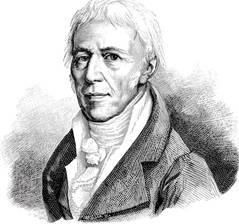
Jean-Baptiste Lamarck

Jean-Baptiste Lamarck was a French naturalist and biologist, a key figure in the history of science. Born on August 1, 1744, in Bazentin, Oise, France, and died on December 18, 1829, in Paris, France. He is known for his contributions to the theory of evolution, particularly his theory of inheritance of acquired characteristics, which suggested that an organism could pass on traits acquired during its lifetime to its offspring. Although his theories are now considered outdated, they laid the groundwork for the modern understanding of evolution. more

You May Also Like

“Man not only survives and functions in his environment, he shapes it and he is shaped by it.”

“No part of the world can be truly understood without a knowledge of its garment of vegetation, for this determines not only the nature of the animal inhabitants but also the occupations of the majority of human beings.”

“One tragic example of the loss of forests and then water is found in Ethiopia. The amount of its forested land has decreased from 40 to 1 percent in the last four decades. Concurrently, the amount of rainfall has declined to the point where the country is rapidly becoming a wasteland.”

“The choice to 'do nothing' in response to the mounting evidence is actually a choice to continue and even accelerate the reckless environmental destruction that is creating the catastrophe at hand.”

“The phenomenon of emergence takes place at critical points of instability that arise from fluctuations in the environment, amplified by feedback loops. Emergence results in the creation of novelty, and this novelty is often qualitatively different from the phenomenon out of which it emerged.”

“The theory of the method of knowing which is advanced in these pages may be termed pragmatic. ... Only that which has been organized into our disposition so as to enable us to adapt the environment to our needs and adapt our aims and desires to the situation in which we live is really knowledge.”

“While the law [of competition] may be sometimes hard for the individual, it is best for the race, because it insures the survival of the fittest in every department. We accept and welcome, therefore, as conditions to which we must accommodate ourselves, great inequality of environment, the concentration of business, industrial and commercial, in the hands of a few, and the law of competition between these, as being not only beneficial, but essential for the future progress of the race.”

“[A living organism] ... feeds upon negative entropy ... Thus the device by which an organism maintains itself stationary at a fairly high level of orderliness (= fairly low level of entropy) really consists in continually sucking orderliness from its environment.”