Quotessence
Home / Authors / Andrei Tarkovsky
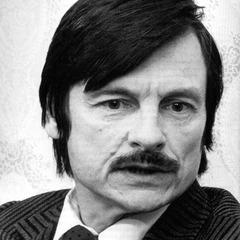
Andrei Tarkovsky

Andrei Tarkovsky Quotes

Film writer

Filter quotes by topic

Famous Andrei Tarkovsky Quotes

“My objective is to create my own world and these images which we create mean nothing more than the images which they are. We have forgotten how to relate emotionally to art: we treat it like editors, searching in it for that which the artist has supposedly hidden. It is actually much simpler than that, otherwise art would have no meaning. You have to be a child—incidentally children understand my pictures very well, and I haven’t met a serious critic who could stand knee-high to those children. We think that art demands special knowledge; we demand some higher meaning from an author, but the work must act directly on our hearts or it has no meaning at all.”

“Art is by nature aristocratic, and naturally selective in its effect on the audience. For even in its 'collective' manifestations, like theatre or cinema, its effect is bound up with the intimate emotions of each person who comes into contact with a work. The more the individual is traumatised and gripped by these emotions, the more significant a place will the work have in his experience. The aristocratic nature of art, however does not in any way absolve the artist of his responsibility to his public and even, if you like, more broadly, to people in general. On the contrary, because of his special awareness of his time and of the world in which he lives, the artist becomes the voice of those who cannot formulate or express their view of reality. In that sense the artist is indeed vox populi. That is why he is called to serve his own talent, which means serving his people.”

“Finally, I would enjoin the reader—confiding in him utterly—to believe that the one thing that mankind has ever created in a spirit of self-surrender is the artistic image. Perhaps the meaning of all human activity lies in artistic consciousness, in the pointless and selfless creative act? Perhaps our capacity to create is evidence that we ourselves were created in the image and likeness of God?”

“Q: What would you like to tell people? I don’t know… I think I’d like to say only that they should learn to be alone and try to spend as much time as possible by themselves. I think one of the faults of young people today is that they try to come together around events that are noisy, almost aggressive at times. This desire to be together in order to not feel alone is an unfortunate symptom, in my opinion. Every person needs to learn from childhood how to be spend time with oneself. That doesn’t mean he should be lonely, but that he shouldn’t grow bored with himself because people who grow bored in their own company seem to me in danger, from a self-esteem point of view.”

“I don’t know… I think I’d like to say only that they should learn to be alone and try to spend as much time as possible by themselves. I think one of the faults of young people today is that they try to come together around events that are noisy, almost aggressive at times. This desire to be together in order to not feel alone is an unfortunate symptom, in my opinion. Every person needs to learn from childhood how to spend time with oneself. That doesn’t mean he should be lonely, but that he shouldn’t grow bored with himself because people who grow bored in their own company seem to me in danger, from a self-esteem point of view.”

“Filmmakers can be divided into two categories: those who strive to imitate the world they live in, to re-create the world that surrounds them...and the directors who create their own worlds. Those who create their own worlds are generally the poets... That is why they have trouble getting their films out. Because the audience is used to a symbolic, nonexistent film world...the result of the audience’s own interests and tastes. The directors I named have all opposed this...that the taste of the audience should be the deciding factor. Not because they want to be obscure, but because they actually want to listen secretly. To give expression to what is deep inside those we call the audience.”

“Pour être libre, il suffit de l'être, sans en demander l'autorisation à personne. Il faut se faire une hypothèse sur son propre destin et s'y tenir, sans se soumettre ni céder aux circonstances. Une telle liberté exige de l'homme de véritables ressources intérieures, un niveau élevé de conscience individuelle, et le sens de la responsabilité devant lui-même et par là devant les autres. La tragédie est hélas que nous ne savons pas être libres. Nous réclamons une liberté qui doit coûter à l'autre mais sans rien lui abandonner en échange, voyant déjà là comme une entrave à nos libertés et à nos droits individuels. Nous sommes tous caractérisés aujourd'hui par un extraordinaire égoïsme. Or ce n'est pas cela la liberté. La liberté signifie plutôt apprendre à ne rien demander à la vie ni à ceux qui nous entourent, à être exigeant envers soi-même et généreux envers les autres. La liberté est dans le sacrifice au nom de l'amour.”

“If there are some who talk the same language as myself, then why should I neglect their interests for the sake of some other group of people who are alien and remote? They have their own 'gods and idols' and we have nothing in common. ... If you try to please audiences, uncritically accepting their tastes, it can only mean that you have no respect for them: that you simply want to collect their money.”

“Why do people go to the cinema? What takes them into a darkened room where, for two hours, they watch the play of shadows on a sheet? The search for entertainment? The need for a kind of drug? ..I think that what a person normally goes to the cinema for is time: for time lost or spent or not yet had. He goes there for living experience; for cinema, like no other art, widens, enhances and concentrates a person’s experience-and not only enhances it but makes it longer, significantly longer. That is the power of cinema: ‘stars’, story-lines and entertainment have nothing to do with it.”

“Weakness is a great thing, and strength is nothing. When a man is just born, he is weak and flexible. When he dies, he is hard and insensitive. When a tree is growing, it's tender and pliant. But when it's dry and hard, it dies. Hardness and strength are death's companions. Pliancy and weakness are expressions of the freshness of being. Because what has hardened will never win.”

“Although the assembly of the shots is responsible for the structure of the film, it does not, as is generally assumed, create its rhythm; the distinct time running through the shots makes the rhythm of the picture, and the rhythm is determined not by the length of edited pieces, but by the pressure of the time that runs through them. The pieces that 'won't edit', that can't be properly joined, are those which record a radically different kind of time”

“My encounter with another world and another culture and the beginnings of an attachment to them had set up an irritation, barely perceptible but incurable-rather like unrequited love, like a symptom of the hopelessness of trying to grasp what is boundless, or unite what cannot be joined; a reminder of how finite, how curtailed, our experience on earth must be”

“I know only one thing. when i sleep, i know no fear, no, trouble no bliss. blessing on him who invented sleep. the common coin that purchases all things, the balance that levels shepherd and king, fool and wise man. there is only one bad thing about sound sleep. They say it closely resembles death.”

“The director’s task is to recreate life, its movement, its contradictions, its dynamic and conflicts. It is his duty to reveal every iota of the truth he has seen, even if not everyone finds that truth acceptable. Of course an artist can lose his way, but even his mistakes are interesting provided they are sincere. For they represent the reality of his inner life, of the peregrinations and struggle into which the external world has thrown him.”

“It is a mistake to talk about the artist looking for his subject. In fact, the subject grows within him like a fruit and begins to demand expression. It is like childbirth. The poet has nothing to be proud of. He is not master of the situation, but a servant. Creative work is his only possible form of existence, and his every work is like a deed he has no power to annul. For him to be aware that the sequence of such deeds is due and ripe, that it lies in the very nature of things, he has to have faith in the idea; for only faith interlocks the system of images for which read system of life.”

“It is obvious that art cannot teach anyone anything, since in four thousand years humanity has learnt nothing at all. We should long ago have become angels had we been capable of paying attention to the experience of art, and allowing ourselves to be changed in accordance with the ideals it expresses. Art only has the capacity, through shock and catharsis, to make the human soul receptive to good. It’s ridiculous to imagine that people can be taught to be good…Art can only give food – a jolt – the occasion – for psychical experience.”

“...art must must carry man's craving for the ideal, must be an expression of his reaching out towards it; that art must give man hope and faith. And the more hopeless the world in the artist's version, the more clearly perhaps must we see the ideal that stands in opposition - otherwise life becomes impossible! Art symbolises the meaning of our existence.”