Quotessence
Home / Authors / B. H. Liddell Hart Books
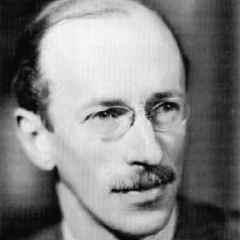
B. H. Liddell Hart

B. H. Liddell Hart Books

Author

Related Quotes

“The predominance of moral factors in all military decisions. On them constantly turns the issue of war and battle. In the history of war they form the more constant factors, changing only in degree, whereas the physical factors are different in almost every war and every military situation.”

“It should be the aim of grand strategy to discover and pierce the Achilles' heel of the opposing government's power to make war. Strategy, in turn, should seek to penetrate a joint in the harness of the opposing forces. To apply one's strength where the opponent is strong weakens oneself disproportionately to the effect attained. To strike with strong effect, one must strike at weakness.”

“The blurring of the line between policy and strategy] encouraged soldiers to make the preposterous claim that policy should be subservient to their conduct of operations, and (especially in democratic countries) it drew the statesman on to overstep the definite border of his sphere and interfere with his military employees in the actual use of their tools.”

“In war the chief incalculable is the human will, which manifests itself in resistance, which in turn lies in the province of tactics. Strategy has not to overcome resistance, except from nature. Its purpose is to diminish the possibility of resistance, and it seeks to fulfil this purpose by exploiting the elements of movement and surprise.”

“For if we merely take what obviously appears the line of least resistance, its obviousness will appeal to the opponent also; and this line may no longer be that of least resistance. In studying the physical aspect, we must never lose sight of the psychological, and only when both are combined is the strategy truly an indirect approach, calculated to dislocate the opponent's balance.”

“In any problem where an opposing force exists and cannot be regulated, one must foresee and provide for alternative courses. Adaptability is the law which governs survival in war as in life ... To be practical, any plan must take account of the enemy's power to frustrate it; the best chance of overcoming such obstruction is to have a plan that can be easily varied to fit the circumstances met.”

“Air forces offered the possibility of striking a the enemy's economic and moral centres without having first to achieve 'the destruction of the enemy's main forces on the battlefield'. Air-power might attain a direct end by indirect means - hopping over opposition instead of overthrowing it.”

“It is folly to imagine that the aggressive types, whether individuals or nations, can be bought off ... since the payment of danegeld stimulates a demand for more danegeld. But they can be curbed. Their very belief in force makes them more susceptible to the deterrent effect of a formidable opposing force.”

“Opposition to the truth is inevitable, especially if it takes the form of a new idea, but the degree of resistance can be diminished- by giving thought not only to the aim but to the method of approach. Avoid a frontal attack on a long established position; instead, seek to turn it by flank movement, so that a more penetrable side is exposed to the thrust of truth. But, in any such indirect approach, take care not to diverge from the truth- for nothing is more fatal to its real advancement than to lapse into untruth.”

“Vitality springs from diversity -- which makes for real progress so long as there is mutual toleration, based on the recognition that worse may come from an attempt to suppress differences than from acceptance of them. For this reason, the kind of peace that makes progress possible is best assured by the mutual checks created by a balance of forces-alike in the sphere of internal politics and of international relations.”

“The art of the indirect approach can only be mastered, and its full scope appreciated, by study of and reflection upon the whole history of war. But we can at least crystallize the lessons into two simple maxims- one negative, the other positive. The first is that, in face of the overwhelming evidence of history, no general is justified in launching his troops to a direct attack upon an enemy firmly in position. The second, that instead of seeking to upset the enemy's equilibrium by one's attack, it must be upset before a real attack is, or can be successfully launched”