Quotessence
Home / Authors / Charles Caleb Colton
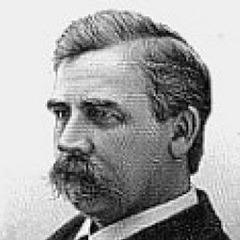
Charles Caleb Colton

Charles Caleb Colton Quotes

Writer

Filter quotes by topic

Famous Charles Caleb Colton Quotes

“Ignorance lies at the bottom of all human knowledge, and the deeper we penetrate the nearer we arrive unto it. For what do we truly know, or what can we clearly affirm, of any one of those important things upon which all our reasonings must of necessity be built--time and space, life and death, matter and mind?”

“There are some who affect a want of affectation, and flatter themselves that they are above flattery; they are proud of being thought extremely humble, and would go round the world to punish those who thought them capable of revenge; they are so satisfied of the suavity of their own temper that they would quarrel with their dearest benefactor only for doubting it.”

“If often happens too, both in courts and in cabinets, that there are two things going on together,--a main plot and an under-plot; and he that understands only one of them will, in all probability, be the dupe of both. A mistress may rule a monarch, but some obscure favorite may rule the mistress.”

“Love may exist without jealousy, although this is rare: but jealousy may exist without love, and this is common; for jealousy can feed on that which is bitter no less than on that which is sweet, and is sustained by pride as often as by affection.”

“There are circumstances of peculiar difficulty and danger, where a mediocrity of talent is the most fatal quantum that a man can possibly possess. Had Charles the First and Louis the Sixteenth been more wise or more weak, more firm or more yielding, in either case they had both of them saved their heads.”

“As the grand discordant harmony of the celestial bodies may be explained by the simple principles of gravity and impulse, so also in that more wonderful and complicated microcosm, the heart of man, all the phenomena of morals are perhaps resolvable into one single principle, the pursuit of apparent good; for although customs universally vary, yet man in all climates and countries is essentially the same.”

“We injure mysteries, which are matters of faith, by any attempt at explanation in order to make them matters of reason. Could they be explained, they would cease to be mysteries; and it has been well said that a thing is not necessarily against reason because it happens to be above it.”

“If it be true that men of strong imaginations are usually dogmatists--and I am inclined to think it is so--it ought to follow that men of weak imaginations are the reverse; in which case we should have some compensation for stupidity. But it unfortunately happens that no dogmatist is more obstinate or less open to conviction than a fool.”

“If our eloquence be directed above the heads of our hearers, we shall do no execution. By pointing our arguments low, we stand a chance of hitting their hearts as well as their heads. In addressing angels, we could hardly raise our eloquence too high; but we must remember that men are not angels.”

“All the poets are indebted more or less to those who have gone before them; even Homer's originality has been questioned, and Virgil owes almost as much to Theocritus, in his Pastorals, as to Homer, in his Heroics; and if our own countryman, Milton, has soared above both Homer and Virgil, it is because he has stolen some feathers from their wings.”

“All poets pretend to write for immortality, but the whole tribe have no objection to present pay, and present praise. Lord Burleigh is not the only statesman who has thought one hundred pounds too much for a song, though sung by Spenser; although Oliver Goldsmith is the only poet who ever considered himself to have been overpaid.”

“That politeness which we put on, in order to keep the assuming and the presumptuous at a proper distance will generally succeed. But it sometimes happens that these obtrusive characters are on such excellent terms with themselves that they put down this very politeness to the score of their own great merits and high pretensions, meeting the coldness of our reserve with a ridiculous condescension of familiarity, in order to set us at ease with ourselves.”

“Lord Bacon has compared those who move in higher spheres to those heavenly bodies in the firmament, which have much admiration, but little rest. And it is not necessary to invest a wise man with power to convince him that it is a garment bedizened with gold, which dazzles the beholder by its splendor, but oppresses the wearer by its weight.”

“In pulpit eloquence, the grand difficulty lies here--to give the subject all the dignity it so fully deserves, without attaching any importance to ourselves. The Christian messenger cannot think too highly of his prince, nor too humbly of himself.”

“There are truths which some men despise because they have not examined, and which they will not examine because they despise. There is one signal instance on record where this kind of prejudice was overcome by a miracle; but the age of miracles is past, while that of prejudice remains.”

“Pride differs in many things from vanity, and by gradations that never blend, although they may be somewhat indistinguishable. Pride may perhaps be termed a too high opinion of ourselves founded on the overrating of certain qualities that we do actually possess; whereas vanity is more easily satisfied, and can extract a feeling of self-complacency from qualifications that are imaginary.”

“He that has energy enough in his constitution to root out a vice should go a little further, and try to plant a virtue in its place; otherwise he will have his labor to renew. A strong soil that has produced weeds may be made to produce wheat with far less difficulty than it would cost to make it produce nothing.”

“Reform is a good replete with paradox; it is a cathartic which our political quacks, like our medical, recommend to others, but will not take themselves; it is admired by all who cannot effect it, and abused by all who can; it is thought pregnant with danger, for all time that is present, but would have been extremely profitable for that which is past, and will be highly salutary for that which is to come.”

“It has been said that men carry on a kind of coasting trade with religion. In the voyage of life, they profess to be in search of heaven, but take care not to venture so far in their approximations to it, as entirely to lose sight of the earth; and should their frail vessel be in danger of shipwreck, they will gladly throw their darling vices overboard, as other mariners their treasures, only to fish them up again when the storm is over.”

“Some well-meaning Christians tremble for their salvation, because they have never gone through that valley of tears and of sorrow, which they have been taught to consider as an ordeal that must be passed through before they can arrive at regeneration. To satisfy such minds, it may be observed, that the slightest sorrow for sin is sufficient, if it produce amendment, and that the greatest is insufficient, if it do not.”