Quotessence
Home / Authors / Friedrich Schiller Books
Friedrich Schiller

Friedrich Schiller Books

Poet

Sammlung

A source page for quotes linked to Friedrich Schiller.
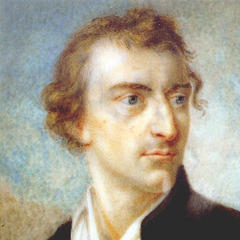
0 quotes

Works

A source page for quotes linked to Friedrich Schiller.

0 quotes

Essays

A source page for quotes linked to Friedrich Schiller.

0 quotes

Die Räuber

A source page for quotes linked to Friedrich Schiller.

0 quotes

Kabale und Liebe

A source page for quotes linked to Friedrich Schiller.

0 quotes

Thalia: 1, H.1-4

A source page for quotes linked to Friedrich Schiller.

0 quotes

William Tell

A source page for quotes linked to Friedrich Schiller.

0 quotes

Related Quotes

“Curious,' the Prince continued, after a deep silence, 'is it possible never to have known something, never to have missed it in its absence -- and a few moments later to live in and for that single experience alone? Can a single moment make a man so different from himself? It would be just as impossible for me to return to the joys and wishes of yesterday morning as it would for me to return to the games of childhood, now that I have seen that object, now that her image dwells here -- and I have this living, overpowering feeling within me: from now on you can love nothing other than her, and in this world nothing else will ever have any effect on you.”

“Strictness to oneself joined with tenderness towards others, forms a truly excellent character. But for the most part, the man who is mild towards others, will be so towards himself, and he who is severe towards himself will be the same towards others; a character which is tender towards itself and severe towards others, is of all the most contemptible.”

“We know that the sensibility of the psyche depends for its intensity upon the liveliness, for its scope upon the richness, of the imagination. The preponderance of the analytical faculty must, however, of necessity, deprive the imagination of its energy and warmth, while a more restricted sphere of objects must reduce its wealth. Hence, the abstract thinker very often has a cold heart, since he dissects his impressions, and impressions can move the soul only as long as they remain whole; while the man of practical affairs often has a narrow heart, since his imagination, imprisoned within the unvarying confines of his own calling, is incapable of extending itself to appreciate other ways of seeing and knowing.”

“If truth is to be victorious in her conflict of forces, she must herself first become a force and appoint some drive to be her champion in the realm of phenomena; for drives are the only motive forces in the sensible world. If she has hitherto displayed so little of her conquering power, this was due, not to the intellect that was powerless to unveil her, but to the heart that closed itself against her, and to the drive that refused to act on her behalf.”

“It seems a bad thing and detrimental to the creative work of the mind if Reason makes to close an examination of the ideas as they come pouring in -at the very gateway, as it were. Looked at in isolation, a thought may seem very trivial or very fantastic; but it may be made important by another thought that comes after it, and in conjunction with other thoughts that may seem equally absurd, it may serve to form a most effective link. Reason cannot form any opinion on all this unless it retains the thought long enough to look at it in connection with the others. On the other hand, where there is a creative mind, Reason -so it seems to me- relaxes its watch upon the gates, and the ideas rush in pell-mell, and only then does it look them through and examine them in a mass.”

“Ach, aus dieses Tales Gründen, Die der kalte Nebel drückt, Könnt ich doch den Ausgang finden, Ach wie fühlt ich mich beglückt! Dort erblick ich schöne Hügel, Ewig jung und ewig grün! Hätt ich Schwingen, hätt ich Flügel, Nach den Hügeln zög ich hin. Harmonien hör ich klingen, Töne süßer Himmelsruh, Und die leichten Winde bringen Mir der Düfte Balsam zu, Goldne Früchte seh ich glühen, Winkend zwischen dunkelm Laub, Und die Blumen, die dort blühen, Werden keines Winters Raub. Ach wie schön muß sich’s ergehen Dort im ew’gen Sonnenschein, Und die Luft auf jenen Höhen, O wie labend muß sie sein! Doch mir wehrt des Stromes Toben, Der ergrimmt dazwischen braust, Seine Wellen sind gehoben, Daß die Seele mir ergraust. Einen Nachen seh ich schwanken, Aber ach! der Fährmann fehlt. Frisch hinein und ohne Wanken! Seine Segel sind beseelt. Du mußt glauben, du mußt wagen, Denn die Götter leihn kein Pfand, Nur ein Wunder kann dich tragen In das schöne Wunderland.”

“Egotism erects its center in itself; love places it out of itself in the axis of the universal whole. Love aims at unity, egotism at solitude. Love is the citizen ruler of a flourishing republic, egotism is a despot in a devastated creation. Egotism sows for gratitude, love for the ungrateful. Love gives, egotism lends; and love does this before the throne of judicial truth, indifferent if for the enjoyment of the following moment, or with the view to a martyr's crown--indifferent whether the reward is in this life or in the next.”