Quotessence
Home / Authors / George Eliot
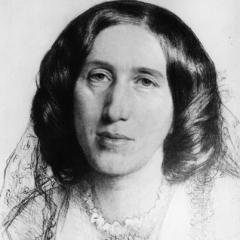
George Eliot

George Eliot Quotes

Novelist

Filter quotes by topic

Famous George Eliot Quotes

“Love is such a simple thing when we have only one-and-twenty summers and a sweet girl of seventeen trembles under our glance, as if she were a bud first opening her heart with wondering rapture to the morning. Such young unfurrowed souls roll to meet each other like two velvet peaches that touch softly and are at rest; they mingle as easily as two brooklets that ask for nothing but to entwine themselves and ripple with ever-interlacing curves in the leafiest hiding-places.”

“Blessed influence of one true loving human soul on another! Not calculable by algebra, not deducible by logic, but mysterious, effectual, mighty as the hidden process by which the tiny seed is quickened, and bursts forth into tall stem and broad leaf, and glowing tasseled flower.”

“Great Love has many attributes, and shrines For varied worshippers, but his force divine Shows most its many-named fulness in the man Whose nature multitudinously mixed-- Each ardent impulse grappling with a thought-- Resists all easy gladness, all content Save mystic rapture, where the questioning soul Flooded with consciousness of good that is Finds life one bounteous answer.”

“Let thy chief terror be of thine own soul: There, 'mid the throng of hurrying desires That trample o'er the dead to seize their spoil, Lurks vengeance, footless, irresistible As exhaltations laden with slow death, And o'er the fairest troop of captured joys Breathes pallid pestilence.”

“There comes a terrible moment to many souls when the great movements of the world, the larger destinies of mankind, which have lain aloof in newspapers and other neglected reading, enter like an earthquake into their own lives--when the slow urgency of growing generations turns into the tread of an invading army or the dire clash of civil war, and grey fathers know nothing to seek for but the corpses of their blooming sons, and girls forget all vanity to make lint and bandages which may serve for the shattered limbs of their betrothed husbands.”

“Are there many situations more sublimely tragic than the struggle of the soul with the demand to renounce a work which has been all the significance of its life--a significance which is to vanish as the waters which come and go where no man has need of them?”

“O the anguish of that thought that we can never atone to our dead for the stinted affection we gave them, for the light answers we returned to their plaints or their pleadings, for the little reverence we showed to that sacred human soul that lived so close to us, and was the divinest thing God had given us to know!”

“The impulse to confession almost always requires the presence of a fresh ear and a fresh heart; and in our moments of spiritual need, the man to whom we have no tie but our common nature, seems nearer to us than mother, brother, or friend. Our daily familiar life is but a hiding of ourselves from each other behind a screen of trivial words and deeds, and those who sit with us at the same hearth, are often the farthest off from the deep human soul within us, full of unspoken evil and unacted good.”

“... it is one of the gains of advancing age that the good of young creatures becomes a more definite intense joy to us. With that renunciation for ourselves which age inevitably brings, we get more freedom of soul to enter into the life of others; what we can never learn they will know, and the gladness which is a departed sunlight to us is rising with the strength of morning to them.”

“To be a poet is to have a soul so quick to discern, that no shade of quality escapes it, and so quick to feel, that discernment is but a hand playing with finely-ordered variety on the chords of emotion--a soul in which knowledge passes instantaneously into feeling, and feeling flashes back as a new organ of knowledge.”

“No one who has ever known what it is to lose faith in a fellow-man whom he has profoundly loved and reverenced, will lightly say that the shock can leave the faith in the Invisible Goodness unshaken. With the sinking of high human trust, the dignity of life sinks too; we cease to believe in our own better self, since that also is part of the common nature which is degraded in our thought; and all the finer impulses of the soul are dulled.”

“Is not this a true autumn day? Just the still melancholy that I love - that makes life and nature harmonise. The birds are consulting about their migrations, the trees are putting on the hectic or the pallid hues of decay, and begin to strew the ground, that one's very footsteps may not disturb the repose of earth and air, while they give us a scent that is a perfect anodyne to the restless spirit. Delicious autumn! My very soul is wedded to it, and if I were a bird I would fly about the earth seeking the successive autumns.”

“May every soul that touches mine - be it the slightest contact - get there from some good; some little grace; one kindly thought; one aspiration yet unfelt; one bit of courage for the darkening sky; one gleam of faith to brave the thickening ills of life; one glimpse of brighter skies beyond the gathering mists - to make this life worthwhile.”

“It is a common sentence that Knowledge is power; but who hath duly considered or set forth the power of Ignorance? Knowledge slowly builds up what Ignorance in an hour pulls down. Knowledge, through patient and frugal centuries, enlarges discovery and makes record of it; Ignorance, wanting its day's dinner, lights a fire with the record, and gives a flavour to its one roast with the burnt souls of many generations.”

“May I reach That purest heaven - be to other souls The cup of strength in some great agony; Enkindle generous ardor, feed pure love, Beget the smiles that have no cruelty. Be the sweet presence of a good diffused, And in the diffusion ever more intense! So shall I join the choir invisible Whose music is the gladness of the world.”

“For years after Lydgate remembered the impression produced in him by this involuntary appeal-this cry from soul to soul, without other consciousness than their moving with kindred natures in the same embroiled medium, the same troublous fitfully-illuminated life.”

“Delicious autumn! My very soul is wedded to it, and if I were a bird I would fly about the earth seeking the successive autumns.”

“What greater thing is there for two human souls than to feel that they are joined - to strengthen each other - to be at one with each other in silent unspeakable memories.”

“Some gentlemen have made an amazing figure in literature by general discontent with the universe as a trap of dulness into which their great souls have fallen by mistake; but the sense of a stupendous self and an insignificant world may have its consolations. Lydgate's discontent was much harder to bear; it was the sense that there was a grand existence in thought and effective action lying around him, while his self was being narrowed into the miserable isolation of egoistic fears, and vulgar anxieties for events that might allay such fears.”