Quotessence
Home / Authors / Manning Marable
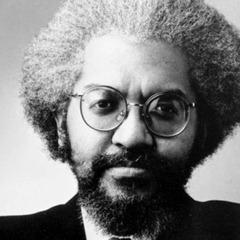
Manning Marable

Manning Marable Quotes

Professor

Filter quotes by topic

Famous Manning Marable Quotes

“Simply because one is Black or Latino or lesbian or gay or whatever does not guarantee the person’s fidelity to a body of politics that empowers the particular constituency that they supposedly represent. The number of black elected officials has risen from 100 in 1964 to more than 9000 today. The number of African Americans who were in congress 30 years ago was about five; today it is over 40, an 800 percent increase. But have Blacks experienced an 800 percent increase in real power? It hasn’t happened. So, I think the emphasis of this liberal notion of social change by working solely within the established electoral system is just fatally flawed.”

“By dismantling the narrow politics of racial identity and selective self-interest, by going beyond 'black' and 'white,' we may construct new values, new institutions and new visions of an America beyond traditional racial categories and racial oppression.”

“As the years progress, what women and men will discover is that the most lasting and rewarding educational experiences come not from specific information provided in classroom lectures or assigned textbooks, but from the values obtained in active engagement in meaningful issues. We achieve for ourselves only as we appreciate the problems and concerns of others-and only as we see our own lives as part of a much greater social purpose.”

“I think that in his 39 short years of life, Malcolm X came to symbolize Black urban America, its culture, its politics, its militancy, its outrage against structural racism and at the end of his life, a broad internationalist vision of emancipatory power far better than any other single individual that he shared with DuBois and Paul Robeson, a pan-Africanist internationalist perspective.”

“Most people who read the autobiography perceive the narrative as a story that now millions of people know, and it was - it's a story of human transformation, the powerful epiphany, Malcolm's X journey to Mecca, his renunciation of the Nation of Islam's racial separatism, his embrace of universal humanity, of humanism that was articulated through Sunni Islam. Well, that's the story everybody knows.”

“What Malcolm X did not know is that back in 1962, a collaborator of Alex Haley, fellow named - a journalist named Alfred Balk had approached the F.B.I. regarding an article that he and Haley were writing together for The Saturday Evening Post, and the F.B.I. had an interest in castigating the Nation of Islam, and isolating it from the mainstream of Negro civil rights activity.”

“Over a period of about year-and-a-half, Malcolm X and [Alex] Haley agreed to work with each other. They met usually after a long business day that Malcolm put in very tired. He would get there at about - either at Haley's apartment or they would meet at then Idyllwild Airport at a hotel, and Malcolm would be debriefed by Haley. He would talk, Haley would take notes.”

“Malcolm's X objective was actually to reingratiate himself within the Nation of Islam, that because he had emerged by the early 1960s as a very prominent figure outside of the N.O.I., there were critics within the organization that were saying to the patriarch of the N.O.I., the Honorable Elijah Mohammad, that Malcolm planned to take over the organization, which was not true.”

“There were internal critics, sharp critics, who were very opposed to [Malcolm X], and who were very - some of them were members of Elijah Mohammad's family, such as Herbert Mohammad, Raymond Shareef, who was the head of the Fruit of Islam, the brother-in-law of - the son-in-law of Elijah Mohammad. They isolated Malcolm X and kept him out of the newspaper of the organization Mohammad Speaks for over a year, which is kind of curious.”

“[Alex] Haley felt he could make a solid case in favor of racial integration by showing what was - to white America - what was the consequence of their support for racial separatism that would end up producing a kind of hate, the hate that hate produced, to use the phrase that Mike Wallace used in his 1959 documentary on the Nation of Islam.”

“What is striking is that from almost from the very beginning of certainly by September and October of 1963, as the book was being constructed, that [Alex] Haley was vetting - asking questions to the publisher and to the publisher's attorney regarding many of the things that Malcolm X was saying. He was worried that he would not have a book that would have the kind of sting that he wanted.”

“In the case of Alex Haley, Haley's material is located at the University of Tennessee at Knoxville, primarily. But there are a whole series of elaborate steps that one has to - has to encounter in order to even begin to do research. There's an attorney. If you want to photocopy material from that archive, you have to get permission from the attorney beforehand.”

“Malcolm X broke with the N.O.I. in March 1964, and in that last 11 chaotic months, he spent most of the time outside of the United States. Nevertheless, he built two organizations in the spring of 1964. First, Muslim Mosque Incorporated, which was a religious organization that was largely based on members of the N.O.I. who left with him. It was spearheaded by James 67X or James Shabazz, who was his chief of staff. Then secondly was the Organization of Afro-American Unity.”

“The Organization of Afro-American Unity was an organization that was a secular group. It largely consisted of people that we would later call several years later Black Powerites, Black nationalists, progressives coming out of the Black freedom struggle, the northern students' movement, people - students, young people, professionals, workers, who were dedicated to Black activism and militancy, but outside of the context of Islam.”

“Malcolm X envisions a broad-based pluralistic united front, which is spearheaded by the Nation of Islam, but mobilizing integrationist organizations, non-political organizations, civic groups, all under the banner of building black empowerment, human dignity, economic development, political mobilization.”

“I believe that if we could see the chapters that are missing from the book [The Autobiography of Malcolm X], we would gain an understanding as to why perhaps - perhaps - the F.B.I., the C.I.A., the New York Police Department and others in law enforcement greatly feared what Malcolm X was about, because he was trying to build a broad - an unprecedented black coalition across the lines of black nationalism and integration. And in way, it presages 30 years ahead of time, the Million Man March.”

“I think that Malcolm X was envisioning, even while he was in the Nation of Islam, a black nationalist progressive strategy toward uniting black people across ideological, class lines, denominational religious lines, Christians, as well as Muslims, to build a strong movement for justice and for empowerment.”