Quotessence
Home / Authors / Paul Tillich Books
Paul Tillich

Paul Tillich Books

Philosopher

The New Being

A source page for quotes linked to Paul Tillich.
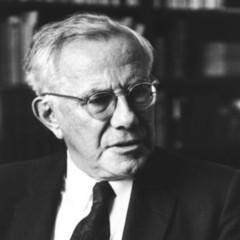
0 quotes

The Eternal Now

A source page for quotes linked to Paul Tillich.

0 quotes

Related Quotes

“One praises that in which a being fulfills its potentialities or actualizes its perfections. Courage is the affirmation of one's essential nature, one's inner aim or entelechy, but it is an affirmation which has in itself the character of "in spite of". It includes the possible and, in some cases, the unavoidable sacrifice of elements which also belong to one's being but which, if not sacrificed, would prevent us from reaching our actual fulfillment. This sacrifice may include pleasure, happiness, even one's own existence. In any case it is praise-worthy, because in the act of courage the most essential part of our being prevails against the less essential.”

“De moed van het vertrouwen neemt de angst voor het lot even goed als de angst voor de schuld in zich op. Deze moed zegt tot beide: "En toch."Dit is de ware betekenis van de leer der voorzienigheid. Voorzienigheid is geen theorie over zekere handelingen van God, maar het godsdienstig symbool van de moed van het vertrouwen ten aanzien van lot en dood. Want de moed van het vertrouwen zegt zelfs tot de dood: "En toch.”

“Man is essentially 'finite freedom'; freedom not in the sense of indeterminacy but in the sense of being able to determine himself through decisions in the center of his being. Man, as finite freedom, is free within the contingencies of his finitude. But within these limits he is asked to make of himself what he is supposed to become, to fulfill his destiny.”

“Man is finite, man's reason lives in preliminary concerns; but man is also aware of his potential infinity, and this awareness appears as his ultimate concern, as faith. If reason is grasped by an ultimate concern, it is driven beyond itself; but it does not cease to be reason, finite reason. The ecstatic experience of an ultimate concern does not destroy the structure of reason. Ecstasy is fulfilled, not denied, rationality.”

“When destiny leads one to the frontier of his being, it makes him personally conscious that he stands before the decision either to fall back upon that which he already is or else to transcend himself. Every person is at that point led to the frontier of his being. He perceives the Other over beyond himself, and it appears to him as a possibility and awakens in him the anxiety of the potential. He sees in the mirror of the other his own limitedness, and he recoils; for at the same time this limitedness was his security, and now it is threatened. The anxiety of the potential draws him back into his bounded reality and its momentary calm. But the situation into which he will return is no longer the same. His experience of the potential and his failure toward it leaves a thorn behind, which cannot be eliminated, which can only be driven out of the consciousness by suppression. And where that occurs, there arises that spiritual phenomenon which we call fanaticism. The original meaning of the word is "divinely inspired" - that is, born out of a distraught spiritual structure and thereby destructively fulfilled. That can appear in smaller, greater or enormous measure, in persons and in groups.”

“Neither the Ten Commandments nor the great commandment is revelatory if separated from the divine covenant with Israel or from the presence of the Kingdom of God in the Christ. These commandments were meant and should be taken as interpretations of a new reality, not as orders directed against the old reality. They are descriptions and not laws. ~ vol. 1, p.125”

“The message of the fulfillment of time is not a green light for a new, and assumedly Christian activism. But it makes us say with Paul: "Though our outer nature is wasting away our inner nature is renewed everyday - because we look not to the things that are seen but to the things that are unseen. For the things that are seen are transient, but the things that are unseen are eternal." In these words the message of the Preacher and the message of Jesus are united. All is vanity but through this vanity eternity shines into us, comes near to us, draws us to itself. When eternity calls in time, then pessimism vanishes. When eternity times us, then time becomes a vessel of eternity. Then we become vessels of that which is eternal.”

“One of the unfortunate consequences of the intellectualization of man's spiritual life was that the word "spirit" was lost and replaced by mind or intellect, and that the element of vitality which is present in "spirit" was separated and interpreted as an independent biological force. Man was divided into a bloodless intellect and a meaningless vitality. The middle ground between them, the spiritual soul, in which vitality and intentionality are united, was dropped.”

“[American] conformism might approximate collectivism, not so much in economic respects, and not too much in political respects, but very much in the pattern of daily life and thought. Whether this will happen or not, and if it does to what degree, is partly dependent on the power of resistance in those who represent the opposite pole of the courage to be, the courage to be as oneself.”

“The courage to be as oneself within the atmosphere of Enlightenment is the courage to affirm oneself as a bridge from a lower to a higher state of rationality. It is obvious that this kind of courage to be must become conformist the moment its revolutionary attack on that which contradicts reason has ceased, namely in the victorious bourgeoisie.”

“In a man like Friedrich von Schlegel the courage to be as an individual self produced complete neglect of participation, but it also produced, in reaction to the emptiness of this self-affirmation, the desire to return to a collective. Schlegel, and with him many extreme individualists in the last hundred years, became Roman Catholics. The courage to be as oneself broke down, and one turned to an institutional embodiment of the courage to be as a part.”

“Out of the element of participation follows the certainty of faith; out of the element of separation follows the doubt in faith. And each is essential for the nature of faith. Sometimes certainty conquers doubt, but it cannot eliminate doubt. The conquered of today may become the conqueror of tomorrow. Sometimes doubt conquers faith, but it still contains faith. Otherwise it would be indifference.”

“Forgiving presupposes remembering. And it creates a forgetting not in the natural way we forget yesterday's weather, but in the way of the great "in spite of" that says: I forget although I remember. Without this kind of forgetting no human relationship can endure healthily. I don't refer to a solemn act of asking for and offering forgiveness. Such rituals as sometimes occur between parents and children, or friends, or man and wife, are often acts of moral arrogance on the one part and enforced humiliation on the other. But I speak of the lasting willingness to accept him who has hurt us.”

“Why does philosophy use concepts and why does faith use symbols if both try to express the same ultimate? The answer, of course, is that the relation to the ultimate is not the same in each case. The philosophical relation is in principle a detached description of the basic structure in which the ultimate manifests itself. The relation of faith is in principle an involved expression of concern about the meaning of the ultimate for the faithful.”