Filter quotes by topic
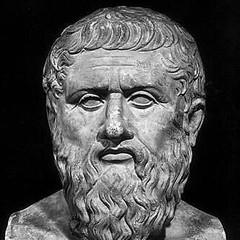
Famous Plato Quotes
Source: The Works of Plato: Charmides, Lysis, Other Dialogues and the Laws
Source: The Works of Plato: A New and Literal Version, Chiefly from the Text of Stallbaum
Source: The Dialogues of Plato
“May not the wolf, as the proverb says, claim a hearing?”
Source: The Works of Plato: The Trial and Death of Socrates
“Mariner, do not ask whose tomb this may be, but go with good fortune: I wish you a kinder sea.”
Source: Phaedo: Translated, with Introd., Notes, and Appendices
“When you admonish a wrongdoer, do so gently, that it may not lead to hostility.”
“As it is, the lover of inquiry must follow his beloved wherever it may lead him.”
“No one knows whether death may not be the greatest good that can happen to man.”
Source: Plato: Five Dialogues: Euthyphro, Apology, Crito, Meno, Phaedo
Source: The Republic of Plato, Translated Into English, with an Introduction, Analysis, and Notes. By J. Ll. Davies and D. J. Vaughan
Source: The Republic of Plato, tr. with an analysis and notes, by J.L. Davies and D.J. Vaughan
Source: The Republic
Source: The Complete Works of Plato (Unabridged): From the greatest Greek philosopher, known for The Republic, Symposium, Apology, Phaedrus, Laws, Crito, Phaedo, Timaeus, Meno, Euthyphro, Gorgias, Parmenides, Protagoras, Statesman and Critias
“Any man may easily do harm, but not every man can do good to another.”
Source: Laws
Source: Plato: The Complete Works: From the greatest Greek philosopher, known for The Republic, Symposium, Apology, Phaedrus, Laws, Crito, Phaedo, Timaeus, Meno, Euthyphro, Gorgias, Parmenides, Protagoras, Statesman and Critias
“May I do to others as I would that they should do unto me.”
Source: The Republic and Other Works
Source: The Portable Plato
“Everything that deceives may be said to enchant.”
Source: Delphi Complete Works of Plato (Illustrated)
“As it is, lovers of inquiry must follow their beloved wherever it may lead.”
Source: The Dialogues of Plato
Source: Laws
Source: Republic. Timaeus. Critias
“When a Benefit is wrongly conferred, the author of the Benefit may often be said to injure.”
Source: Laws