Quotessence
Home / Authors / Queen Noor of Jordan
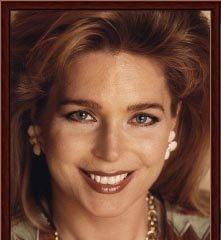
Queen Noor of Jordan

Queen Noor of Jordan Quotes

Advocate

Filter quotes by topic

Famous Queen Noor of Jordan Quotes

“Everyone I knew, including my new friends in Jordan, expressed horror at the realities of the Holocaust. But they resented, as I was growing to, how Arabs were cast as the aggressors in the dispute between Israel and the Arab countries, when it was their land that had been seized to resolve a European political problem.”

“My early childhood was spent living by the Pacific Ocean. I carry with me something imprinted by that wide, limitless horizon, which I learned connected us to different people and cultures, including my own family's origins in the Arab World and Northern Europe. I understood early that my world was only a small part of a much larger one. That captivated me.”

“When my father began to work with President John. F.Kennedy, we moved to Washington, D.C. I was fortunate in my pre-adolescent years, as my social and political consciousness was developing, to live at the epicentre of that dynamic, idealistic, and inspiring moment in U.S. political history, with its ethos of personal and civic responsibility, summed up so succinctly in his exhortation: "Ask not what your country can do for you, but ask what you can do for your country."”

“King Hussein of Jordan dedicated his life - I witnessed it in his sleeping as well as waking hours - to trying to break through the impasses keeping people apart. He understood that the security and prosperity of any one of us in this world depends on the security and prosperity enjoyed by others. As Martin Luther King said, "Injustice anywhere is a threat to justice everywhere." In the Middle East, nothing could be more true.”

“Even into the 20th century, women were still struggling in the Western world for rights that Islam had granted women in the 7th century: equal rights to education; the right to own and inherit property; to have a voice in the decisions affecting their lives; to be active, engaged, and valued members of society at all levels.”

“I founded the King Hussein Foundation after my husband's death in 1999, to build on his humanitarian vision and legacy in the country and abroad, through programs promoting education and leadership, economic empowerment, tolerance, cross-cultural dialogue, and media that enhances mutual understanding and respect among different cultures across conflict lines.”

“The film and media technology that's available today is going to be the most potent weapon in our arsenal in tackling ideological intolerance and ignorance, as well as the kind of fear and stereotyping that can dehumanize the others as the enemy, as being somehow less entitled to the privileges and the aspirations that we have.”

“I have witnessed firsthand the anguish of this humanitarian tragedy - in Palestine, Iraq, Syria, Pakistan, and other conflict and post-conflict zones. The destruction of lives and hopes, the emotional trauma, and the economic, social, and political marginalization of the displaced, the human insecurity, with real and potentially devastating consequences over generations, in ever-widening arenas of conflict. We can and must ensure the human rights of the displaced. That begins by making their voices heard.”

“I have been a long-time advocate for a just Arab-Israeli peace and for Palestinian refugees. Today, as you are aware, Turkey, Lebanon, and Jordan and Iraq are being overwhelmed by those fleeing the conflict in Syria, often with nothing but the clothes on their backs. Many are severely tortured - abused women and their traumatized children whose husbands, fathers, and brothers have been killed or permanently disabled.”

“I don't think we've ever lived in such a dangerous time, on a range of different levels. We also live in an extremely exciting time with a multitude of opportunities for each and every one of us to engage our individual voices, to engage more effectively collectively, to tackle some of these issues that would have seemed beyond our reach just a few years ago.”

“A more just world is possible. In most of the global issues, and also in so many of the development issues I'm involved in in our region, the young people that I am working with are seizing the tools at their disposal and trying to use them well, for issues far larger than their immediate personal benefit and concerns. That's what gives me hope.”

“I spent the first years working in Jordan trying to learn as much as I could about what was taking place in the country, about where there were gaps in the development process that needed attention. Inevitably, there were certain common denominators which are fairly common to all developing societies, perhaps to all societies: that quality education be accessible to everyone, not just a limited elite few; the sustainable conservation of natural resources; the full engagement of women in national development; and the value of cross-cultural exchange and understanding to international relations.”

“War over water would be an ultimate obscenity. And yet, unfortunately it is conceivable... Water has been a source over so many years of erosion of confidence, of tension, of human rights abuses, really, of so many in areas whose traditional water supplies have been controlled and depleted by occupational authorities. That must stop if we're going to be able to develop a climate for peace.”