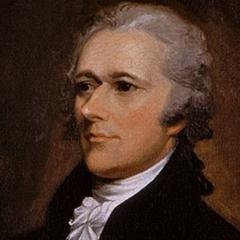
“The laws of Congress are restricted to a certain sphere, and when they depart from this sphere, they are no longer supreme or binding.”
Source: Selected writings and speeches of Alexander Hamilton
“The legislatures will have better means of information. They can discover the danger at a distance; and possessing all the organs of civil power, and the confidence of the people, they can at once adopt a regular plan of opposition, in which they can combine all the resources of the community. They can readily communicate with each other in the different States, and unite their common forces for the protection of their common liberty.”
Source: The Federalist Papers: A Collection of Essays Written in Favour of the New Constitution
“It has been observed, [that for the federal government] to coerce the States is one of the maddest projects that was ever devised.”
“[In the event of war, Americans would] resort for repose and security to institutions which have a tendency to destroy their civil and political rights. To be more safe they, at length, become willing to run the risk of being less free.”
Source: The Federalist Papers and the Constitution of the United States: The Principles of the American Government
“A struggle for liberty is in itself respectable and glorious. . . . When conducted with magnanimity, justice and humanity, it ought to command the admiration of every friend to human nature. But if sullied by crimes and extravagancies, it loses its respectability.”
Source: Citizen Hamilton: The Wit and Wisdom of an American Founder
“To watch the progress of such endeavors is the office of a free press. To give us early alarm and put us on our guard against encroachments of power. This then is a right of utmost importance, one for which, instead of yielding it up, we ought rather to spill our blood.”
Source: The Law Practice of Alexander Hamilton: Documents and Commentary
“The Liberty of the press consists in the right to publish with impunity truth with good motives for justifiable ends, though reflecting on government, magistracy, or individuals.”
Source: The Works of Alexander Hamilton: Political essays [etc., 1792-1804] Contents. Index
“The experience of past ages may inform us, that when the circumstances of a people render them distressed, their rulers generally recur to severe, cruel, and oppressive measures. Instead of endeavoring to establish their authority in the affection of their subjects, they think they have no security but in their fear.”
Source: The Works of Alexander Hamilton: Miscellanies, 1774-1789: A full vindication; The farmer refuted; Quebec bill; Resolutions in Congress; Letters from Phocion; New-York Legislature, etc
“The states have authority to interpret the Constitution, enforce it, and protect the people from violations of it by the federal government In the first place, there is not a syllable in the plan under consideration which directly empowers the national courts to construe the laws according to the spirit of the Constitution, or which gives them any greater latitude in this respect than may be claimed by the courts of every State.”
“Civil liberty is only natural liberty, modified and secured by the sanctions of civil society. It is not a thing, in its own nature, precarious and dependent on human will and caprice; but it is conformable to the constitution of man, as well as necessary to the well-being of society.”
Source: The Works of Alexander Hamilton: Miscellanies, 1774-1789: A full vindication; The farmer refuted; Quebec bill; Resolutions in Congress; Letters from Phocion; New-York Legislature, etc
“Has it been found that bodies of men act with more rectitude or greater disinterestedness than individuals? The contrary of this has been inferred by all accurate observers of the conduct of mankind; and the inference is founded upon obvious reasons. Regard to reputation has a less active influence, when the infamy of a bad action is to be divided among a number than when it is to fall singly upon one.”
Source: The Essential Federalist: A New Reading of the Federalist Papers
“If the end be clearly comprehended within any of the specified powers, and if the measure have an obvious relation to that end, and is not forbidden by any particular provision of the Constitution, it may safely be deemed to come within the compass of the national authority.”
“The origin of all civil government, justly established, must be a voluntary compact, between the rulers and the ruled; and must be liable to such limitations, as are necessary for the security of the absolute rights of the latter; for what original title can any man or set of men have, to govern others, except their own consent?”
Source: The Works of Alexander Hamilton: Miscellanies, 1774-1789: A full vindication; The farmer refuted; Quebec bill; Resolutions in Congress; Letters from Phocion; New-York Legislature, etc
“The changes in the human condition are uncertain and frequent. Many, on whom fortune has bestowed her favours, may trace their family to a more unprosperous station; and many who are now in obscurity, may look back upon the affluence and exalted rank of their ancestors.”
Source: Citizen Hamilton: The Wit and Wisdom of an American Founder
“If the exercise of power of internal taxation by the Union should be discovered on experiment to be really inconvenient, the federal government may then forbear the use of it . . .”
Source: The federalist papers
“The power of creating new funds upon new objects of taxation, by its own authority, would enable the national government to borrow as far as its necessities might require.”
Source: The Federalist Papers (Including Declaration of Independence & United States Constitution): Written by the Founding Fathers in Favor of the Constitution – Arguments that Created the Modern America
“A habit of labor in the people is as essential to the health and rigor of their minds and bodies as it is conducive to the welfare of the state.”
“[S]ound policy condemns the practice of accumulating debts.”
Source: Miscellanies, 1774-1789: A full vindication; The farmer refuted; Quebec bill; Resolutions in Congress; Letters from Phocion; New-York Legislature, etc
“Establish that a Government may decline a provision for its debts, though able to make it, and you overthrow all public morality, you unhinge all the principles that must preserve the limits of free constitutions.”
Source: Papers
“There can be no time, no state of things, in which Credit is not essential to a Nation.”
Source: Reports of the Secretary of the Treasury of the United States, Prepared in Obedience to the Act of the 10th May, 1800: ... to which are Prefixed, the Reports of Alexander Hamilton, on Public Credit, on a National Bank, on Manufactures, and on the Establishment of a Mint ... Printed by Order of the Senate of the United States
“But though a funded debt is not in the first instance, an absolute increase of Capital, or an augmentation of real wealth; yet by serving as a New power in the operation of industry, it has within certain bounds a tendency to increase the real wealth of a Community, in like manner as money borrowed by a thrifty farmer, to be laid out in the improvement of his farm may, in the end, add to his Stock of real riches.”
Source: The Political Economy of the American Revolution
“There are respectable individuals, who from a just aversion to an accumulation of Public debt, are unwilling to concede to it any kind of utility, who can discern no good to alleviate the ill with which they suppose it pregnant; who cannot be persuaded that it ought in any sense to be viewed as an increase of capital lest it should be inferred, that the more debt the more capital, the greater the burthens the greater the blessings of the community.”
Source: Report of the Secretary of the Treasury of the United States, on the Subject of Manufactures: Presented to the House of Representatives, December 5, 1791
“In a government framed for durable liberty, not less regard must be paid to giving the magistrate a proper degree of authority, to make and execute the laws with rigour, than to guarding against encroachments upon the rights of the community. As too much power leads to despotism, too little leads to anarchy, and both eventually to the ruin of the people.”
Source: 1779-1781
“If it be asked what is to restrain the House of Representatives from making legal discriminations in favor of themselves and a particular class of the society? I answer, the genius of the whole system, the nature of just and constitutional laws, and above all the vigilant and manly spirit which actuates the people of America, a spirit which nourishes freedom, and in return is nourished by it. If this spirit shall ever be so far debased as to tolerate a law not obligatory on the Legislature as well as on the people, the people will be prepared to tolerate anything but liberty.”
Source: The Federalist, on the New Constitution, Written in the Year 1788
“Nothing could be more ill-judged than that intolerant spirit which has, at all times, characterized political parties.”
Source: The federalist papers
“We are attempting, by this Constitution, to abolish factions, and to unite all parties for the general welfare.”
Source: Papers
“It is impossible not to bestow the imputation of deliberate imposture and deception upon the gross pretense of a similitude between a king of Great Britain and a magistrate of the character marked out for that of the President of the United States. It is still more impossible to withhold that imputation from the rash and barefaced expedients which have been employed to give success to the attempted imposition.”
“It has been frequently remarked, that it seems to have been reserved to the people of this country to decide, by their conduct and example, the important question, whether societies of men are really capable or not, of establishing good government from reflection and choice, or whether they are forever destined to depend, for their political constitutions, on accident and force.”
Source: The Works of Alexander Hamilton: Comprising His Most Important Official Reports: An Improved Edition of the Federalist, on the New Constitution, Written in 1788; and Pacificus, on the Proclamation of Neutrality, Written in 1793 ...
“The republican principle demands that the deliberate sense of the community should govern the conduct of those to whom they intrust the management of their affairs; but it does not require an unqualified complaisance to every sudden breeze of passion or to every transient impulse which the people may receive from the arts of men, who flatter their prejudices to betray their interests.”
Source: The Federalist Papers and the Constitution of the United States: The Principles of the American Government
“A powerful, victorious ally is yet another name for master.”
“The art of reading is to skip judiciously.”
“There are seasons in every country when noise and impudence pass current for worth; and in popular commotions especially, the clamors of interested and factious men are often mistaken for patriotism.”
Source: The Works of Alexander Hamilton: Miscellanies, 1774-1789: A full vindication; The farmer refuted; Quebec bill; Resolutions in Congress; Letters from Phocion; New-York Legislature, etc
“Men give me credit for some genius. All the genius I have lies in this; when I have a subject in hand, I study it profoundly. Day and night it is before me. My mind becomes pervaded with it. Then the effort that I have made is what people are pleased to call the fruit of genius. It is the fruit of labor and thought.”
“A nation which can prefer disgrace to danger is prepared for a master, and deserves one.”
Source: Citizen Hamilton: The Wit and Wisdom of an American Founder
“Give all the power to the many, they will oppress the few. Give all the power to the few, they will oppress the many.”
“The inquiry constantly is what will please, not what will benefit the people. In such a government there can be nothing but temporary expedient, fickleness, and folly.”
Source: Papers: Harold C. Syrett, Editor; Jacob E. Cooke, Associate Editor
“Hard words are very rarely useful. Real firmness is good for every thing. Strut is good for nothing.”
Source: Correspondence [contin.] 1795-1804; 1777; 1791. Letters of H.G. 1789. Address to public creditors. 1790. Vindication of funding system. 1791
“Safety from external danger is the most powerful director of national conduct. Even the ardent love of liberty will, after a time, give way to its dictates. The violent destruction of life and property incident to war, the continual effort and alarm attendant on a state of continual danger, will compel nations the most attached to liberty to resort for repose and security to institutions which have a tendency to destroy their civil and political rights. To be more safe, they at length become willing to run the risk of being less free.”
Source: The Federalist Papers: A Collection of Essays Written in Favour of the New Constitution
“To judge from the history of mankind, we shall be compelled to conclude, that the fiery and destructive passions of war, reign in the human breast, with much more powerful sway, than the mild and beneficent sentiments of peace.”
Source: The Federalist Papers: A Collection of Essays Written in Favour of the New Constitution
“It will be of little avail to the people, that the laws are made by men of their own choice, if the laws be so voluminous that they cannot be read, or so incoherent that they cannot be understood; if they be repealed or revised before they are promulgated, or undergo such incessant changes that no man, who knows what the law is to-day, can guess what it will be tomorrow.”
Source: The Essential Federalist: A New Reading of the Federalist Papers
“For my part, I sincerely esteem the Constitution, a system which without the finger of God, never could have been suggested and agreed upon by such a diversity of interests.”
“In a free government, the security for civil rights must be the same as that for religious rights. It consists in the one case in the multiplicity of interests, and in the other in the multiplicity of sects.”
Source: The Federalist, on the New Constitution, Written in the Year 1788
“Some reasonable term ought to be allowed to enable aliens to get rid of foreign and acquire American attachments; to learn the principles and imbibe the spirit of our government; and to admit of a probability at least, of their feeling a real interest in our affairs.”
Source: The works of Alexander Hamilton: containing his correspondence, and his political and official writings, exclusive of the Federalist, civil and military
“Let us recollect that peace or war will not always be left to our option; that however moderate or unambitious we may be, we cannot count upon the moderation, or hope to extinguish the ambition of others.”
Source: The Federalist
“A fondness for power is implanted in most men, and it is natural to abuse it when acquired.”
Source: The Works of Alexander Hamilton: Miscellanies, 1774-1789: A full vindication; The farmer refuted; Quebec bill; Resolutions in Congress; Letters from Phocion; New-York Legislature, etc
“Great Ambition, unchecked by principle, or the love of Glory, is an unruly Tyrant.”
Source: The Works of Alexander Hamilton: Correspondence [contin.] 1795-1804; 1777; 1791. Letters of H. G. 1789. Address to public creditors. 1790. Vindication of funding system. 1791
“There may be in every government a few choice spirits, who may act from more worthy motives. One great error is that we suppose mankind more honest than they are. Our prevailing passions are ambition and interest.”
Source: The Works of Alexander Hamilton
“Ambition without principle never was long under the guidance of good sense.”
Source: The Works of Alexander Hamilton: Correspondence [contin.] 1795-1804; 1777; 1791. Letters of H. G. 1789. Address to public creditors. 1790. Vindication of funding system. 1791
“It is a general principle of human nature, that a man will be interested in whatever he possesses, in proportion to the firmness or precariousness of the tenure by which he holds it.”
Source: The Federalist, on the new constitution, written in 1788, with an appendix, containing the letters of Pacificus and Helvidius on the proclamation of neutrality of 1793, also the original articles of confederation and the constitution of the United States
“Men are rather reasoning than reasonable animals for the most part governed by the impulse of passion.”
Source: The Works of Alexander Hamilton: Correspondence [contin.] 1795-1804; 1777; 1791. Letters of H.G. 1789. Address to public creditors. 1790. Vindication of funding system. 1791