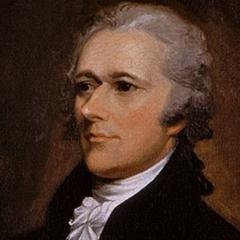
“Law is defined to be a rule of action; but how can that be a rule, which is little known and less fixed?”
Source: The Essential Federalist: A New Reading of the Federalist Papers
“It may be said that the power of preventing bad laws includes that of preventing good ones; and may be used to the one purpose as well as to the other. But this objection will have little weight with those who can properly estimate the mischiefs of that inconstancy and mutability in the laws, which form the greatest blemish in the character and genius of our governments.”
Source: The Federalist Papers: Alexander Hamilton, James Madison, John Jay
“The idea of governing at all times by the simple force of law (which we have been told is the only admissible principle of republican government) has no place but in the reveries of those political doctors whose sagacity disdains the admonitions of experimental instruction.”
Source: The Federalist Papers: A Collection of Essays Written in Favour of the New Constitution
“It is the Press which has corrupted our political morals - and it is to the Press we must look for the means of our political regeneration.”
“Wherever indeed a right of property is infringed for the general good, if the nature of the case admits of compensation, it ought to be made; but if compensation be impracticable, that impracticability ought to be an obstacle to a clearly essential reform.”
Source: Correspondence [contin.] 1795-1804; 1777; 1791. Letters of H.G. 1789. Address to public creditors. 1790. Vindication of funding system. 1791
“Let experience, the least fallible guide of human opinion, be appealed to for an answer to these inquiries.”
Source: The Essential Federalist: A New Reading of the Federalist Papers
“Those who have a tolerable knowledge of human nature will not stand in need of such lights.”
Source: The Federalist, on the New Constitution, Written in the Year 1788
“There was a time when we were told . . . that a sense of common interest would preside over the conduct of the respective members...This language at the present day would appear as wild as that great part of what we now hear from the same quarter will be thought, when we shall have received further lessons from that best oracle of wisdom, experience.”
“Hitherto my observations have only aimed at a vindication of the provision in question, on the ground of theoretic propriety . . . . But there remains to be mentioned a positive advantage . . . I allude to the circumstance of uniformity in the time of elections for the House of Representatives. It is more than possible, that this uniformity may be found by experience to be of great importance to the public welfare; both as a security against the perpetuation of the same spirit in the body; and as a cure for the diseases of faction.”
“The regular distribution of power into distinct departments; the introduction of legislative balances and checks; the institution of courts composed of judges holding their offices during good behavior; the representation of the people in the legislature by deputies of their own election . . . They are means, and powerful means, by which the excellences of republican government may be retained and its imperfections lessened or avoided.”
Source: The Essential Federalist: A New Reading of the Federalist Papers
“Good constitutions are formed upon a comparison of the liberty of the individual with the strength of government: If the tone of either be too high, the other will be weakened too much. It is the happiest possible mode of conciliating these objects, to institute one branch peculiarly endowed with sensibility, another with knowledge and firmness. Through the opposition and mutual control of these bodies, the government will reach, in its regular operations, the perfect balance between liberty and power.”
Source: The Political Writings of Alexander Hamilton:
“But as the plan of the convention aims only at a partial union or consolidation, the State governments would clearly retain all the rights of sovereignty which they before had, and which were not, by that act, EXCLUSIVELY delegated to the United States.”
Source: The Federalist, on the New Constitution, Written in the Year 1788
“It is one thing to be subordinate to the laws, and another [for the Executive] to be dependent on the legislative body. The first comports with, the last violates, the fundamental principles of good government; and, whatever may be the forms of the Constitution, unites all power in the same hands.”
Source: The Federalist on the New Constitution
“The same rule that teaches the propriety of a partition between the various branches of power, teaches us likewise that this partition ought to be so contrived as to render the one independent of the other.”
Source: The Fœderalist: A Collection of Essays, Written in Favor of the New Constitution, as Agreed Upon by the Fœderal Convention, September 17, 1787. Reprinted from the Original Text. With an Historical Introduction and Notes
“There are men who could neither be distressed nor won into a sacrifice of their duty; but this stern virtue is the growth of few soils: And in the main it will be found, that a power over a man's support is a power over his will.”
Source: The Federalist on the New Constitution
“Such a wife as I want... must be young, handsome I lay most stress upon a good shape, sensible a little learning will do, well-bread, chaste, and tender. As to religion, a moderate stock will satisfy me. She must believe in God and hate a saint.”
“People sometimes attribute my success to my genius; all the genius I know anything about is hard work.”
“The complete independence of the courts of justice is peculiarly essential in a limited Constitution. By a limited Constitution, I understand one which contains certain specified exceptions to the legislative authority. Limitations of this kind can be preserved in practice no other way than through the medium of courts of justice, whose duty it must be to declare all acts contrary to the manifest tenor of the Constitution void. Without this, all the reservations of particular rights or privileges would amount to nothing.”
“To all general purposes we have uniformly been one people each individual citizen everywhere enjoying the same national rights, privileges, and protection.”
Source: The Federalist Papers: A Collection of Essays Written in Favour of the New Constitution
“Divide et impera must be the motto of every nation that either hates or fears us.”
Source: The federalist papers
“It is of the nature of war to increase the executive at the expense of the legislative authority.”
Source: The federalist papers
“Schemes to subvert the liberties of a great community require time to mature them for execution.”
Source: The federalist papers
“The only constitutional exception to the power of making treaties is, that it shall not change the Constitution.… On natural principles, a treaty, which should manifestly betray or sacrifice primary interests of the state, would be null.”
“There is no position which depends on clearer principles than that every act of a delegated authority, contrary to the commission under which it is exercised, is void. No legislative act, therefore, contrary to the Constitution, can be valid.”
Source: The federalist papers
“When a government betrays the people by amassing too much power and becoming tyrannical, the people have no choice but to exercise their original right of self-defense — to fight the government.”
“The Christian Constitutional Society, its object is first: The support of the Christian religion. Second: The support of the United States.”
“I have a tender reliance on the mercy of the Almighty, through the merits of the Lord Jesus Christ. I am a sinner. I look to Him for mercy; pray for me.”
“The true principle of a republic is that the people should choose whom they please to govern them. Representation is imperfect, in proportion as the current of popular favor is checked. The great source of free government, popular election, should be perfectly pure, and the most unbounded liberty allowed.”
Source: The works of Alexander Hamilton: comprising his correspondence, and his political and official writings, exclusive of the Federalist, civil and military. Published from the original manuscripts deposited in the Department of State, by order of the Joint Library Committee of Congress
“That instability is inherent in the nature of popular governments, I think very disputable … A representative democracy, where the right of election is well secured and regulated & the exercise of the legislature, executive, and judiciary authorities, is vested in select persons, chosen really and not nominally by the people, will in my opinion be most likely to be happy, regular and durable.”
“The injury which may possibly be done by defeating a few good laws, will be amply compensated by the advantage of preventing a number of bad ones.”
Source: The Works of Alexander Hamilton: Comprising His Most Important Official Reports: An Improved Edition of the Federalist, on the New Constitution, Written in 1788; and Pacificus, on the Proclamation of Neutrality, Written in 1793 ...
“Experience is the oracle of truth; and where its responses are unequivocal, they ought to be conclusive and sacred.”
Source: The Federalist, on the new constitution, written in 1788, with an appendix, containing the letters of Pacificus and Helvidius on the proclamation of neutrality of 1793, also the original articles of confederation and the constitution of the United States
“To cherish and stimulate the activity of the human mind, by multiplying the objects of enterprise, is not among the least considerable of the expedients, by which the wealth of a nation may be promoted.”
Source: Reports of the Secretary of the Treasury of the United States, Prepared in Obedience to the Act of the 10th May, 1800: ... to which are Prefixed, the Reports of Alexander Hamilton, on Public Credit, on a National Bank, on Manufactures, and on the Establishment of a Mint ... Printed by Order of the Senate of the United States
“This process of election affords a moral certainty that the office of President will seldom fall to the lot of any many who is not in an eminent degree endowed with the requisite qualifications.”
Source: The Federalist: A Commentary on the Constitution of the United States : a Collection of Essays
“A feeble executive implies a feeble execution of the government. A feeble execution is but another phrase for a bad execution; and a government ill executed, whatever may be its theory, must be, in practice, a bad government.”
Source: The federalist papers
“The praise of a civilized world is justly due to Christianity;—war, by the influence of the humane principles of that religion, has been stripped of half its horrors. The French renounce Christianity, and they relapse into barbarism;—war resumes the same hideous and savage form which it wore in the ages of Gothic and Roman violence.”
Source: The Works of Alexander Hamilton
“Americans rouse - be unanimous, be virtuous, be firm, exert your courage, trust in Heaven, and nobly defy the enemies both of God and man!”
Source: The works of Alexander Hamilton: containing his correspondence, and his political and official writings, exclusive of the Federalist, civil and military
“There are some who maintain that trade will regulate itself, and it is not to be benefited by the encouragements or restraints of government. Such persons will imagine that there is no need of a common directing power. This is one of those wild speculative paradoxes, which have grown into credit among us, contrary to the uniform practice and sense of the most enlightened nations.”
Source: The Federalist: A Commentary on the Constitution of the United States : a Collection of Essays
“Opinion, whether well or ill-founded, is the governing principle of human affairs”
Source: Citizen Hamilton: The Wit and Wisdom of an American Founder
“As to religion a moderate stock will satisfy me. She must believe in god and hate a saint.”
Source: Alexander Hamilton: Lapham's Quarterly - Special Issue
“Now, mark my words. So long as we are a young and virtuous people, this instument will bind us together in mutual interests, mutual welfare, and mutual happiness. But when we become old and corrupt, it will bind no longer.”
“Money is, with propriety, considered as the vital principle of the body politic; as that which sustains its life and motion, and enables it to perform its most essential functions.”
Source: The Essential Federalist: A New Reading of the Federalist Papers
“This [a state militia system] appears to me the only substitute that can be devised for a standing army, and the best possible security against it, if it should exist.”
Source: History of the Republic of the United States of America: As Traced in the Writings of Alexander Hamilton and of His Contemporaries
“Learn to think continentally.”
“As riches increase and accumulate in few hands . . . the tendency of things will be to depart from the republican standard.”
Source: Jeffersonian principles and Hamiltonian principles: extracts from the writings of Thomas Jefferson and Alexander Hamilton
“The President, and government, will only control the militia when a part of them is in the actual service of the federal government, else, they are independent and not under the command of the president or the government. The states would control the militia, only when called out into the service of the state, and then the governor would be commander in chief where enumerated in the respective state constitution.”
“The militia is a voluntary force not associated or under the control of the States except when called out; [ when called into actual service] a permanent or long standing force would be entirely different in make-up and call.”
“Perhaps myself the first, at some expense of popularity, to unfold the true character of Jefferson, it is too late for me to become his apologist. Nor can I have any disposition to do it. I admit that his politics are tinctured with fanaticism, that he is too much in earnest in his democracy, that he has been a mischievous enemy to the principle measures of our past administration, that he is crafty & persevering in his objects, that he is not scrupulous about the means of success, nor very mindful of truth, and that he is a contemptible hypocrite.”
Source: Correspondence [contin.] 1795-1804; 1777; 1791. Letters of H.G. 1789. Address to public creditors. 1790. Vindication of funding system. 1791
“If the Constitution is adopted (and it was) the Union will be in fact and in theory an association of States or a Confederacy.”
“Those who do not industrialize become hewers of wood and hawkers of water”
“The natural cure for an ill-administration, in a popular or representative constitution, is a change of men.”
Source: The Federalist, on the new constitution, written in 1788, with an appendix, containing the letters of Pacificus and Helvidius on the proclamation of neutrality of 1793, also the original articles of confederation and the constitution of the United States