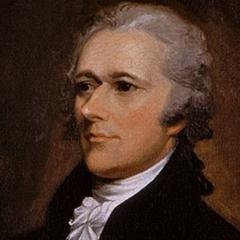
“The attributes of sovereignty are now enjoyed by every state in the Union.”
“I should esteem it the extreme of imprudence to prolong the precarious state of our national affairs, and to expose the Union to the jeopardy of successive experiments, in the chimerical pursuit of a perfect plan. I never expect to see a perfect work from imperfect man. The result of the deliberations of all collective bodies must necessarily be a compound, as well of the errors and prejudices, as of the good sense and wisdom, of the individuals of whom they are composed.”
Source: The federalist papers
“A share in the sovereignty of the state, which is exercised by the citizens at large, in voting at elections is one of the most important rights of the subject, and in a republic ought to stand foremost in the estimation of the law...That portion of the sovereignty, to which each individual is entitled, can never be too highly prized. It is that for which we have fought and bled.”
“The legislatures will have better means of information. They can discover the danger at a distance; and possessing all the organs of civil power, and the confidence of the people, they can at once adopt a regular plan of opposition, in which they can combine all the resources of the community. They can readily communicate with each other in the different States, and unite their common forces for the protection of their common liberty.”
Source: The Federalist Papers: A Collection of Essays Written in Favour of the New Constitution
“It has been observed, [that for the federal government] to coerce the States is one of the maddest projects that was ever devised.”
“The states have authority to interpret the Constitution, enforce it, and protect the people from violations of it by the federal government In the first place, there is not a syllable in the plan under consideration which directly empowers the national courts to construe the laws according to the spirit of the Constitution, or which gives them any greater latitude in this respect than may be claimed by the courts of every State.”
“A habit of labor in the people is as essential to the health and rigor of their minds and bodies as it is conducive to the welfare of the state.”
“There can be no time, no state of things, in which Credit is not essential to a Nation.”
Source: Reports of the Secretary of the Treasury of the United States, Prepared in Obedience to the Act of the 10th May, 1800: ... to which are Prefixed, the Reports of Alexander Hamilton, on Public Credit, on a National Bank, on Manufactures, and on the Establishment of a Mint ... Printed by Order of the Senate of the United States
“It is impossible not to bestow the imputation of deliberate imposture and deception upon the gross pretense of a similitude between a king of Great Britain and a magistrate of the character marked out for that of the President of the United States. It is still more impossible to withhold that imputation from the rash and barefaced expedients which have been employed to give success to the attempted imposition.”
“Safety from external danger is the most powerful director of national conduct. Even the ardent love of liberty will, after a time, give way to its dictates. The violent destruction of life and property incident to war, the continual effort and alarm attendant on a state of continual danger, will compel nations the most attached to liberty to resort for repose and security to institutions which have a tendency to destroy their civil and political rights. To be more safe, they at length become willing to run the risk of being less free.”
Source: The Federalist Papers: A Collection of Essays Written in Favour of the New Constitution
“The same state of the passions which fits the multitude, who have not a sufficient stock of reason and knowledge to guide them, for opposition to tyranny and oppression, very naturally leads them to a contempt and disregard of all authority.”
Source: Citizen Hamilton: The Wit and Wisdom of an American Founder
“Hence, in a state of nature, no man had any moral power to deprive another of his life, limbs, property, or liberty; nor the least authority to command or exact obedience from him, except that which arose from the ties of consanguinity.”
Source: The Official and Other Papers ...
“The only distinction between freedom and slavery consists in this: In the former state a man is governed by the laws to which he has given his consent, either in person or by his representative; in the latter, he is governed by the will of another. In the one case, his life and property are his own; in the other, they depend upon the pleasure of his master. It is easy to discern which of these two states is preferable.”
Source: The Official and Other Papers ...
“The laws of certain states . . . give an ownership in the service of Negroes as personal property . . . . But being men, by the laws of God and nature, they were capable of acquiring liberty - and when the captor in war . . . thought fit to give them liberty, the gift was not only valid, but irrevocable.”
“It is impossible to read the history of the petty republics of Greece and Italy without feeling sensations of horror and disgust at the distractions with which they were continually agitated, and at the rapid succession of revolutions by which they were kept in a state of perpetual vibration between the extremes of tyranny and anarchy . . . great improvement . . . were either not known at all, or imperfectly known to the ancients.”
“As riches increase and accumulate in few hands, as luxury prevails in society, virtue will be in a greater degree considered as only a graceful appendage of wealth, and the tendency of things will be to depart from the republican standard. This is the real disposition of human nature; it is what neither the honorable member nor myself can correct. It is a common misfortunate that awaits our State constitution, as well as all others.”
Source: The Works of Alexander Hamilton: Miscellanies, 1774-1789: A full vindication; The farmer refuted; Quebec bill; Resolutions in Congress; Letters from Phocion; New-York Legislature, etc
“The history of human conduct does not warrant that exalted opinion of human virtue which would make it wise in a nation to commit interests of so delicate and momentous a kind as those which concern its intercourse with the rest of the world, to the sole disposal of a magistrate, created and circumstanced, as would be a president of the United States.”
Source: The Federalist on the New Constitution
“What plan for the regulation of the militia may be pursued by the national government is impossible to be foreseen...The project of disciplining all the militia of the United States is as futile as it would be injurious if it were capable of being carried into execution... Little more can reasonably be aimed at with the respect to the people at large than to have them properly armed and equipped ; and in order to see that this be not neglected, it will be necessary to assemble them once or twice in the course of a year.”
“After an unequivocal experience of the inefficacy of the subsisting federal government, you are called upon to deliberate on a new Constitution for the United States of America.”
Source: The federalist papers
“While the constitution continues to be read, and its principles known, the states, must, by every rational man, be considered as essential component parts of the union; and therefore the idea of sacrificing the former to the latter is totally inadmissible.”
Source: The Works of Alexander Hamilton: Miscellanies, 1774-1789: A full vindication; The farmer refuted; Quebec bill; Resolutions in Congress; Letters from Phocion; New-York Legislature, etc
“This balance between the National and State governments ought to be dwelt on with peculiar attention, as it is of the utmost importance. It forms a double security to the people. If one encroaches on their rights they will find a powerful protection in the other. Indeed, they will both be prevented from overpassing their constitutional limits by a certain rivalship, which will ever subsist between them.”
Source: The Works of Alexander Hamilton: Miscellanies, 1774-1789: A full vindication; The farmer refuted; Quebec bill; Resolutions in Congress; Letters from Phocion; New-York Legislature, etc
“The State governments possess inherent advantages, which will ever give them an influence and ascendancy over the National Government, and will for ever preclude the possibility of federal encroachments. That their liberties, indeed, can be subverted by the federal head, is repugnant to every rule of political calculation.”
Source: The Works of Alexander Hamilton: Miscellanies, 1774-1789: A full vindication; The farmer refuted; Quebec bill; Resolutions in Congress; Letters from Phocion; New-York Legislature, etc
“The local interest of a State ought in every case to give way to the interests of the Union. For when a sacrifice of one or the other is necessary, the former becomes only an apparent, partial interest, and should yield, on the principle that the smaller good ought never to oppose the greater good.”
Source: The works of Alexander Hamilton: comprising his correspondence, and his political and official writings, exclusive of the Federalist, civil and military. Published from the original manuscripts deposited in the Department of State, by order of the Joint Library Committee of Congress
“The proposed Constitution, so far from implying an abolition of the State governments, makes them constituent parts of the national sovereignty, by allowing them a direct representation in the Senate, and leaves in their possession certain exclusive and very important portions of sovereign power. This fully corresponds, in every rational import of the terms, with the idea of a federal government.”
Source: The Essential Federalist: A New Reading of the Federalist Papers
“There is one transcendant advantage belonging to the province of the State governments . . . -I mean the ordinary administration of criminal and civil justice.”
“I confess I am at a loss to discover what temptation the persons entrusted with the administration of the general government could ever feel to divest the States of the authorities of that description. The regulation of the mere domestic police of a State appears to me to hold out slender allurements to ambition.”
Source: The Federalist, on the new constitution, written in 1788, with an appendix, containing the letters of Pacificus and Helvidius on the proclamation of neutrality of 1793, also the original articles of confederation and the constitution of the United States
“The administration of private justice between the citizens of the same state, the supervision of agriculture and of other concerns of a similar nature, all those things in short which are proper to be provided for by local legislation, can never be desirable cares of a general jurisdiction . . . the attempt to exercise these powers would be as troublesome as it would be nugatory; and the possession of them, for that reason, would contribute nothing to the dignity, to the importance, or to the splendour of the national government.”
“The Convention probably foresaw what it has been a principal aim of these papers to inculcate that the danger which most threatens our political welfare is, that the state governments will finally sap the foundations of the Union.”
Source: The federalist papers
“It will be well to advert to the proportion between the objects that will require a federal provision in respect to revenue; and those which will require a state provision. We shall discover that the former are altogether unlimited; and that the latter are circumscribed within very moderate bounds.”
Source: The Federalist Papers: A Collection of Essays Written in Favour of the New Constitution
“Nothing can be more evident, than that an exclusive power of regulating elections for the National Government, in the hands of the State Legislatures, would leave the existence of the Union entirely at their mercy . . . . It is to little purpose to say that a neglect or omission of this kind [not letting the feds have elections], would be unlikely to take place. The constitutional possibility of the thing, without an equivalent for the risk, is an unanswerable objection.”
“The scheme of separate confederacies, which will always multiply the chances of ambition, will be a never failing bait to all such influential characters in the State administrations as are capable of preferring their own emolument and advancement to the public weal.”
Source: The Federalist: With Letters of Brutus
“If the maintenance of public credit, then, be truly important, the next enquiry which suggests itself is, by what means it is to be effected? The ready answer to which question is, by good faith, by a punctual performance of contracts. States, like individuals, who observe their engagements, are respected and trusted: while the reverse is the fate of those who pursue an opposite conduct.”
Source: The Political Economy of the American Revolution
“It is presumable that no country will be able to borrow of foreigners upon better terms than the United States, because none can, perhaps, afford so good security.”
Source: Reports of the Secretary of the Treasury of the United States, Prepared in Obedience to the Act of the 10th May, 1800: ... to which are Prefixed, the Reports of Alexander Hamilton, on Public Credit, on a National Bank, on Manufactures, and on the Establishment of a Mint ... Printed by Order of the Senate of the United States
“It is of the greatest consequence that the debt should, with the consent of the creditors, be remoulded into such a shape as will bring the expenditure of the nation to a level with its income. Till this shall be accomplished, the finances of the United States will never wear a proper countenance. Arrears of interest, continually accruing, will be as continual a monument, either of inability, or of ill faith and will not cease to have an evil influence on public credit.”
“Industry is increased, commodities are multiplied, agriculture and manufacturers flourish: and herein consists the true wealth and prosperity of a state.”
Source: The works of Alexander Hamilton: comprising his correspondence, and his political and official writings, exclusive of the federalist, civil and military
“The tendency of a national bank is to increase public and private credit. The former gives power to the state, for the protection of its rights and interests: and the latter facilitates and extends the operations of commerce among individuals. Industry is increased, commodities are multiplied, agriculture and manufacturers flourish: and herein consists the true wealth and prosperity of a state.”
Source: The works of Alexander Hamilton: comprising his correspondence, and his political and official writings, exclusive of the federalist, civil and military
“The Spirit of Enterprise, which characterizes the commercial part of America, has left no occasion of displaying itself unimproved. It is not at all probable that this unbridled spirit would pay much respect to those regulations of trade by which particular States might endeavor to secure exclusive benefits to their own citizens.”
Source: The Fœderalist: A Collection of Essays, Written in Favor of the New Constitution, as Agreed Upon by the Fœderal Convention, September 17, 1787. Reprinted from the Original Text. With an Historical Introduction and Notes
“There are still to be found visionary or designing men, who stand ready to advocate the paradox of perpetual peace between the states, though dismembered and alienated from each other.... The genius of republics, say they, is pacific; the spirit of commerce has a tendency to soften the manners of men, and to extinguish those inflammable humours which have so often kindled into wars. Commercial republics, like ours, will never be disposed to waste themselves in ruinous contentions with each other. They will be governed by mutual interest, and will cultivate a spirit of mutual amity and concord.”
“It is by far the safer course to lay [considerations of the future] altogether aside; and to confine our attention wholly to the nature and extent of the powers as they are delineated in the constitution. Everything beyond this, must be left to the prudence and firmness of the people; who, as they will hold the scales in their own hands, it is to be hoped, will always take care to preserve the constitutional equilibrium between the General and State governments.”
“Would they not fear that citizens not less tenacious than conscious of their rights would flock from the remotest extremes of their respective states to the places of election, to overthrow their tyrants, and to substitute men who would be disposed to avenge the violated majesty of the people?”
Source: The Federalist: With Letters of Brutus
“If we are in earnest about giving the Union energy and duration we must abandon the vain project of legislating upon the States in their collective capacities.”
Source: The Federalist, on the new constitution, written in 1788, with an appendix, containing the letters of Pacificus and Helvidius on the proclamation of neutrality of 1793, also the original articles of confederation and the constitution of the United States
“It is evident from the state of the country, from the habits of the people, from the experience we have had on the point itself, that it is impracticable to raise any very considerable sums by direct taxation.”
Source: The Federalist, on the New Constitution, Written in 1788
“States, like individuals, who observe their engagements, are respected and trusted: while the reverse is the fate of those who pursue an opposite conduct.”
Source: Reports of the secretary of the Treasury of the United States
“Let Americans disdain to be the instruments of European greatness! Let the thirteen States, bound together in a strict and indissoluble Union, concur in erecting one great American system, superior to the control of all transatlantic force or influence, and able to dictate the terms of the connection between the old and the new world!”
“The treaties of the United States, to have any force at all, must be considered as part of the law of the land.”
Source: The Federalist, on the new constitution, written in 1788, with an appendix, containing the letters of Pacificus and Helvidius on the proclamation of neutrality of 1793, also the original articles of confederation and the constitution of the United States
“Though a wide ocean separates the United States from Europe, yet there are various considerations that warn us against an excess of confidence or security.”
Source: The Federalist, on the new constitution, written in 1788, with an appendix, containing the letters of Pacificus and Helvidius on the proclamation of neutrality of 1793, also the original articles of confederation and the constitution of the United States
“The principal purposes to be answered by union are these the common defense of the members; the preservation of the public peace as well against internal convulsions as external attacks; the regulation of commerce with other nations and between the States; the superintendence of our intercourse, political and commercial, with foreign countries.”
Source: The Federalist Papers: A Collection of Essays Written in Favour of the New Constitution
“The reasonableness of the agency of the national courts in cases in which the state tribunals cannot be supposed to be impartial, speaks for itself. No man ought certainly to be a judge in his own cause, or in any cause in respect to which he has the least interest or bias.”
Source: The Federalist
“But as the plan of the convention aims only at a partial union or consolidation, the State governments would clearly retain all the rights of sovereignty which they before had, and which were not, by that act, EXCLUSIVELY delegated to the United States.”
Source: The Federalist, on the New Constitution, Written in the Year 1788
“The only constitutional exception to the power of making treaties is, that it shall not change the Constitution.… On natural principles, a treaty, which should manifestly betray or sacrifice primary interests of the state, would be null.”