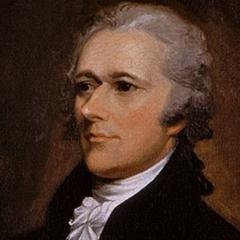
“Take mankind as they are, and what are they governed by? Their passions.”
Source: Jan. 1787-May 1788.-v. 5.June 1778-Nov. 1789.-v. 6. Dec. 1789-Aug. 1790
“The passions of a revolution are apt to hurry even good men into excesses.”
Source: Papers
“Has it not. . . invariably been found that momentary passions, and immediate interests, have a more active and imperious control over human conduct than general or remote considerations of policy, utility and justice?”
Source: The Federalist, on the New Constitution, Written in the Year 1788
“The same state of the passions which fits the multitude, who have not a sufficient stock of reason and knowledge to guide them, for opposition to tyranny and oppression, very naturally leads them to a contempt and disregard of all authority.”
Source: Citizen Hamilton: The Wit and Wisdom of an American Founder
“Take mankind in general, they are vicious-their passions may be operated upon.”
Source: Jan.1787-May 1788
“A fondness for power is implanted in most men, and it is natural to abuse it when acquired. This maxim, drawn from the experience of all ages, makes it the height of folly to intrust any set of men with power which is not under every possible control; perpetual strides are made after more as long as there is any part withheld.”
Source: The Works of Alexander Hamilton: Miscellanies, 1774-1789: A full vindication; The farmer refuted; Quebec bill; Resolutions in Congress; Letters from Phocion; New-York Legislature, etc
“It is a general principle of human nature, that a man will be interested in whatever he possesses, in proportion to the firmness or precariousness of the tenure by which he holds it; will be less attached to what he holds by a momentary or uncertain title, than to what he enjoys by a durable or certain title; and, of course, will be willing to risk more for the sake of the one, than for the sake of the other.”
Source: The Federalist: On the New Constitution
“Men are rather reasoning than reasonable animals for the most part governed by the impulse of passion. This is a truth well understood by our adversaries who have practised upon it with no small benefit to their cause. For at the very moment they are eulogizing the reason of men & professing to appeal only to that faculty, they are courting the strongest & most active passion of the human heart - VANITY!”
Source: The Works of Alexander Hamilton: Correspondence [contin.] 1795-1804; 1777; 1791. Letters of H.G. 1789. Address to public creditors. 1790. Vindication of funding system. 1791
“In all general questions which become the subjects of discussion, there are always some truths mixed with falsehoods. I confess, there is danger where men are capable of holding two offices. Take mankind in general, they are vicious, their passions may be operated upon. We have been taught to reprobate the danger of influence in the British government, without duly reflecting how far it was necessary to support a good government. We have taken up many ideas upon trust, and at last, pleased with our own opinions, establish them as undoubted truths.”
“I would die to preserve the law upon a solid foundation; but take away liberty, and the foundation is destroyed.”
Source: The Works of Alexander Hamilton: Miscellanies, 1774-1789: A full vindication; The farmer refuted; Quebec bill; Resolutions in Congress; Letters from Phocion; New-York Legislature, etc
“We are now forming a republican government. Real liberty is never found in despotism or the extremes of democracy, but in moderate governments.”
Source: Jeffersonian principles and Hamiltonian principles: extracts from the writings of Thomas Jefferson and Alexander Hamilton
“Government is frequently and aptly classed under two descriptions-a government of force, and a government of laws; the first is the definition of despotism-the last, of liberty.”
Source: The works of Alexander Hamilton: comprising his correspondence, and his political and official writings, exclusive of the Federalist, civil and military. Published from the original manuscripts deposited in the Department of State, by order of the Joint Library Committee of Congress
“Civil liberty is only natural liberty, modified and secured by the sanctions of civil society.”
Source: The Works of Alexander Hamilton: Miscellanies, 1774-1789: A full vindication; The farmer refuted; Quebec bill; Resolutions in Congress; Letters from Phocion; New-York Legislature, etc
“[V]igor of government is essential to the security of liberty.”
Source: The Fœderalist: A Collection of Essays, Written in Favor of the New Constitution, as Agreed Upon by the Fœderal Convention, September 17, 1787. Reprinted from the Original Text. With an Historical Introduction and Notes
“Safety from external danger is the most powerful director of national conduct. To be more safe, [nations] at length become willing to run the risk of being less free.”
Source: The Federalist, on the New Constitution, Written in the Year 1788
“[If you understood the natural rights of mankind,] [y]ou would be convinced that natural liberty is a gift of the beneficent Creator to the whole human race, and that civil liberty is founded in that, and cannot be wrested from any people without the most manifest violation of justice.”
“Remember civil and religious liberty always go together: if the foundation of the one be sapped, the other will fall of course.”
Source: The Official and Other Papers ...
“No man in his senses can hesitate in choosing to be free, rather than a slave.”
Source: The Works of Alexander Hamilton: Miscellanies, 1774-1789: A full vindication; The farmer refuted; Quebec bill; Resolutions in Congress; Letters from Phocion; New-York Legislature, etc
“Hence, in a state of nature, no man had any moral power to deprive another of his life, limbs, property, or liberty; nor the least authority to command or exact obedience from him, except that which arose from the ties of consanguinity.”
Source: The Official and Other Papers ...
“No person that has enjoyed the sweets of liberty can be insensible of its infinite value, or can reflect on its reverse without horror and detestation”
Source: The Works of Alexander Hamilton: Miscellanies, 1774-1789: A full vindication; The farmer refuted; Quebec bill; Resolutions in Congress; Letters from Phocion; New-York Legislature, etc
“The only distinction between freedom and slavery consists in this: In the former state a man is governed by the laws to which he has given his consent, either in person or by his representative; in the latter, he is governed by the will of another. In the one case, his life and property are his own; in the other, they depend upon the pleasure of his master. It is easy to discern which of these two states is preferable.”
Source: The Official and Other Papers ...
“That Americans are entitled to freedom is incontestable on every rational principle. All men have one common original: they participate in one common nature, and consequently have one common right. No reason can be assigned why one man should exercise any power or preeminence over his fellow-creatures more than another; unless they have voluntarily vested him with it.”
Source: The works of Alexander Hamilton: comprising his correspondence, and his political and official writings, exclusive of the Federalist, civil and military. Published from the original manuscripts deposited in the Department of State, by order of the Joint Library Committee of Congress
“Were not the disadvantages of slavery too obvious to stand in need of it, I might enumerate and describe the tedious train of calamities inseparable from it. I might show that it is fatal to religion and morality; that it tends to debase the mind, and corrupt its noblest springs of action. I might show that it relaxes the sinews of industry, clips the wings of commerce, and introduces misery and indigence in every shape.”
Source: The works of Alexander Hamilton: comprising his correspondence, and his political and official writings, exclusive of the Federalist, civil and military. Published from the original manuscripts deposited in the Department of State, by order of the Joint Library Committee of Congress
“Energy in the executive is a leading character in the definition of good government. It is essential to the protection of the community against foreign attacks; it is not less essential to the steady administration of the laws; to the protection of property against those irregular and high-handed combinations which sometimes interrupt the ordinary course of justice; to the security of liberty against the enterprises and assaults of ambition, of faction, and of anarchy.”
Source: The Essential Federalist: A New Reading of the Federalist Papers
“It equally proves, that though individual oppression may now and then proceed from the courts of justice, the general liberty of the people can never be endangered from that quarter; I mean so long as the judiciary remains truly distinct from both the legislature and the Executive. For I agree, that "there is no liberty, if the power of judging be not separated from the legislative and executive powers." And it proves, in the last place, that as liberty can have nothing to fear from the judiciary alone, but would have every thing to fear from its union with either of the other departments.”
Source: The Federalist Papers: A Collection of Essays Written in Favour of the New Constitution
“The idea of restraining the legislative authority, in the means of providing for the national defense, is one of those refinements which owe their origin to a zeal for liberty more ardent than enlightened.”
Source: The Federalist Papers and the Constitution of the United States: The Principles of the American Government
“The citizens of America have too much discernment to be argued into anarchy. And I am much mistaken, if experience has not wrought a deep and solemn conviction in the public mind, that greater energy of government is essential to the welfare and prosperity of the community”
Source: The federalist papers
“Were it not that it might require too long a discussion, it would not be difficult to demonstrate that a large and well-organized republic can scarcely lose its liberty from any other cause than that of anarchy, to which a contempt of the laws is the high-road.”
Source: The works of Alexander Hamilton: comprising his correspondence, and his political and official writings, exclusive of the Federalist, civil and military. Published from the original manuscripts deposited in the Department of State, by order of the Joint Library Committee of Congress
“Give me the steady, uniform, unshaken security of constitutional freedom. Give me the right to be tried by a jury of my own neighbors, and to be taxed by my own representatives only. What will become of the law and courts of justice without this? The shadow may remain, but the substance will be gone. I would die to preserve the law upon a solid foundation; but take away liberty, and the foundation is destroyed.”
“In testimony of their Respect For The Patriot of incorruptible Integrity, The Soldier of approved Valour The Statesman of consummate Wisdom; Whose Talents and Virtues will be admired By Grateful Posterity Long after this Marble shall have mouldered into Dust.”
“I have carefully examined the evidences of the Christian religion, and if I was sitting as a juror upon its authenticity I would unhesitatingly give my verdict in its favor. I can prove its truth as clearly as any proposition ever submitted to the mind of man.”
“A government ought to contain in itself every power requisite to the full accomplishment of the objects committed to its care, and to the complete execution of the trusts for which it is responsible, free from every other control but a regard to the public good and to the sense of the people.”
Source: The federalist papers
“One great error is that we suppose mankind more honest than they are.”
“We must make the best of those ills which cannot be avoided.”
“The institution of delegated power implies that there is a portion of virtue and honor among mankind which may be a reasonable foundation of confidence.”
Source: The Essential Federalist: A New Reading of the Federalist Papers
“The laws of certain states . . . give an ownership in the service of Negroes as personal property . . . . But being men, by the laws of God and nature, they were capable of acquiring liberty - and when the captor in war . . . thought fit to give them liberty, the gift was not only valid, but irrevocable.”
“Experience teaches, that men are often so much governed by what they are accustomed to see and practice, that the simplest and most obvious improvements . . . are adopted with hesitation, reluctance, and slow gradations.”
Source: Citizen Hamilton: The Wit and Wisdom of an American Founder
“It is impossible to read the history of the petty republics of Greece and Italy without feeling sensations of horror and disgust at the distractions with which they were continually agitated, and at the rapid succession of revolutions by which they were kept in a state of perpetual vibration between the extremes of tyranny and anarchy . . . great improvement . . . were either not known at all, or imperfectly known to the ancients.”
“Laws are a dead letter without courts to expound and define their true meaning and operation.”
“The best we can hope for concerning the people at large is that they be properly armed.”
“...that standing army can never be formidable (threatening) to the liberties of the people, while there is a large body of citizens, little if at all inferior to them in the use of arms.”
“To model our political system upon speculations of lasting tranquility, is to calculate on the weaker springs of the human character.”
“As riches increase and accumulate in few hands, as luxury prevails in society, virtue will be in a greater degree considered as only a graceful appendage of wealth, and the tendency of things will be to depart from the republican standard. This is the real disposition of human nature; it is what neither the honorable member nor myself can correct. It is a common misfortunate that awaits our State constitution, as well as all others.”
Source: The Works of Alexander Hamilton: Miscellanies, 1774-1789: A full vindication; The farmer refuted; Quebec bill; Resolutions in Congress; Letters from Phocion; New-York Legislature, etc
“That experience is the parent of wisdom is an adage the truth of which is recognized by the wisest as well as the simplest of mankind.”
Source: The Essential Federalist: A New Reading of the Federalist Papers
“The history of human conduct does not warrant that exalted opinion of human virtue which would make it wise in a nation to commit interests of so delicate and momentous a kind as those which concern its intercourse with the rest of the world, to the sole disposal of a magistrate, created and circumstanced, as would be a president of the United States.”
Source: The Federalist on the New Constitution
“To look for a continuation in harmony between a number of independent unconnected sovereignties, situated in the same neighborhood, would be to disregard the uniform course of human events, and to set at defiance the accumulated experience of ages.”
Source: The Federalist, on the New Constitution, Written in the Year 1788
“This position will not be disputed so long as it is admitted that the desire of reward is one of the strongest incentives of human conduct, or that the best security for the fidelity of mankind is to make their interest coincide with their duty. Even the love of fame, the ruling passion of the noblest minds... would on the contrary deter him from the undertaking, when he foresaw that he must quit the scene before he could accomplish the work.”
“To presume a want of motives for such contests . . . would be to forget that men are ambitious, vindictive, and rapacious.”
Source: The federalist papers
“These are not vague inferences . . . but they are solid conclusions drawn from the natural and necessary progress of human affairs.”
Source: The federalist papers
“The inhabitants of territories, often the theatre of war, are unavoidably subject to frequent infringements on their rights, which serve to weaken their sense of those rights; and by degrees, the people are brought to consider the soldiery not only as their protectors but as their superiors.”
Source: The Federalist, on the New Constitution ... by A. Hamilton, James Madison, and John Jay. With an Appendix Containing the Letters of Pacificus (A. Hamilton) and Helvidius (J. Madison), on the Proclamation of Neutrality of 1793; the Original Articles of Confederation ... Sixth Edition, Etc