Quotessence
Home / Authors / Elizabeth Berg Books
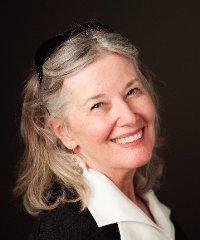
Elizabeth Berg

Elizabeth Berg Books

Writer

True To Form

A source page for quotes linked to Elizabeth Berg.
0 quotes

Never Change

A source page for quotes linked to Elizabeth Berg.

0 quotes

Say When

A source page for quotes linked to Elizabeth Berg.

0 quotes

Home Safe

A source page for quotes linked to Elizabeth Berg.

0 quotes

What We Keep

A source page for quotes linked to Elizabeth Berg.

0 quotes

Open House

A source page for quotes linked to Elizabeth Berg.

0 quotes

The Dream Lover

A source page for quotes linked to Elizabeth Berg.

0 quotes

Related Quotes

“Your girlfriend won't stay pretty for long. I myself was a hot tomato, but look at me now. 'Pretty' goes away, but what can come in its place is 'beautiful.' And that's better. Do you know what I mean, Arthur? Because when you look with the eyes of love, what you see is beautiful. Even an ugly dog---you know what I mean. You've probably seen Mr. Blesoff and his terrible little dog that I don't even know what it is. But Mr. Blesoff acts like he's Lassie. What matters is not what girls look like, even though I know, I know: you're young, you like the pretty girls, you got the engine running. But what matters is who they are. In their soul. What you want, Arthur, is someone you see eye-to-eye with. Someone you can laugh with. But most important, you want someone you can cry with.”

“And so, what of it all? What of me and my passions and personas, my great loves and failures of love, my writing, my politics? What of the clanging opinions, the endless queries as to the whys and wherefores of how I chose to conduct myself? In the end, there is but one answer to every question, whether it is spit at me or made as gentlest inquiry: I was I.”

“He got back in the car, started the engine, and turned on the heat full blast. His knees were wet; he was freezing. He turned on the radio, tapped his hands on the steering wheel to the rhythm of "Jingle Bell Rock." And then he turned off the radio and stared straight ahead at a November sky so devoid of color it looked to have been erased. In the distance, he saw a quivering chevron of Canadian geese. He would stay here to watch them fly by; he had always found them beautiful, But they were moving away from him, disappearing even as he watched.”

“Actors, painters, dancers, comedians, even just ordinary people doing ordinary things, what are they without an audience of some sort? See, that's what I do. I am the audience. I am the witness, I am the great appreciator that's what I do and that's all I want to do. I worked for a lot of years. I did a lot of things for a lot of years. Now, here I am in the rocking chair, and I don't mind it, Lucille. I don't feel useless. I feel lucky.”

“If I could just have him until the day was over. Just a few more hours. But he was gone. I clasped my hand tightly over my mouth and felt a trembling that started deep inside move out to make all of me shake. I had a mighty impulse, it truly was mighty, to rise to my feet and howl. To overturn the chair and nightstand, to rip at my clothes, to bring down the very walls around us. But of course I did not do that. I pulled an elemental sense of outrage back inside and smoothed it down. I forced something far too big into something far too small, and this made for a surprising and unreasonable weight, as mercury does. I noticed sounds coming from my throat, little unladylike grunts. I saw that everything I’d ever imagined about what it would feel like when was pale. Was wrong. Was the shadow and not the mountain. And then, “It’s all right,” I said, quickly. “It’s all right.” To whom? I wondered later.”

“When Suzie introduced Helen, she told the audience that one of the best things about books is that they are an interactive art form: that while the author may describe in some detail how a character looks, it is the reader's imagination that completes the image, making it his or her own. "That's why we so often don't like movies made from books, right?" Suzie said. "We don't like someone else's interpretation of what we see so clearly." She talked, too, about how books educate and inspire, and how they soothe the soul-"like comfort food without the calories," she said. She talked about the tactile joys of reading, the feel of a page beneath one's fingers; the elegance of typeface on a page. She talked about how people complain that they don't have time to read, and reminded them that if they gave up half an hour of television a day in favor of reading, they could finish twenty-five books a year. "Books don't take time away from us," she said. "They give it back. In this age of abstraction, of multitasking, of speed for speed's sake, they reintroduce us to the elegance-and the relief!-of real, tick-tock time.”

“But what we need are readers. Right? Where would writers be without readers? Who are they going to write for? And actors, what are they without an audience? Actors, painters, dancers, comedians, even just ordinary people doing ordinary things, what are they without an audience of some sort? See, that's what I do. I am the audience. I am the witness. I am the great appreciator, that's what I do and that's all I want to do. I worked for a lot of years. I did a lot of things for a lot of years. Now, well, here I am. I don't feel useless. I feel lucky.”

“I was downstairs, reading." " Now?" I strained to see her face. She was smiling, it appeared. "Yes, now," she said. "It's nice, sometimes, to read in the middle of the night. The sky is so dark and soft-looking outside the window, all the stars out. You have just on light on, you know, and it seems to pour onto the page. Makes the book seem better. You are this little island, just up alone with a book. And you heard the night sounds of the house...It's so interesting to me, that sound. Time. The measure of it.”

“I am thinking about the way that life can be so slippery; the way that a twelve-year-old girl looking into the mirror to count freckles reaches out toward herself and that reflection has turned into that of a woman on her wedding day, righting her veil. And how, when that bride blinks, she reopens her eyes to see a frazzled young mother trying to get lipstick on straight for the parent/teacher conference that starts in three minutes. And how after that young woman bends down to retrieve the wild-haired doll her daughter has left on the bathroom floor, she rises up to a forty-seven-year-old, looking into the mirror to count age spots.”

“Abby was saying that all her illness had done was to make her love Link and Daddy more . And appreciate everything more. And to understand , in a way she never had before, that death was a natural part of life, just like the seasons in nature. And everybody’s job was to love life while you had it and never to take anything for granted. It was hard to remember to do that, but it was worth it to try.”

“I'm just saying I think people are meant to be with people. You suffer in a marriage; but alone, you suffer more. Did you ever read that Mark Twain book "Extracts from Adam's Diary"? Adam thought Eve was a real pain in the ass, talking too much, looking at her reflection in the pond all the time, getting them expelled from Paradise, for Christ's sake! But what he said at the end was that he was better off living outside the Garden with Eve than inside it without her.”

“I remember once when we were moving, driving across country, and it was raining so hard, the windshield wipers going fast and squeaking, and then: nothing. It stopped. I looked out the window ahead of me and it was clear. I looked out the back and there was the rain, still going. Nobody said anything, but there it was, a near miracle, a rain line, a way of seeing just where something starts, when usually you are just in the middle of it before you notice it. That's how it feels to me now, to not want to be like (that) anymore. I see the line.”

“There are random moments - tossing a salad, coming up the driveway to the house, ironing the seams flat on a quilt square, standing at the kitchen window and looking out at the delphiniums, hearing a burst of laughter from one of my children's rooms - when I feel a wavelike rush of joy. This is my true religion: arbitrary moments of of nearly painful happiness for a life I feel privileged to lead.”

“Do you think that people ever really do believe they will die, that the world will just go along as always without them? I wonder if we aren't all a little surprised at the moment of crossover, if we don't look back over our shoulders saying, Now hold on.”

“Well, most women are full to the brim, that's all...We are, most of us, ready to explode, especially when our children are small and we are so weary with the demands for love and attention and the kind of service that makes you feel you should be wearing a uniform with "Mommy" embroidered over the left breast, over the heart...If a stranger had come up to me and said, "Do you want to talk about it? I have time to listen," I think I might have burst into tears at the relief of it.”

“Well, anyway, her death changed our lives for the better, because it brought a kind of awareness, a specific sense of purpose and appreciation we hadn't had before. Would I trade that in order to have her back? In a fraction of a millisecond. But I won't ever have her back. So I have taken this, as her great gift to us. But. Do I block her out? Never. Do I think of her? Always. In some part of my brain, I think of her every single moment of every single day.”

“I wondered what my father had looked like that day, how he had felt, marrying the lively and beautiful girl who was my mother. I wondered what his life was like now. Did he ever think of us? I wanted to hate him, but I couldn't; I didn't know him well enough. Instead, I wondered about him occasionally, with a confused kind of longing. There was a place inside me carved out for him; I didn't want it to be there, but it was. Once, at the hardware store, Brooks had shown me how to use a drill. I'd made a tiny hole that went deep. The place for my father was like that.”