Quotessence
Home / Authors / George Saunders
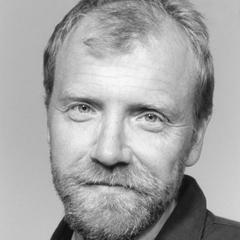
George Saunders

George Saunders Quotes

Writer

Filter quotes by topic

Famous George Saunders Quotes

“Good God, but life could be less than easy, not that he was unaware that it could certainly be a lot worse, but to go about in such a state, pulse high, face red, worried sick that someone would notice how nervous one was, was certainly less than ideal, and he felt sure that his body was secreting all kinds of harmful chemicals and that the more he worried about the harmful chemicals the faster they were pouring out of wherever it was they came from.”

“My people!" he shouted in the stentorian voice. "I shall speak now of us! Who are we? We are an articulate people, yet a people of few words. We feel deeply, yet refrain from embarrassing displays of emotion. Though firm, we are never too firm, though we love fun, we never have fun in a silly way that makes us appear ridiculous, unless that is our intent. Our national coloration, though varied, is consistent. Everything about us is as it should be, for example, we can be excessive when excess is called for, and yet, even in our excess, we show good taste, although never is our taste so super-refined as to seem precious. Even the extent to which we are moderate is moderate, except when we have decided to be immoderately moderate, or even shockingly flamboyant, at which time our flamboyance is truly breathtaking in a really startling way, and when we decide to make mistakes, our mistakes are as big and grand and irrevocable as any nation's colossal errors, and when we decide to deny our mistakes, we sound just as if we are telling the truth, and when we decide to admit our errors, we do so in a way that is truly moving in its extreme frankness! Am I making sense? Am I saying this well?”

“The realization that failure was possible, even for me, had the effect of increasing my empathy. If life could be this harsh/grueling/boring for someone who'd had all the advantages, what must it be like for someone who hadn't? A thread of connection went out between me and everyone else. They, too, wanted to be happy. They, too, wanted to succeed. Maybe they had people they loved at home. They, too, were doing some weird uninteresting job in order to ensure the security and happiness of those beloved people of theirs, and yet...”

“Sweet Evelyn, I think, I should have loved you better. Possessing perfect knowledge I hover above him as he hacks me to bits. I see his rough childhood. I see his mother doing something horrid to him with a broomstick. I see the hate in his heart and the people he had yet to kill before pneumonia gets him at eighty-three. I see the dead kid's mom unable to sleep, pounding her fists against her face in grief at the moment I was burying her son's hand. I see the pain I've caused. I see the man I could have been, and the man I was, and then everything is bright and new and keen with love and I sweep through Sam's body, trying to change him, trying so hard, and feeling only hate and hate, solid as stone.”

“That's what powerful men did. Stayed quiet. Held secrets. Ran things from inside a tight protective circle, making perilous decisions only they were savvy enough to make, leaving normal morality to the mere earthlings, who lived and ate and died dully down below, never knowing the extent to which they were being shielded by a beneficent distant pulling of strings.”

“And there was nothing left for me to do, but go. Though the things of the world were strong with me still. Such as, for example: a gaggle of children trudging through a side-blown December flurry; a friendly match-share beneath some collision-tilted streetlight; a frozen clock, bird-visited within its high tower; cold water from a tin jug; toweling off one’s clinging shirt post–June rain. Pearls, rags, buttons, rug-tuft, beer-froth. Someone’s kind wishes for you; someone remembering to write; someone noticing that you are not at all at ease.”

“I'd say there's a general thesis in here somewhere: any story that suffers from what seems like a moral failing (that seems sexist, racist, homophobic, transphobic, pedantic, appropriative, derivative of another writer's work, and so on) will be seen, with sufficient analytical snooping, to be suffering from a technical failing, and if that failing is addressed, it will (always) become a better story.”

“His mind was freshly inclined toward sorrow; toward the fact that the world was full of sorrow; that everyone labored under some burden of sorrow; that all were suffering; that whatever way one took in this world, one must try to remember that all were suffering (none content; all wronged, neglected, overlooked, misunderstood), and therefore one must do what one could to lighten the load of those with whom one came into contact; that his current state of sorrow was not uniquely his, not at all, but, rather, its like had been felt, would be felt, by scores of others, in all times, in every time, and must not be prolonged or exaggerated, because, in this state, he could be of no help to anyone and, given that his position in the world situated him to be either of great help, or great harm, it would not do to stay low, if he could help it.”

“What I mean to say is, we had been considerable. Had been loved. Not lonely, not lost, not freakish, but wise, each in his or her own way. Our departures caused pain. Those who had loved us sat upon their beds, heads in hand; lowered their faces to tabletops, making animal noises. We had been loved, I say, and remembering us, even many years later, people would smile, briefly gladdened at the memory.”

“No place works any different than any other place, really, beyond mere details. The universal human laws--need, love for the beloved, fear, hunger, periodic exaltation, the kindness that rises up naturally in the absence of hunger/fear/pain--are constant, predictable, reliable, universal, and are merely ornamented with the details of local culture. What a powerful thing to know: that one's own desires are mappable onto strangers; that what one finds in oneself will most certainly be found in The Other--perhaps muted, exaggerated, or distorted, yes, but there nonetheless, and thus a source of comfort.”

“A culture capable of imagining complexly is a humble culture. It acts, when it has to act, as late in the game as possibl, and as cautiously, because it knows its girth and the tight confines of the china shop it's blundering into. And it knows that no matter how well prepared it is -- no matter how ruthlessly it has held its projections up to intelligent scrutiny -- the place it is headed for is going to very different from the place it imagined. The shortfall between the imagined and the real, multiplied by the violence of one's intent, equals the evil one will do.”

“There was a story often told. Perhaps you’ve heard this one. Don’t stop me if you have, though, ha ha (I dearly love to tell it): Little boy’s grousing: doesn’t like cars. Because of “the pollution,” you know where this one’s going, I bet. The father pulls the car over to the side of the road. “Then I suppose you’ll want to walk.” End of objections from el kiddo. Your choice, Jacques. Dying in the back of a horse cart stuck in the mud? Or zinging toward help, air-con blasting? Anyone with a lick of sense would choose the latter. We had. The world had. That was what was so damn stupid about it. People forgot the empty larder. Forgot drought, forgot famine. Forgot what it was like to be at the mercy of the world. The Nesbitts’d brought over a charity basket. During that lean period. After the hay burned up, the little feeder stream went dry, Bremer refused to re-up their loan. You best believe I was drooling. Father shot me a look. Move the slightest muscle toward that basket, my young swain, his eyes were saying, you’ll find yourself bunking down in the barn with the heifers. The bread in that basket was rock-hard and the bacon stringy and the apples home to more than a few worms. But to us it was a feast. Whereas nowadays folks padded past climate-controlled cases of out-of-season vegetables and fish from faraway seas and meat from animals who fed in meadows under mountain ranges whose names a person could hardly pronounce, thinking, Yap, yap, yap, big deal, pork from Denmark, salmon from the Bering Strait, loaves of woven bread from Ferrara, all of this is my right. When what it was, was a goddamn miracle.”

Book:Vigil

“Sir, if you are as powerful as I feel that you are, and as inclined toward us as you seem to be, endeavor to do something for us, so that we might do something for ourselves. We are ready, sir; are angry, are capable, our hopes are coiled up so tight as to be deadly, or holy: turn us loose, sir, let us at it, let us show what we can do. --thomas havens”

“Be bigger presence at work. Race up ladder (joyfully, w/smile on face), get raise. Get in best shape of life, start dressing nicer. Learn guitar? Make point of noticing beauty of world? Why not educate self re. birds, flowers, trees, constellations, become true citizen of natural world, walk around neighborhood w/kids, patiently teaching kids names of birds, flowers, etc. etc.? Why not take kids to Europe? Kids have never been. Have never, in Alps, had hot chocolate in mountain café, served by kindly white- haired innkeeper, who finds them so sophisticated/friendly relative to usual snotty/rich American kids (who always ignore his pretty but crippled daughter w/braids) that he shows them secret hiking path to incredible glade, kids frolic in glade, sit with crippled pretty girl on grass, later say it was most beautiful day of their lives, keep in touch with crippled girl via email, we arrange surgery here for her, surgeon so touched he agrees to do surgery for free, she is on front page of our paper, we are on front page of their paper in Alps? Ha ha.”

“So, instead of the story being this messed-up thing I erroneously produced, because I don’t know how to do it right—instead of it existing as a sort of Proof of Failure, with me as Chief Failer—I see myself as a loyal, helpful friend to that guy over there, who is my talent, and I have faith in him, although he sometimes gets a little confused. And I’m trying to help him to do his best. He empties his pockets on to the table and some of what he puts there is good, and some of it is… “not quite there yet.” I step up to the table, put my hand on his back, and the feeling I’m trying to convey is, “What’ve we got here? Let’s see what we can do. It’s going to be all right.”

“I hold the biscuits in front of his face and he stands up. "What do I have to do?" he says. "Nothing," I say. "They're for you." "Are they poisoned?" he says. "No," I say. "Eat one," he says. So I do. "Probably the others are poisoned," he says. "Eat a fraction of each." I eat a corner off each biscuit. He looks at the reminders suspiciously, then sniffs them. "I'm not sure it's worth it," he says. "How I wish you'd never come. Perhaps you've left the poison off of just those corners." I begin to realize I'll doubt whatever information he gives me. "Lick the entire biscuit," he says. "Then give them to me." So I lick each biscuit. "Both sides," he says. I lick both sides of each biscuit. I give him the wet biscuits and he cracks them open and sniffs them. Then he puts them in his pocket. "What do you want?" he says. "Now that you've failed to poison me to death.”

“[Is it] Lying when a person uses his considerable reputation and his mastery of public communications to thrash his opponents by redirecting the attention of the general populace, thus infecting the people with the tiniest sliver of doubt, which, widely propagated, becomes a sizable wedge of doubt? said G. Doesn't every idea, said R., even those judged by some standards to be fallacious or those which have been disproven outright, deserve to be honored with the public's attention? Doesn't the public have the right to know? said G. And decide for itself? said R. Are you calling the public stupid? said G. Do you not believe in democracy? said R. R. turned to me. We were, in life, eminent scientists, he said.”

“Huck [Finn] and Tom [Sawyer] represent two viable models of the American Character. They exist side by side in every American and every American action. America is, and always has been, undecided about whether it will be the United States of Tom or the United States of Huck. The United States of Tom looks at misery and says: Hey, I didn't do it. It looks at inequity and says: All my life I have busted my butt to get where I am, so don't come crying to me. Tom likes kings, codified nobility, unquestioned privilege. Huck likes people, fair play, spreading the truck around. Whereas Tom knows, Huck wonders. Whereas Huck hopes, Tom presumes. Whereas Huck cares, Tom denies. These two parts of the American Psyche have been at war since the beginning of the nation, and come to think of it, these two parts of the World Psyche have been at war since the beginning of the world, and the hope of the nation and of the world is to embrace the Huck part and send the Tom part back up the river, where it belongs.”

“Morse found it nerve-wracking to cross the St. Jude grounds just as school was being dismissed, because he felt that if he smiled at the uniformed Catholic children they might think he was a wacko or pervert and if he didn't smile they might think he was an old grouch made bitter by the world, which surely, he felt, by certain yardsticks, he was. Sometimes he wasn't entirely sure that he wasn't a wacko of sorts, although certainly he wasn't a pervert. Of that he was certain. Or relatively certain. Being overly certain, he was relatively sure, was what eventually made one a wacko. So humility was the thing, he thought, arranging his face into what he thought would pass for the expression of a man thinking fondly of his own youth, a face devoid of wackiness or perversion, humility was the thing.”

“Can we ever really know to what extent this man [Mark Twain] or his book [Adventures of Huckleberry Finn] was, or is, racist? When we identify racism in the book, aren't we really just identifying racism in the culture out of which it came? Is it fair to expect Twain to have vaulted himself out of his own time and place and arrive, clean-booted and upright, in our own? Isn't the book still funny and deep? Aren't I actually enjoying it? How does one do the complicated math of Ultimate Racism: If we determine that, relative to our own time, Twain was a 40 percent racist, while relative to his own, he was only a 12 percent racist, or was in fact a 0 percent racist--what do we know, really?”

“Morse found it nerve-wracking to cross the St. Jude grounds just as school was being dismissed, because he felt that if he smiled at the uniformed Catholic children they might think he was a wacko or pervert and if he didn't smile they might think he was an old grouch made bitter by the world, which surely, he felt, by certain yardsticks, he was. Sometimes he wasn't entirely sure that he wasn't even a wacko of sorts, although certainly he wasn't a pervert. Of that he was certain. Or relatively certain. Being overly certain, he was relatively sure, was what eventually made one a wacko.”

“Am I oversimplifying here? Yes. Is all our media stupid? Far from it. Were intelligent, valuable things written about the rush to war (and about O.J. and Monica, and then Laci Peterson and Michael Jackson, et al.)? Of course. But: Is some of our media very stupid? Hoo boy. Does stupid, near-omnipresent media make us more tolerant toward stupidity in general? It would be surprising if it didn’t. Is human nature such that, under certain conditions, stupidity can come to dominate, infecting the brighter quadrants, dragging everybody down with it?”