Quotessence
Home / Authors / Howard Zinn
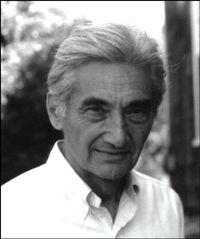
Howard Zinn

Howard Zinn Quotes

Historian

Filter quotes by topic

Famous Howard Zinn Quotes

“Civil disobedience is not our problem. Our problem is civil obedience. Our problem is that people all over the world have obeyed the dictates of leaders…and millions have been killed because of this obedience…Our problem is that people are obedient allover the world in the face of poverty and starvation and stupidity, and war, and cruelty. Our problem is that people are obedient while the jails are full of petty thieves… (and) the grand thieves are running the country. That’s our problem.”

“We don't have to engage in grand, heroic actions to participate in the process of change. Small acts, when multiplied by millions of people, can transform the world.”

“If history is to be creative, to anticipate a possible future without denying the past, it should, I believe, emphasize new possibilities by disclosing those hidden episodes of the past when, even if in brief flashes, people showed their ability to resist, to join together, occasionally to win. I am supposing, or perhaps only hoping, that our future may be found in the past's fugitive movements of compassion rather than in its solid centuries of warfare.”

“What most of us must be involved in--whether we teach or write, make films, write films, direct films, play music, act, whatever we do--has to not only make people feel good and inspired and at one with other people around them, but also has to educate a new generation to do this very modest thing: change the world.”

“The democratic principle, enunciated in the words of the Declaration of Independence, declared that government was secondary, that the people who established it were primary. Thus, the future of democracy depended on the people, and their growing consciousness of what was the decent way to relate to their fellow human beings all over the world.”

“Surely, if it is the right of the people to "alter or abolish," it is their right to criticize, even severely, policies they believe destructive of the ends for which government has been established. This principle, in the Declaration of Independence, suggests that true patriotism lies in supporting the values the country is supposed to cherish: equality, life, liberty, the pursuit of happiness. When our government compromises, undermines, or attacks those values, it is being unpatriotic.”

“The Constitution. . . illustrates the complexity of the American system: that it serves the interests of a wealthy elite, but also does enough for small property owners, for middle-income mechanics and farmers, to build a broad base of support. The slightly prosperous people who make up this base of support are buffers against the blacks, the Indians, the very poor whites. They enable the elite to keep control with a minimum of coercion, a maximum of law--all made palatable by the fanfare of patriotism and unity.”

“The power of a bold idea uttered publicly in defiance of dominant opinion cannot be easily measured. Those special people who speak out in such a way as to shake up not only the self-assurance of their enemies, but the complacency of their friends, are precious catalysts for change.”

“There is a power that can be created out of pent-up indignation, courage, and the inspiration of a common cause, and that if enough people put their minds and bodies into that cause, they can win. It is a phenomenon recorded again and against in the history of popular movements against injustice all over the world.”

“I had always insisted that a good education was a synthesis of book learning and involvement in social action, that each enriched the other. I wanted my students to know that the accumulation of knowledge, while fascinating in itself, is not sufficient as long as so many people in the world have no opportunity to experience that fascination.”

“The mountain of history books under which we all stand leans so heavily in the other direction-so tremblingly respectful of states and statesmen and so disrespectful, by inattention, to people's movements-that we need some counterforce to avoid being crushed into submission.”

“There was an idea in the air, becoming clearer and stronger, an idea not just in the theories of Karl Marx but in the dreams of writers and artists through the ages: that people might cooperatively use the treasures of the earth to make life better for everyone, not just a few.”

“Nations are not communities and never have been. The history of any country, presented as the history of a family, conceals the fierce conflicts of interest (sometimes exploding, often repressed) between conquerors and conquered, masters and slaves, capitalists and workers, dominators and dominated in race and sex. And in such as world of conflict, a world of victims and executioners, it is the job of thinking people, as Albert Camus suggested, not to be on the side of the executioners.”

“To be hopeful in bad times is based on the fact that human history is not only of cruelty, but also of compassion, sacrifice, courage, kindness. If we see only the worst, it destroys our capacity to do something. If we remember those times and places where people have behaved magnificently, this gives us the energy to act. And if we do act, in however small a way, we don't have to wait for some grand Utopian future. The future is an infinite succession of presents, and to live now as we think human beings should live, in defiance of all that is bad around us, is itself a marvelous victory.”

“What we choose to emphasize in this complex history will determine our lives. If we see only the worst, it destroys our capacity to do something. If we remember those times and places--and there are so many--where people have behaved magnificently, this gives us the energy to act, and at least the possibility of sending this spinning top of a world in a different direction.”

“Where progress has been made, wherever any kind of injustice has been overturned, it’s been because people acted as citizens, and not as politicians. They didn’t just moan. They worked, they acted, they organized, they rioted if necessary to bring their situation to the attention of people in power. And that’s what we have to do today.”

“War is by definition the indiscriminate killing of huge numbers of people for ends that are uncertain. Think about means and ends, and apply it to war. The means are horrible, certainly. The ends, uncertain. That alone should make you hesitate. . . . We are smart in so many ways. Surely, we should be able to understand that in between war and passivity, there are a thousand possibilities.”

“Each situation has to be evaluated separately, for all are different. In general, I believe in non-violent direct action, which involve organizing large numbers of people, whereas too often violent uprisings are the product of a small group. If enough people are organized, violence can be minimized in bringing about social change.”

“History is instructive. And what it suggests to people is that even if they do little things, if they walk on the picket line, if they join a vigil, if they write a letter to their local newspaper. Anything they do, however small, becomes part of a much, much larger sort of flow of energy. And when enough people do enough things, however small they are, then change takes place.”