Quotessence
Home / Authors / John Locke Books
John Locke

John Locke Books

Philosopher

Works

A source page for quotes linked to John Locke.
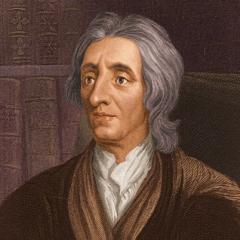
0 quotes

Related Quotes

“A sound mind in a sound body, is a short, but full description of a happy state in this world. He that has these two, has little more to wish for; and he that wants either of them, will be but little the better for anything else. Men’s happiness or misery is most part of their own making. He, whose mind directs not wisely, will never take the right way; and he, whose body is crazy and feeble, will never be able to advance in it.”

“No man in civil society can be exempted from the laws of it: for if any man may do what he thinks fit, and there be no appeal on earth, for redress or security against any harm he shall do; I ask, whether he be not perfectly still in the state of nature, and so can be no part or member of that civil society; unless any one will say, the state of nature and civil society are one and the same thing, which I have never yet found any one so great a patron of anarchy as to affirm.”

“As usurpation is the exercise of power, which another hath a right to; so tyranny is the exercise of power beyond right, which no body can have a right to. And this is making use of the power any one has in his hands, not for the good of those who are under it, but for his own private separate advantage. When the governor, however intitled, makes not the law, but his will, the rule; and his commands and actions are not directed to the preservation of the properties of his people, but the satisfaction of his own ambition, revenge, covetousness, or any other irregular passion.”

“Sec. 10. Besides the crime which consists in violating the law, and varying from the right rule of reason, whereby a man so far becomes degenerate, and declares himself to quit the principles of human nature, and to be a noxious creature, there is commonly injury done to some person or other, and some other man receives damage by his transgression: in which case he who hath received any damage, has, besides the right of punishment common to him with other men, a particular right to seek reparation from him that has done it: and any other person, who finds it just, may also join with him that is injured, and assist him in recovering from the offender so much as may make satisfaction for the harm he has suffered.”

“The works of nature and the works of revelation display religion to mankind in characters so large and visible that those who are not quite blind may in them see and read the first principles and most necessary parts of it and from thence penet into those infinite depths filled with the treasures of wisdom and knowledge.”

“Justice and truth are the common ties of society”

“Earthly minds, like mud walls, resist the strongest batteries; and though, perhaps, sometimes the force of a clear argument may make some impression, yet they nevertheless stand firm, keep out the enemy, truth, that would captivate or disturbe them.”

“..every Man has a Property in his own Person. This no Body has any Right to but himself. The Labour of his Body, and the Work of his Hands, we may say, are properly his. .... The great and chief end therefore, of Mens uniting into Commonwealths, and putting themselves under Government, is the Preservation of their Property.”

“Vague and mysterious forms of speech, and abuse of language, have so long passed for mysteries of science; and hard or misapplied words with little or no meaning have, by prescription, such a right to be mistaken for deep learning and height of speculation, that it will not be easy to persuade either those who speak or those who hear them, that they are but the covers of ignorance and hindrance of true knowledge.”

“The Commonwealth of Learning is not at this time without Master-Builders, whose mighty Designs, in advancing the Sciences, will leave lasting Monuments to the Admiration of Posterity; But every one must not hope to be a Boyle, or a Sydenham; and in an Age that produces such Masters, as the Great-Huygenius, and the incomparable Mr. Newton, with some other of that Strain; 'tis Ambition enough to be employed as an Under-Labourer in clearing Ground a little, and removing some of the Rubbish, that lies in the way to Knowledge.”

“Understanding like the eye; whilst it makes us see and perceive all things, takes no notice of itself; and it requires art and pains to set it at a distance and make it its own subject.”

“Every Man being conscious to himself, That he thinks, and that which his Mind is employ'd about whilst thinking, being the Ideas, that are there, 'tis past doubt, that Men have in their Minds several Ideas, such as are those expressed by the words, Whiteness, Hardness, Sweetness, Thinking, Motion, Man, Elephant, Army, Drunkenness, and others: It is in the first place then to be inquired, How he comes by them? I know it is a received Doctrine, That Men have native Ideas, and original Characters stamped upon their Minds, in their very first Being.”

“The Ideas of primary Qualities of Bodies, are Resemblances of them, and their Patterns do really exist in the Bodies themselves; but the Ideas, produced in us by these Secondary Qualities, have no resemblance of them at all. There is nothing like our Ideas, existing in the Bodies themselves. They are in Bodies, we denominate from them, only a Power to produce those Sensations in us: And what is Sweet, Blue or Warm in Idea, is but the certain Bulk, Figure, and Motion of the insensible parts in the Bodies themselves, which we call so.”

“The senses at first let in particular Ideas, and furnish the yet empty Cabinet: And the Mind by degrees growing familiar with some of them, they are lodged in the Memory, and Names got to them.”

“If, then, there must be something eternal, let us see what sort of Being it must be. And to that it is very obvious to Reason, that it must necessarily be a cogitative Being. For it is as impossible to conceive that ever bare incogitative Matter should produce a thinking intelligent Being, as that nothing should of itself produce Matter.”

“Whenever legislators endeavor to take away and destroy the property of the people, or to reduce them to slavery under arbitrary power, they put themselves into a state of war with the people, who are thereupon absolved from any further obedience.”

“From whence it is obvious to conclude that, since our Faculties are not fitted to penetrate into the internal Fabrick and real Essences of Bodies; but yet plainly discover to us the Being of a GOD, and the Knowledge of our selves, enough to lead us into a full and clear discovery of our Duty, and great Concernment, it will become us, as rational Creatures, to imploy those Faculties we have about what they are most adapted to, and follow the direction of Nature, where it seems to point us out the way.”

“Let us suppose the mind to be, as we say, white paper, void of all characters, without any ideas; how comes it to be furnished? Whence comes it by that vast store which the busy and boundless fancy of man has painted on it with an almost endless variety? Whence has it all the materials of reason and knowledge? To this I answer, in one word, from experience.”

“Truth then seems to me, in the proper import of the word, to signify nothing but the joining or separating of Signs, as the Things signified by them do agree or disagree one with another. The joining or separating of signs here meant, is what by another name we call proposition. So that truth properly belongs only to propositions: whereof there are two sorts, viz. mental and verbal; as there are two sorts of signs commonly made use of, viz. ideas and words.”

“Nature never makes excellent things, for mean or no uses: and it is hardly to be conceived, that our infinitely wise Creator, should make so admirable a Faculty, as the power of Thinking, that Faculty which comes nearest the Excellency of his own incomprehensible Being, to be so idlely and uselesly employ'd, at least 1/4 part of its time here, as to think constantly, without remembering any of those Thoughts, without doing any good to it self or others, or being anyway useful to any other part of Creation.”

“Any single man must judge for himself whether circumstances warrant obedience or resistance to the commands of the civil magistrate; we are all qualified, entitled, and morally obliged to evaluate the conduct of our rulers. This political judgment, moreover, is not simply or primarily a right, but like self-preservation, a duty to God. As such it is a judgment that men cannot part with according to the God of Nature. It is the first and foremost of our inalienable rights without which we can preserve no other.”