Quotessence
Home / Authors / Paul Goodman Books
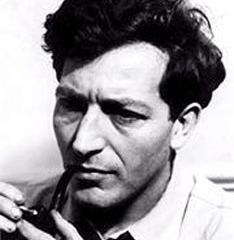
Paul Goodman

Paul Goodman Books

Novelist

Five years

A source page for quotes linked to Paul Goodman.
0 quotes

Nature Heals

A source page for quotes linked to Paul Goodman.

0 quotes

Related Quotes

“Not speaking and speaking are both human ways of being in the world, and there are kinds and grades of each. There is the dumb silence of slumber or apathy; the sober silence that goes with a solemn animal face; the fertile silence of awareness, pasturing the soul, whence emerge new thoughts; the alive silence of alert perception, ready to say, “This… this…”; the musical silence that accompanies absorbed activity; the silence of listening to another speak, catching the drift and helping him be clear; the noisy silence of resentment and self-recrimination, loud and subvocal speech but sullen to say it; baffled silence; the silence of peaceful accord with other persons or communion with the cosmos.”

“Patience is drawing on underlying forces; it is powerfully positive, though to a natural view it looks like just sitting it out. How would I persist against positive eroding forces if I were not drawing on invisible forces? And patience has a positive tonic effect on others; because of the presence of the patient person, they revive and go on, as if he were the gyroscope of the ship providing a stable ground. But the patient person himself does not enjoy it.”

“We define boredom as the pain a person feels when he's doing nothing or something irrelevant, instead of something he wants to do but won't, can't, or doesn't dare. Boredom is acute when he knows the other thing and inhibits his action, e.g., out of politeness, embarrassment, fear of punishment or shame. Boredom is chronic if he has repressed the thought of it and no longer is aware of it. A large part of stupidity is just the chronic boredom, for a person can't learn, or be intelligent about, what he's not interested in, when his repressed thoughts are elsewhere.”

“Anarchism is grounded in a rather definite social-psychological hypothesis: that forceful, graceful and intelligent behaviour occurs only when there is an uncoerced and direct response to the physical and social environment; that in most human affairs, more harm than good results from compulsion, top-down direction, bureaucratic planning, pre-ordained curricula, jails, conscription, states.”

“Be patient, do nothing, cease striving. We find this advice disheartening and therefore unfeasible because we forget it is our own inflexible activity that is structuring the reality. We think that if we do not hustle, nothing will happen and we will pine away. But the reality is probably in motion and after a while we might take part in that motion. But one can't know.”

“To translate, one must have a style of his own, for the translation will have no rhythm or nuance, which come from the process of artistically thinking through and molding the sentences; they cannot be reconstituted by piecemeal imitation. The problem of translation is to retreat to a simpler tenor of one’s own style and creatively adjust this to one’s author.”

“The important thing about travel in foreign lands is that it breaks the speech habits and makes you blab less, and breaks the habitual space-feeling because of different village plans and different landscapes. It is less important that there are different mores, for you counteract these with your own reaction-formations.”

“The importance of the Beats is twofold: first, they act out a critique of the organized system that everybody in some sense agrees with. But second-and more important in the long run-they are a kind of major pilot study of the use of leisure in an economy of abundance.”

“God works in many ways His wonders to perform. But He's not a skillful mechanic. A man drived over a cliff and "by a miracle" he only breaks his back. It would be more divine if he were a better driver and stayed on the road.”

“Naturally, grown-up citizens are concerned about the beatniks and delinquents. ... The question is why the grownups do not, more soberly, draw the same conclusions as the youth. Or, since no doubt many people are quite clear about the connection that the structure of society that has becoming increasingly dominant in our country is disastrous to the growth of excellence and manliness, why don't more people speak up and say so?”

“Nothing could be more stupid than for the communications commission to give to people who handle the means of broadcasting the inventing of what to broadcast, and then, disturbed at the poor quality, to worry about censorship.”

“Thwarted, or starved, in the important objects proper to young capacities, the boys and young men naturally find or invent deviant objects for themselves. ... Their choices and inventions are rarely charming, usually stupid, and often disastrous; we cannot expect average kids to deviate with genius. But on the other hand, the young men who conform to the dominant society become for the most part apathetic, disappointed, cynical and wasted.”