Quotessence
Home / Authors / Siri Hustvedt Books
Siri Hustvedt

Siri Hustvedt Books

Novelist

The Blindfold

A source page for quotes linked to Siri Hustvedt.
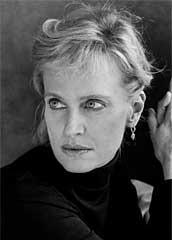
0 quotes

What I Loved

A source page for quotes linked to Siri Hustvedt.

0 quotes

Related Quotes

“When a culture oppresses women, and all do to one degree or another, it isn't convenient to acknowledge that there are women who like submission in bed or who have fantasies about rape. Masochistic fantasies damage the case for equality, and even when they are seen as the result of a "sick society," the peculiarity of our sexual actions or fantasies is not easily untangled or explained away. The ground from which they spring is simply too muddy. Acts can be controlled, but not desire. Sexual feeling pops up, in spite of our politics.”

“The truth is that what fascinates me is not so much being in a place as not being there: how places live in the mind once you have left them, how they are imagined before you arrive, or how they are seemingly called out of nothing to illustrate a thought or story like my tree down yonder. These mental spaces map our Innes lives more fully than any "real" map, delineating the borders of here and there that also shape what we see in the present.”

“Va ser llavors que em vaig fixar en un blau que tenia just per sota del genoll. Ja l’havia vist abans, però en aquell moment el seu to porpra, que en una de les vores virava cap al verd grogós, va atreure els meus ulls, com si aquesta petita ferida fos realment el tema del quadre. M’hi vaig atansar, vaig posar un dit a la tela i vaig resseguir el contorn del blau. Aquest gest em va excitar. Em vaig girar per mirar l’Erica. Era un dia càlid de setembre, i ella tenia els braços descoberts. Em vaig inclinar i li vaig besar les pigues de les espatlles, i en acabat li vaig enretirar els cabells que li cobrien el coll i vaig besar la pell suau de sota. Em vaig agenollar davant seu, li vaig apujar la roba de la faldilla, li vaig passar els dits per les cuixes, i llavors vaig fer servir la llengua.”

“Lots of women read fiction. Most men don't. Women read fiction written by women and by men. Most men don't. If a man opens a novel,. he likes to have a masculine name on the cover; it's reassuring somehow. You never know what might happen to that external genitalia if you immerse yourself in imaginary doings concocted by someone with the goods on the inside.”

“Despite its particulars, Alice's story is depressingly familiar. It's basic structure is repeated, with multiple variations, everywhere all the time. Although occasionally overt, the cruelties are most often hidden, surreptitious jabs to shame and hurt the victim, a strategy most often adopted by girls, not boys, who go for the direct punch, blow, or kick in the groin. The duel at dawn, with its elaborate legalisms, its seconds and its paces (...) —all are granted a dignity in the culture that no female form of rivalry can match.”

“Los patriarcas nos defraudan. No ven y no escuchan. Suelen permanecer ciegos y hacer oídos sordos a las mujeres, se pavonean, alardean y actúan como si no estuviéramos allí. Y no siempre son hombres. A veces son mujeres, también ciegas que se odian a sí mismas. Están atrapadas en los hábitos perceptivos de los siglos, en las expectativas que han llegado a gobernar su mente.”

“My mother said the bizarre name Raccoona had surely been inspired, at least on a subliminal level, by the masks raccoons don't wear but simply have - the ones given them by nature..... [S]he pointed out that Le Guin had suspected all along that Raccoona and Tiptree were two authors that came from the same source, but in a letter to Alice she wrote that she preferred Tiptree to Raccoona: 'Raccoona, I think, has less control, thus less wit and power.' Le Guin, Mother said, had understood something deep. 'When you take on a male persona, something happens.' When I asked her what that was, she sat back in her chair, waved her arm, and smiled. 'You get to be the father.”

“We must all allow ourselves the fantasy of projection from time to time, a chance to clothe ourselves in the imaginary gowns and tails of what has never been and never will be. This gives some polish to our tarnished lives, and sometimes we may choose one dream over another, and in the choosing find some respite from ordinary sadness. After all, we, none of us, can ever untangle the knot of fictions that make up that wobbly thing we call a self.”

“I've come to think of consciousness as a continuum of states, from fully awake cogitation to daydreaming to the altered consciousness of hallucinations and dreams. Still, interpreting dreams can only take place when we're awake. I believe meaning is what the mind makes and wants. It's essential to perception and to consciousness in all its forms. But the important meanings of psychotherapy are subjective. There's a lot of research that confirms that drem content reflects the dreamer's emotional conflicts.”

“When I say my wound became political in the years that followed, I don't mean that my involvement in the anti-war movement was somehow insincere or that I have any regrets about my activism. As a champion of the downtrodden, the disenfranchised, the poor, and the oppressed, I found a new outlet for the somewhat irrational but nevertheless strong sense I had of being an outsider in a group - uncomfortable, awkward, and quick to feel a slight. Political feeling can't exist without identification, and mine inevitably went to people without power, In contrast, right-wing ideologies often appeal to those who want to link themselves to authority, people for whom the sight of military parades or soldiers marching off to war is aggrandizing, not painful. Inevitably, there is sublimation in politics, too. It becomes an avenue for suppressed aggression and anger, and I was no exception. And so it was that armed with passion and gorged on political history, I became a firebrand at fourteen. For three years, I read and argued and demonstrated. I marched against the Vietnam War, helped print strike T-shirts at Carleton College after the deaths of four students at Kent State, attended rallies, raised money for war-torn Mozambique, signed petitions, licked envelopes for the American Indian Movement, and turned into a feminist. But even then, I didn't believe all the rhetoric.”

“In effect, painting is the still memory of [the artist's] human motion, and our individual responses to it depend on who we are, on our character, which underlines the simple truth that no person leaves himself behind in order to look at a painting.”