Filter quotes by topic
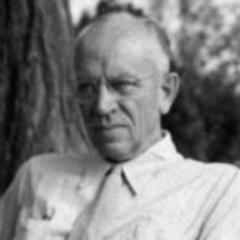
Famous Aldo Leopold Quotes
Source: Aldo Leopold: A Sand County Almanac & Other Writings on Conservation and Ecology: (Library of America #238)
Source: Aldo Leopold: A Sand County Almanac & Other Writings on Conservation and Ecology: (Library of America #238)
Source: Aldo Leopold: A Sand County Almanac & Other Writings on Conservation and Ecology: (Library of America #238)
“If the land mechanism as a whole is good then every part is good, whether we understand it or not.”
Source: Round River
Source: A Sand County Almanac, and Sketches Here and There
“We abuse land because we regard it as a commodity belonging to us.”
Source: A Sand County Almanac, and Sketches Here and There
Source: Aldo Leopold: A Sand County Almanac & Other Writings on Conservation and Ecology: (Library of America #238)
Source: Game Management
Source: A Sand County Almanac, and Sketches Here and There
“What a dull world if we knew all about geese!”
Source: A Sand County Almanac: And Sketches Here and There
Source: Wisconsin Wildlife Chronology
Source: A Sand County Almanac, and Sketches Here and There
“Too much safety seems to yield only danger in the long run.”
Source: Aldo Leopold: A Sand County Almanac & Other Writings on Conservation and Ecology: (Library of America #238)
Source: Aldo Leopold: A Sand County Almanac & Other Writings on Conservation and Ecology: (Library of America #238)
Source: A Sand County Almanac, and Sketches Here and There
Source: The River of the Mother of God: and other Essays by Aldo Leopold
Source: A Sand County Almanac, and Sketches Here and There
“For us in the minority, the opportunity to see geese is more important than television.”
Source: A Sand County Almanac, and Sketches Here and There
Source: A Sand County Almanac, and Sketches Here and There
Source: Aldo Leopold's Southwest
“It is, by common consent, a good thing for people to get back to nature.”
Source: A Sand County Almanac, and Sketches Here and There
Source: Aldo Leopold: A Sand County Almanac & Other Writings on Conservation and Ecology: (Library of America #238)
Source: A Sand County Almanac: And Sketches Here and There