Quotessence
Home / Authors / Aristotle
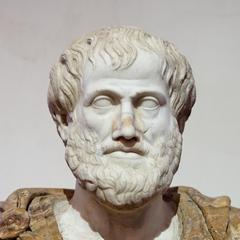
Aristotle

Aristotle Quotes

Philosopher

Filter quotes by topic

Famous Aristotle Quotes

“It is better for a city to be governed by a good man than by good laws.”

“The laws are, and ought to be, relative to the constitution, and not the constitution to the laws. A constitution is the organization of offices in a state, and determines what is to be the governing body, and what is the end of each community. But laws are not to be confounded with the principles of the constitution; they are the rules according to which the magistrates should administer the state, and proceed against offenders.”

“That which most contributes to the permanence of constitutions is the adaptation of education to the form of government, and yet in our own day this principle is universally neglected. The best laws, though sanctioned by every citizen of the state, will be of no avail unless the young are trained by habit and education in the spirit of the constitution.”

“There is an error common to both oligarchies and to democracies: in the latter the demagogues, when the multitude are above the law, are always cutting the city in two by quarrels with the rich, whereas they should always profess to be maintaining their cause; just as in oligarchies the oligarchs should profess to maintain the cause of the people, . .”

“That education should be regulated by law and should be an affair of state is not to be denied, but what should be the character of this public education, and how young persons should be educated, are questions which remain to be considered. As things are, there is disagreement about the subjects. For mankind are by no means agreed about the things to be taught, whether we look to virtue or the best life. Neither is it clear whether education is more concerned with intellectual or with moral virtue.”

“In the Laws it is maintained that the best constitution is made up of democracy and tyranny, which are either not constitutions at all, or are the worst of all. But they are nearer the truth who combine many forms; for the constitution is better which is made up of more numerous elements. The constitution proposed in the Laws has no element of monarchy at all; it is nothing but oligarchy and democracy, leaning rather to oligarchy.”

“These, then, are the four kinds of royalty. First the monarchy of the heroic ages; this was exercised over voluntary subjects, but limited to certain functions; the king was a general and a judge, and had the control of religion The second is that of the barbarians, which is a hereditary despotic government in accordance with law. A third is the power of the so-called Aesynmete or Dictator; this is an elective tyranny. The fourth is the Lacedaemonian, which is in fact a generalship, hereditary and perpetual.”

“In all well-attempered governments there is nothing which should be more jealously maintained than the spirit of obedience to law, more especially in small matters; for transgression creeps in unperceived and at last ruins the state, just as the constant recurrence of small expenses in time eats up a fortune.”

“Once more: there are three offices according to whose directions the highest magistrates are chosen in certain states - guardians of the law, probuli, councilors - of these, the guardians of the law are an aristocratical, the probuli an oligarchical, the council a democratical institution.”

“Even when laws have been written down, they ought not always to remain unaltered. As in other sciences, so in politics, it is impossible that all things should be precisely set down in writing; for enactments must be universal, but actions are concerned with particulars. Hence we infer that sometimes and in certain cases laws may be changed.”

“When we look at the matter from another point of view, great caution would seem to be required. For the habit of lightly changing the laws is an evil, and, when the advantage is small, some errors both of lawgivers and rulers had better be left; the citizen will not gain so much by making the change as he will lose by the habit of disobedience.”

“Laws, when good, should be supreme; and that the magistrate or magistrates should regulate those matters only on which the laws are unable to speak with precision owing to the difficulty of any general principle embracing all particulars.”

“The goodness or badness, justice or injustice, of laws varies of necessity with the constitution of states. This, however, is clear, that the laws must be adapted to the constitutions. But if so, true forms of government will of necessity have just laws, and perverted forms of government will have unjust laws.”

“Now what is just and right is to be interpreted in the sense of 'what is equal'; and that which is right in the sense of being equal is to be considered with reference to the advantage of the state, and the common good of the citizens. And a citizen is one who shares in governing and being governed. He differs under different forms of government, but in the best state he is one who is able and willing to be governed and to govern with a view to the life of virtue.”

“Men agree that justice in the abstract is proportion, but they differ in that some think that if they are equal in any respect they are equal absolutely, others that if they are unequal in any respect they should be unequal in all. The only stable principle of government is equality according to proportion, and for every man to enjoy his own.”

“As to adultery, let it be held disgraceful, in general, for any man or woman to be found in any way unfaithful when they are married, and called husband and wife. If during the time of bearing children anything of the sort occur, let the guilty person be punished with a loss of privileges in proportion to the offense.”

“Some persons hold that, while it is proper for the lawgiver to encourage and exhort men to virtue on moral grounds, in the expectation that those who have had a virtuous moral upbringing will respond, yet he is bound to impose chastisement and penalties on the disobedient and ill-conditioned, and to banish the incorrigible out of the state altogether. For (they argue) although the virtuous man, who guides his life by moral ideals, will be obedient to reason, the base, whose desires are fixed on pleasure, must be chastised by pain, like a beast of burden.”

“For man, when perfected, is the best of animals, but, when separated from law and justice, he is the worst of all; since armed injustice is the more dangerous, and he is equipped at birth with the arms of intelligence and with moral qualities which he may use for the worst ends. Wherefore, if he have not virtue, he is the most unholy and the most savage of animals, and the most full of lust and gluttony. But justice is the bond of men in states, and the administration of justice, which is the determination of what is just, is the principle of order in political society.”

“Nor was civil society founded merely to preserve the lives of its members; but that they might live well: for otherwise a state might be composed of slaves, or the animal creation... nor is it an alliance mutually to defend each other from injuries, or for a commercial intercourse. But whosoever endeavors to establish wholesome laws in a state, attends to the virtues and vices of each individual who composes it; from whence it is evident, that the first care of him who would found a city, truly deserving that name, and not nominally so, must be to have his citizens virtuous.”