Quotessence
Home / Authors / E. F. Schumacher
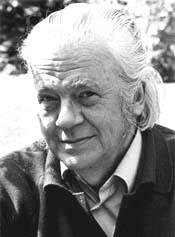
E. F. Schumacher

E. F. Schumacher Quotes

Statistician

Filter quotes by topic

Famous E. F. Schumacher Quotes

“Our ordinary mind always tries to persuade us that we are nothing but acorns and that our greatest happiness will be to become bigger, fatter, shinier acorns; but that is of interest only to pigs. Our faith gives us knowledge of something better: that we can become oak trees.”

“Even bigger machines, entailing even bigger concentrations of economic power and exerting ever greater violence against the environment, do not represent progress: they are a denial of wisdom. Wisdom demands a new orientation of science and technology towards the organic, the gentle, the nonviolent, the elegant and beautiful.”

“Economic policies absorb almost the entire attention of government, and at the same time become ever more impotent. The simplest things, which only fifty years ago one could do without difficulty, cannot get done any more. The richer a society, the more impossible it become to do worthwhile things without immediate payoff.”

“The way in which we experience and interpret the world obviously depends very much indeed on the kind of ideas that fill our minds. If they are mainly small, weak, superficial, and incoherent, life will appear insipid , uninteresting, petty and chaotic.”

“No degree of prosperity could justify the accumulation of large amounts of highly toxic substances which nobody knows how to make safe and which remain an incalculable danger to the whole of creation for historical or even geological ages. To do such a thing is a transgression against life itself, a transgression infinitely more serious than any crime perpetrated by man. The idea that a civilization could sustain itself on such a transgression is an ethical, spiritual, and metaphysical monstrosity. It means conducting the economical affairs of man as if people did not matter at all.”

“The key words of violent economics are urbanization, industrialization, centralization, efficiency, quantity, speed. . . . The problem of evolving a nonviolent way of economic life [in the West] and that of developing the underdeveloped countries may well turn out to be largely identical.”

“That soul-destroying, meaningless, mechanical, moronic work is an insult to human nature which must necessarily and inevitably produce either escapism or aggression, and that no amount of 'bread and circuses' can compensate for the damage done-these are facts which are neither denied nor acknowledged but are met with an unbreakable conspiracy of silence-because to deny them would be too obviously absurd and to acknowledge them would condemn the central preoccupation of modern society as a crime against humanity.”

“Few can contemplate without a sense of exhilaration the splendid achievements of practical energy and technical skill, which, from the latter part of the seventeenth century, were transforming the face of material civilization, and of which England was the daring, if not too scrupulous, pioneer.”