Quotessence
Home / Authors / Fareed Zakaria Books
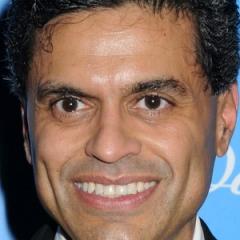
Fareed Zakaria

Fareed Zakaria Books

Journalist

Related Quotes

“IN OCTOBER 2019, just a few months before the novel coronavirus swept the world, Johns Hopkins University released its first Global Heath Security Index, a comprehensive analysis of countries that were best prepared to handle an epidemic or pandemic. The United States ranked first overall, and first in four of the six categories—prevention, early detection and reporting, sufficient and robust health system, and compliance with international norms. That sounded right. America was, after all, the country with most of the world’s best pharmaceutical companies, research universities, laboratories, and health institutes. But by March 2020, these advantages seemed like a cruel joke, as Covid-19 tore across the United States and the federal government mounted a delayed, weak, and erratic response. By July, with less than 5% of the world’s population, the country had over 25% of the world’s cumulative confirmed cases. Per capita daily death rates in the United States were ten times higher than in Europe. Was this the new face of American exceptionalism?”

“I should have paid greater attention to my mentor in graduate school, Samuel Huntington, who once explained that Americans never recognize that, in the developing world, the key is not the kind of government — communist, capitalist, democratic, dictatorial — but the degree of government. That absence of government is what we are watching these days, from Libya to Iraq to Syria. (“Why they still hate us, 13 years later,” Washington Post, 09/05/2014)”

“Because of the times we live in, all of us, young and old, do not spend enough time and effort thinking about the meaning of life. We do not look inside ourselves enough to understand our strengths and weaknesses, and we do not look around enough - a the world, in history - to ask the deepest and broadest questions. The solution surely is that, even now, we could all use a little bit more of a liberal education.”

“But as the digital revolution has created new forms of communal engagement, it has accelerated a rot within society. Digitalization has decimated local communities, and traditional affiliations have weakened as younger generations have shifted their lives online. Was this a Faustian bargain? We have gotten convenience and efficiency at the cost of losing civic engagement, intimacy, and authenticity. In this we again hear the echo of the poet Oliver Goldsmith: 'Wealth accumulates, and men decay.' Amid such dislocations, people are drawn to fringe online communities--or even reject modernity itself, turning away from liberal democracy, economic growth, and technological progress.”

“Generations from now, when historians write about these times, they might note that, in the early decades of the twenty-first century, the United States succeeded in its great and historic mission--it globalized the world. But along the way, they might write, it forgot to globalize itself.”

“Foreign policy commands attention when it's crisis management. A street revolt breaks out in Egypt or Libya or Kiev and everyone asks, how should the president respond? Now these are important parts of America's role in the world, but they are essentially reactive and tactical. The broader challenge is to lay down a longer-term strategy that endures after the crisis of the moment.”

“We have the leading companies and the leading sectors in the advanced industrial world, we have an incredibly dynamic society, and we have high levels of entrepreneurship. And we have the best universities in the world. ... We also have impeccable credit. What we don't have is a political system that can take the simple measures to deal with our short-term deficit.”

“ISIS is a formidable foe, but the counter forces to it have only just begun and if these forces, the Iraqi army, the Kurdish Peshmerga, American air power, the Syrian Free Army, work in a coordinated fashion, it will start losing ground. Also, please keep in mind that ISIS does not actually hold as much ground as the many maps flashed on television keep showing. Large parts of those territories that ISIS supposedly controls are vacant desert.”

“Germany is a fascinating role model. The Germans have maintained their manufacturing edge despite being a high-tax, high-regulation economy. Why? Because the government really set about ensuring that it maintained funding for technical training, technical advancements and programs. It made a concerted effort to retain high-end, complex manufacturing -- the kind of BMW model, if you will. And they've done that so successfully that Germany, which has a quarter of America's population, exports more than America does.”

“As the United States continues its slow but steady recovery from the depths of the financial crisis, nobody actually wants a massive austerity package to shock the economy back into recession, and so the odds have always been high that the game of budgetary chicken will stop short of disaster. Looming past the cliff, however, is a deep chasm that poses a much greater challenge -- the retooling of the country's economy, society, and government necessary for the United States to perform effectively in the twenty-first century.”

“Intriguingly, in poll after poll, when Americans are asked what public institutions they most respect, three bodies are always at the top of their list: the Supreme Court, the armed forces, and the Federal Reserve System. All three have one thing in common: they are insulated from the public pressures and operate undemocratically. It would seem that Americans admire these institutions, precisely because they lead rather than follow.”

“On almost every issue involving postwar Iraq, [Bush's] assumptions and policies have been wrong. This strange combination of arrogance and incompetence has not only destroyed the hopes for a new Iraq. It has had the much broader effect of turning the United States into an international outlaw.”

“We all accuse Vladimir Putin of Cold War nostalgia, but Washington's elites - politicians and intellectuals - miss the old days as well. They wish for the world in which the United States was utterly dominant over its friends, its foes were to be shunned entirely, and the challenges were stark, moral, and vital. Today's world is messy and complicated. China is one of our biggest trading partners and our looming geopolitical rival. Russia is a surly spoiler, but it has a globalized middle class and has created ties in Europe.”

“China is ruthlessly pragmatic. It supports North Korea for its own selfish interests. And I believe that China no longer considers us an ally. The current president, Xi Jinping, cultivates close relations with South Korea. He has never met with me, the leader of North Korea, something that the leader of China has always done. At the grand celebrations in Beijing two years ago commemorating the 70th anniversary of the end of World War II, he placed the president of Russia and the president of South Korea at his side. In North Korea, we pay a lot of attention to ceremonies and what they signal.”

“In a very weak economy, when you say 'cut government spending,' what you mean is you're laying off school teachers and you're de-funding various programs that put money into the economy. This means you have more unemployed people that then draw unemployment benefits and don't pay taxes.”