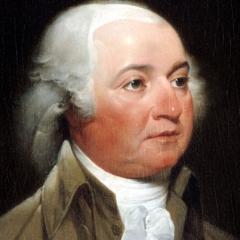
“The proposition that the people are the best keepers of their own liberties is not true. They are the worst conceivable, they are no keepers at all; they can neither judge, act, think, or will, as a political body.”
“Nothing is more dreaded than the national government meddling with religion.”
Source: Old Family Letters: Copied from the Originals for Alexander Biddle... Series A-[B]
“Let the pulpit resound with the doctrines and sentiments of religious liberty... Let us hear the dignity of his [man's] nature, and the noble rank he holds among the works of God... Let it be known, that British liberties are not the grants of princes or parliaments.”
“Liberty, once lost, is lost forever.”
Source: The Book of Abigail and John: Selected Letters of the Adams Family, 1762-1784
“Wisdom and knowledge, as well as virtue, diffused generally among the body of the people being necessary for the preservation of their rights and liberties; and as these depend on spreading the opportunities and advantages of education in various parts of the country, and among the different orders of the people, it shall be the duty of legislators and magistrates in all future periods of this commonwealth to cherish the interests of literature and the sciences.”
Source: The Works of John Adams, Second President of the United States: With a Life of the Author, Notes and Illustrations
“The only foundation of a free Constitution, is pure Virtue, and if this cannot be inspired into our People, in a great Measure, than they have it now. They may change their Rulers, and the forms of Government, but they will not obtain a lasting Liberty.”
“Liberty, according to my metaphysics, is an intellectual quality, an attribute that belongs not to fate nor chance. Neither possesses it, neither is capable of it. There is nothing moral or immoral in the idea of it. The definition of it is a self-determining power in an intellectual agent. It implies thought and choice and power; it can elect between objects, indifferent in point of morality, neither morally good nor morally evil.”
Source: The Political Writings of John Adams: Representative Selections
“The moment the idea is admitted into society that property is not as sacred as the law of God, and that there is not a force of law and public justice to protect it, anarchy and tyranny commence.”
Source: The Works of John Adams, Second President of the United States: With a Life of the Author, Notes and Illustrations
“Let them revere nothing but religion, morality and liberty.”
Source: The Letters of John and Abigail Adams
“[You have Rights] antecedent to all earthly governments: Rights, that cannot be repealed or restrained by human laws; Rights, derived from the Great Legislator of the universe.”
Source: The Works of John Adams Vol. 3: Autobiography, Diary, Notes of a Debate in the Senate, Essays
“Were I to define the British constitution, therefore, I should say, it is a limited monarchy, or a mixture of the three forms of government commonly known in the schools, reserving as much of the monarchical splendor, the aristocratical independency, and the democratical freedom, as are necessary that each of these powers may have a control, both in legislation and execution, over the other two, for the preservation of the subject's liberty.”
Source: The Works of John Adams, Second President of the United States: With a Life of the Author, Notes and Illustrations
“Liberty can no more exist without virtue and independence than the body can live and move without a soul.”
Source: Novanglus and Massachusettensis; or, political essays, published in ... 1774 and 1775, on the principal points of controversy, between Great Britain and her colonies; the former by John Adams ... the latter by Jonathan Sewall [or rather, Daniel Leonard] ... To which are added a number of letters lately written by President Adams to the Hon. William Tudor, etc
“Public virtue cannot exist in a nation without private, and public virtue is the only foundation of republics.”
Source: Warren-Adams Letters: Being Chiefly a Correspondence Among John Adams, Samuel Adams, and James Warren ... 1743-1814
“[I]t is religion and morality alone which can establish the principles upon which freedom can securely stand. The only foundation of a free constitution is pure virtue.”
Source: The Works of John Adams, Second President of the United States: With a Life of the Author, Notes and Illustrations
“Honor is truly sacred, but holds a lower rank in the scale of moral excellence than virtue. Indeed the former is part of the latter, and consequently has not equal pretensions to support a frame of government productive of human happiness.”
Source: The Political Writings of John Adams: Representative Selections
“Mankind will in time discover that unbridled majorities are as tyrannical and cruel as unlimited despots.”
“Human nature itself is evermore an advocate for liberty. There is also in human nature a resentment of injury, and indignation against wrong. A love of truth and a veneration of virtue. These amiable passions, are the "latent spark" . . . If the people are capable of understanding, seeing and feeling the differences between true and false, right and wrong, virtue and vice, to what better principle can the friends of mankind apply than to the sense of this difference?”
Source: Novanglus and Massachusettensis; or, political essays, published in ... 1774 and 1775, on the principal points of controversy, between Great Britain and her colonies; the former by John Adams ... the latter by Jonathan Sewall [or rather, Daniel Leonard] ... To which are added a number of letters lately written by President Adams to the Hon. William Tudor, etc
“Thus, experience has ever shown, that education, as well as religion, aristocracy, as well as democracy and monarchy, are, singly, totally inadequate to the business of restraining the passions of men, of preserving a steady government, and protecting the lives, liberties, and properties of the people . . . . Religion, superstition, oaths, education, laws, all give way before passions, interest, and power, which can be resisted only by passions, interest, and power.”
“Objects of the most stupendous magnitude, and measure in which the lives and liberties of millions yet unborn are intimately interested, are now before us. We are in the very midst of a revolution the most complete, unexpected and remarkable of any in the history of nations.”
Source: Works: with a life of the author
“To suppose arms in the hands of citizens, to be used at individual discretion, except in private self-defense, or by partial orders of towns, counties or districts of a state, is to demolish every constitution, and lay the laws prostrate, so that liberty can be enjoyed by no man; it is a dissolution of the government. The fundamental law of the militia is, that it be created, directed and commanded by the laws, and ever for the support of the laws.”
“It is the duty of all men in society, publicly, and at stated seasons, to worship the SUPREME BEING, the great Creator and Preserver of the universe. And no subject shall be hurt, molested, or restrained, in his person, liberty, or estate, for worshipping GOD in the manner most agreeable to the dictates of his own conscience; or for his religious profession or sentiments; provided he doth not disturb the public peace, or obstruct others in their religious worship.”
Source: The Political Writings of John Adams: Representative Selections
“Public virtue cannot exist in a nation without private, and public virtue is the only foundation of republics. There must be a positive passion for the public good, the public interest, honour, power and glory, established in the minds of the people, or there can be no republican government, nor any real liberty: and this public passion must be superiour to all private passions.”
Source: Warren-Adams Letters: Being Chiefly a Correspondence Among John Adams, Samuel Adams, and James Warren ... 1743-1814
“We must not then depend alone upon the love of liberty in the soul of man for its preservation.”
Source: John Adams: Writings from the New Nation, 1784-1826
“It has ever been my hobby-horse to see rising in America an empire of liberty, and a prospect of two or three hundred millions of freemen, without one noble or one king among them. You say it is impossible. If I should agree with you in this, I would still say, let us try the experiment, and preserve our equality as long as we can. A better system of education for the common people might preserve them long from such artificial inequalities as are prejudicial to society, by confounding the natural distinctions of right and wrong, virtue and vice.”
Source: Works: with a life of the author
“[T]he liberty, the unalienable, indefeasible rights of men, the honor and dignity of human nature, the grandeur and glory of the public, and the universal happiness of individuals, were never so skillfully and successfully consulted as in that most excellent monument of human art, the common law of England.”
Source: The Works of John Adams, Second President of the United States: With a Life of the Author, Notes and Illustrations
“[A] republic . . . [is] a government, in which the property of the public, or people, and of every one of them was secure and protected by law . . . implies liberty; because property cannot be secured unless the man be at liberty to acquire, use or part with it, at his discretion, and unless he have his personal liberty of life and limb, motion and rest, for that purpose.”
Source: The Works of John Adams, Second President of the United States: With a Life of the Author, Notes and Illustrations
“[D]emocracy will soon degenerate into an anarchy, such an anarchy that every man will do what is right in his own eyes and no man's life or property or reputation or liberty will be secure, and every one of these will soon mould itself into a system of subordination of all the moral virtues and intellectual abilities, all the powers of wealth, beauty, wit and science, to the wanton pleasures, the capricious will, and the execrable cruelty of one or a very few.”
“The most sensible and jealous people are so little attentive to government that there are no instances of resistance until repeated, multiplied oppressions have placed it beyond a doubt that their rulers had formed settled plans to deprive them of their liberties; not to oppress an individual or a few, but to break down the fences of a free constitution, and deprive the people at large of all share in the government, and all the checks by which it is limited.”
“I would define liberty to be a power to do as we would be done by. The definition of liberty to be the power of doing whatever the law permits, meaning the civil laws, does not seem satisfactory.”
“We should begin by setting conscience free. When all men of all religions shall enjoy equal liberty, property, and an equal chance for honors and power we may expect that improvements will be made in the human character and the state of society.”
Source: The Works of John Adams Vol. 8: Letters and State Papers 1782 - 1799
“Property must be secured, or liberty cannot exist.”
Source: The Works of John Adams, Second President of the United States: With a Life of the Author, Notes and Illustrations
“Those who trade liberty for security have neither.”
“That the said Constitution shall never be construed to authorize Congress to infringe the just liberty of the press or the rights of conscience.”
“The rights of Englishmen are derived from God, not from king or Parliament, and would be secured by the study of history, law, and tradition.”
“The good of the governed is the end, and rewards and punishments are the means, of all government. The government of the supreme and all-perfect Mind, over all his intellectual creation, is by proportioning rewards to piety and virtue, and punishments to disobedience and vice. ... The joys of heaven are prepared, and the horrors of hell in a future state, to render the moral government of the universe perfect and complete. Human government is more or less perfect, as it approaches nearer or diverges further from an imitation of this perfect plan of divine and moral government.”
“The dons, the bashaws, the grandees, the patricians, the sachems, the nabobs, call them by what names you please, sigh and groan and fret, and sometimes stamp and foam and curse, but all in vain. The decree is gone forth, and it cannot be recalled, that a more equal liberty than has prevailed in other parts of the earth must be established in America.”
Source: The Works of John Adams, Second President of the United States: With a Life of the Author, Notes and Illustrations
“Nip the shoots of arbitrary power in the bud, is the only maxim which can ever preserve the liberties of any people. When the people give way, their deceivers, betrayers and destroyers press upon them so fast that there is no resisting afterwards. The nature of the encroachments is to, grow every day more encroaching; like a cancer, it eats faster and faster every hour.”
Source: The Works of John Adams, Second President of the United States: With a Life of the Author, Notes and Illustrations
“We should be unfaithful to ourselves if we should ever lose sight of the danger to our Liberties if anything partial or extraneous should infect the purity of our free, fair, virtuous, and independent elections. If an election is to be determined by a majority of a single vote, and that can be procured by a party through artifice or corruption, the Government may be the choice of a party for its own ends, not of the nation for the national good.”
“Have you ever found in history, one single example of a nation, thoroughly corrupted, that was afterwards restored to virtue? And without virtue there can be no political liberty.”
Source: The Works of John Adams, Second President of the United States: With a Life of the Author, Notes and Illustrations
“I shall have the liberty to think for myself.”
“I shall have liberty to think for myself without molesting others or being molested myself.”
Source: The Works of John Adams, Second President of the United States: With a Life of the Author, Notes and Illustrations
“Each individual of the society has a right to be protected by it in the enjoyment of his life, liberty, and property, according to standing laws.”
Source: The Works of John Adams, Second President of the United States: With a Life of the Author, Notes and Illustrations
“The numbers of men in all ages have preferred ease, slumber, and good cheer to liberty, when they have been in competition.”
Source: John Adams: Writings from the New Nation, 1784-1826
“Property is surely a right of mankind as real as liberty. Perhaps, at first, prejudice, habit, shame or fear, principle or religion, would restrain the poor from attacking the rich, and the idle from usurping on the industrious; but the time would not be long before courage and enterprise would come, and pretexts be invented by degrees, to countenance the majority in dividing all the property among them, or at least, in sharing it equally with its present possessors.”
Source: The Works of John Adams Vol. 6: Defence of the Constitution IV, Discourses on Davila
“Property must be secured or liberty cannot exist. But if unlimited or unbalanced power of disposing property, be put into the hands of those who have no property, France will find, as we have found, the lamb committed to the custody of the world. In such a case, all the pathetic exhortations and addresses of the national assembly to the people, to respect property, will be regarded no more than the warbles of the songsters of the forest.”
“We may... affirm that the balance of power in a society accompanies the balance of property in land. The only possible way, then, of preserving the balance of power on the side of liberty and public virtue is to make the acquisition of land easy to every member of society; to make a division of the land into small quantities, so that the multitude may be possessed of landed estates.”
Source: John Adams Speaking: Pound's Sources for the Adams Cantos
“If the multitude is possessed of the balance of real estate, the multitude will have the balance of power, and in that case the multitude will take care of the liberty, virtue, and interest of the multitude in all acts of government.”
Source: The Works of John Adams, Second President of the United States: With a Life of the Author, Notes and Illustrations
“Let us hear the dangers of thralldom to our consciences from ignorance, extreme poverty, and dependence; in short, from civil and political slavery. Let us see delineated before us the true map of man. Let us hear the dignity of his nature, and the noble rank he holds among the works of God-that consenting to slavery is a sacrilegious breach of trust, as offensive in the sight of God as it is derogatory from our own honor or interest or happiness-and that God Almighty has promulgated from heaven liberty, peace, and goodwill to man!”
“Our Constitution was made only for a moral and religious people. It is wholly inadequate to the government of any other.”
Source: Works: with a life of the author
“I must study politics and war that my sons may have liberty to study mathematics and philosophy.”
Source: The Letters of John and Abigail Adams