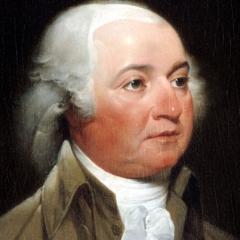
“It was the general opinion of ancient nations, that the divinity alone was adequate to the important office of giving laws to men... and modern nations, in the consecrations of kings, and in several superstitious chimeras of divine rights in princes and nobles, are nearly unanimous in preserving remnants of it... Is the jealousy of power, and the envy of superiority, so strong in all men, that no considerations of public or private utility are sufficient to engage their submission to rules for their own happiness? Or is the disposition to imposture so prevalent in men of experience, that their private views of ambition and avarice can be accomplished only by artifice? — … There is nothing in which mankind have been more unanimous; yet nothing can be inferred from it more than this, that the multitude have always been credulous, and the few artful. The United States of America have exhibited, perhaps, the first example of governments erected on the simple principles of nature: and if men are now sufficiently enlightened to disabuse themselves of artifice, imposture, hypocrisy, and superstition, they will consider this event as an era in their history. Although the detail of the formation of the American governments is at present little known or regarded either in Europe or America, it may hereafter become an object of curiosity. It will never be pretended that any persons employed in that service had any interviews with the gods, or were in any degree under the inspiration of heaven, any more than those at work upon ships or houses, or labouring in merchandize or agriculture: it will for ever be acknowledged that these governments were contrived merely by the use of reason and the senses. As Copley painted Chatham, West, Wolf, and Trumbull, Warren and Montgomery; as Dwight, Barlow, Trumbull, and Humphries composed their verse, and Belknap and Ramzay history; as Godfrey invented his quadrant, and Rittenhouse his planetarium; as Boylston practised inoculation, and Franklin electricity; as Paine exposed the mistakes of Raynal, and Jefferson those of Buffon, so unphilosophically borrowed from the Recherches Philosophiques sur les Américains those despicable dreams of de Pauw — neither the people, nor their conventions, committees, or sub-committees, considered legislation in any other light than ordinary arts and sciences, only as of more importance. Called without expectation, and compelled without previous inclination, though undoubtedly at the best period of time both for England and America, to erect suddenly new systems of laws for their future government, they adopted the method of a wise architect, in erecting a new palace for the residence of his sovereign. They determined to consult Vitruvius, Palladio, and all other writers of reputation in the art; to examine the most celebrated buildings, whether they remain entire or in ruins; compare these with the principles of writers; and enquire how far both the theories and models were founded in nature, or created by fancy: and, when this should be done, as far as their circumstances would allow, to adopt the advantages, and reject the inconveniences, of all. Unembarrassed by attachments to noble families, hereditary lines and successions, or any considerations of royal blood, even the pious mystery of holy oil had no more influence than that other of holy water: the people universally were too enlightened to be imposed on by artifice; and their leaders, or more properly followers, were men of too much honour to attempt it. Thirteen governments thus founded on the natural authority of the people alone, without a pretence of miracle or mystery, which are destined to spread over the northern part of that whole quarter of the globe, are a great point gained in favour of the rights of mankind.
[Preface to 'A Defence of the Constitutions of the United States of America', 1787]”
Source: A Defence of the Constitutions of Government of the United States of America: Akashic U.S. Presidents Series
“There is nothing in which mankind have been more unanimous [founding nations upon superstition]; yet nothing can be inferred from it more than this, that the multitude have always been credulous, and the few artful. The United States of America have exhibited, perhaps, the first example of governments erected on the simple principles of nature: and if men are now sufficiently enlightened to disabuse themselves of artifice, imposture, hypocrisy, and superstition, they will consider this event as an era in their history... [T]he detail of the formation of the American governments... may hereafter become an object of curiosity. It will never be pretended that any persons employed in that service had any interviews with the gods, or were in any degree under the inspiration of heaven... it will for ever be acknowledged that these governments were contrived merely by the use of reason and the senses... Thirteen governments thus founded on the natural authority of the people alone, without a pretence of miracle or mystery, which are destined to spread over the northern part of that whole quarter of the globe, are a great point gained in favour of the rights of mankind.
[A Defence of the Constitutions of the United States of America, 1787]”
Source: The Political Writings of John Adams
“Government is nothing more than the combined force of society, or the united power of the multitude, for the peace, order, safety, good and happiness of the people.”
Source: Diary and Autobiography
“Ambition is one of the ungovernable passions of the human heart. The love of power is insatiable and uncontrollable.”
“As the government of the United States is not, in any sense, founded on the Christian religion; as it has in itself no character of enmity against the laws, religion or tranquility of Musselmen [Muslims] ... it is declared ... that no pretext arising from religious opinion shall ever product an interruption of the harmony existing between the two countries.... The United States is not a Christian nation any more than it is a Jewish or a Mohammedan nation.”
“The real fabric of American society is not all those flags you see on people's cars...it's in the Bill of Rights and in our constitutional form of government.”
“The Declaration of Independence laid the cornerstone of human government upon the first precepts of Christianity.”
“Nothing is more dreaded than the national government meddling with religion.”
Source: Old Family Letters: Copied from the Originals for Alexander Biddle... Series A-[B]
“Liberty, once lost, is lost forever.”
Source: The Book of Abigail and John: Selected Letters of the Adams Family, 1762-1784
“The form of government which communicates ease, comfort, security, or, in one word, happiness, to the greatest number of persons, and in the greatest degree, is the best.”
Source: The Political Writings of John Adams: Representative Selections
“The only foundation of a free Constitution, is pure Virtue, and if this cannot be inspired into our People, in a great Measure, than they have it now. They may change their Rulers, and the forms of Government, but they will not obtain a lasting Liberty.”
“[You have Rights] antecedent to all earthly governments: Rights, that cannot be repealed or restrained by human laws; Rights, derived from the Great Legislator of the universe.”
Source: The Works of John Adams Vol. 3: Autobiography, Diary, Notes of a Debate in the Senate, Essays
“Were I to define the British constitution, therefore, I should say, it is a limited monarchy, or a mixture of the three forms of government commonly known in the schools, reserving as much of the monarchical splendor, the aristocratical independency, and the democratical freedom, as are necessary that each of these powers may have a control, both in legislation and execution, over the other two, for the preservation of the subject's liberty.”
Source: The Works of John Adams, Second President of the United States: With a Life of the Author, Notes and Illustrations
“Public virtue cannot exist in a nation without private, and public virtue is the only foundation of republics.”
Source: Warren-Adams Letters: Being Chiefly a Correspondence Among John Adams, Samuel Adams, and James Warren ... 1743-1814
“Honor is truly sacred, but holds a lower rank in the scale of moral excellence than virtue. Indeed the former is part of the latter, and consequently has not equal pretensions to support a frame of government productive of human happiness.”
Source: The Political Writings of John Adams: Representative Selections
“Thus, experience has ever shown, that education, as well as religion, aristocracy, as well as democracy and monarchy, are, singly, totally inadequate to the business of restraining the passions of men, of preserving a steady government, and protecting the lives, liberties, and properties of the people . . . . Religion, superstition, oaths, education, laws, all give way before passions, interest, and power, which can be resisted only by passions, interest, and power.”
“As the happiness of the people is the sole end of government, so the consent of the people is the only foundation of it.”
Source: The Works of John Adams, Second President of the United States: With a Life of the Author, Notes and Illustrations
“The furnace of affliction produces refinement in states as well as individuals. And the new Governments we are assuming in every part will require a purification from our vices, and an augmentation of our virtues, or there will be no blessings.”
Source: The Works of John Adams, Second President of the United States: With a Life of the Author, Notes and Illustrations
“There is nothing I dread so much as the division of the republic into two great parties, each arranged under its leader, and concerting measures in opposition to each other. This, in my humble apprehension, is to be dreaded as the greatest political evil under our constitution.”
Source: The Works of John Adams, Second President of the United States: With a Life of the Author, Notes and Illustrations
“The consequences arising from the continual accumulation of public debts in other countries ought to admonish us to prevent their growth in our own.”
Source: The Works of John Adams, Second President of the United States: With a Life of the Author, Notes and Illustrations
“Religion and virtue are the only foundations, not of republicanism and of all free government, but of social felicity under all government and in all the combinations of human society.”
Source: The Works of John Adams Vol. 9: Letters and State Papers 1799 - 1811
“The form of government which you admire, when its principles are pure is admirable indeed. It is productive of every Thing which is great and excellent among men. But its principles are as easily destroyed as human nature is corrupted. Such a government is only to be supported by pure religion or Austere morals.”
Source: Warren-Adams Letters: Being Chiefly a Correspondence Among John Adams, Samuel Adams, and James Warren ... 1743-1814
“A constitution founded on these principles introduces knowledge among the people, and inspires them with a conscious dignity becoming freemen; a general emulation takes place, which causes good humor, sociability, good manners, and good morals to be general. That elevation of sentiment inspired by such a government, makes the common people brave and enterprising. That ambition which is inspired by it makes them sober, industrious, and frugal.”
Source: The Works of John Adams Vol. 4: Novanglus, Thoughts on Government, Defence of the Constitution I
“The dignity and stability of government in all its branches, the morals of the people, and every blessing of society depend so much upon an upright and skillful administration of justice, that the judicial power ought to be distinct from both the legislative and executive, and independent upon both, that so it may be a check upon both, as both should be checks upon that.”
“To suppose arms in the hands of citizens, to be used at individual discretion, except in private self-defense, or by partial orders of towns, counties or districts of a state, is to demolish every constitution, and lay the laws prostrate, so that liberty can be enjoyed by no man; it is a dissolution of the government. The fundamental law of the militia is, that it be created, directed and commanded by the laws, and ever for the support of the laws.”
“Public virtue cannot exist in a nation without private, and public virtue is the only foundation of republics. There must be a positive passion for the public good, the public interest, honour, power and glory, established in the minds of the people, or there can be no republican government, nor any real liberty: and this public passion must be superiour to all private passions.”
Source: Warren-Adams Letters: Being Chiefly a Correspondence Among John Adams, Samuel Adams, and James Warren ... 1743-1814
“Upon this point all speculative politicians will agree, that the happiness of society is the end of government, as all divines and moral philosophers will agree that the happiness of the individual is the end of man. From this principle it will follow that the form of government which communicates ease, comfort, security, or, in one word, happiness, to the greatest numbers of persons, and in the greatest degree, is the best. All sober inquirers after truth, ancient and modern, pagan and Christian, have declared that the happiness of man, as well as his dignity, consists in virtue.”
Source: The Works of John Adams: Controversial papers of the Revolution (continued) Works on government
“Human government is more or less perfect as it approaches nearer or diverges farther from the imitation of this perfect plan of divine and moral government.”
Source: Diary and Autobiography: Diary, 1755-1770
“The question before the human race is, Whether the God of nature shall govern the world by his own laws, or whether Priests and Kings shall rule it by fictitious Miracles? Or, in other words, whether authority is originally in the People? Or whether it has descended for 1800 Years in a succession of Popes and Bishops, or brought down from Heaven by the Holy Ghost in the form of a Dove, in a Phial of holy Oil?”
Source: The Adams-Jefferson Letters: The Complete Correspondence Between Thomas Jefferson and Abigail and John Adams
“If there is a form of government, then, whose principle and foundation is virtue, will not every sober man acknowledge it better calculated to promote the general happiness than any other form?”
Source: The Works of John Adams, Second President of the United States: With a Life of the Author, Notes and Illustrations
“Fear is the foundation of most governments; but it is so sordid and brutal a passion, and renders men in whose breasts it predominates so stupid and miserable, that Americans will not be likely to approve of any political institution which is founded on it.”
Source: The Political Writings of John Adams: Representative Selections
“Government is instituted for the common good; for the protection, safety, prosperity, and happiness of the people; and not for profit, honor, or private interest of any one man, family, or class of men; therefore, the people alone have an incontestable, unalienable, and indefeasible right to institute government; and to reform, alter, or totally change the same, when their protection, safety, prosperity, and happiness require it.”
Source: The Political Writings of John Adams: Representative Selections
“We must not then depend alone upon the love of liberty in the soul of man for its preservation.”
Source: John Adams: Writings from the New Nation, 1784-1826
“[A] republic . . . [is] a government, in which the property of the public, or people, and of every one of them was secure and protected by law . . . implies liberty; because property cannot be secured unless the man be at liberty to acquire, use or part with it, at his discretion, and unless he have his personal liberty of life and limb, motion and rest, for that purpose.”
Source: The Works of John Adams, Second President of the United States: With a Life of the Author, Notes and Illustrations
“What other form of government, indeed, can so well deserve our esteem and love?”
Source: Works: with a life of the author
“[D]emocracy will soon degenerate into an anarchy, such an anarchy that every man will do what is right in his own eyes and no man's life or property or reputation or liberty will be secure, and every one of these will soon mould itself into a system of subordination of all the moral virtues and intellectual abilities, all the powers of wealth, beauty, wit and science, to the wanton pleasures, the capricious will, and the execrable cruelty of one or a very few.”
“As good government is an empire of laws, how shall your laws be made? In a large society, inhabiting an extensive country, it is impossible that the whole should assemble to make laws. The first necessary step, then, is to depute power from the many to a few of the most wise and good.”
Source: The Works of John Adams, Second President of the United States: With a Life of the Author, Notes and Illustrations
“There is no good government but what is republican. That the only valuable part of the British constitution is so; for the true idea of a republic is "an empire of laws, and not of men." That, as a republic is the best of governments, so that particular arrangement of the powers of society, or in other words, that form of government which is best contrived to secure an impartial and exact execution of the law, is the best of republics.”
“A question arises whether all the powers of government, legislative, executive, and judicial, shall be left in this body? I think a people cannot be long free, nor ever happy, whose government is in one Assembly.”
Source: The Works of John Adams, Second President of the United States: With a Life of the Author, Notes and Illustrations
“Children should be educated and instructed in the principles of freedom. Aristotle speaks plainly to this purpose, saying, 'that the institution of youth should be accommodated to that form of government under which they live; forasmuch as it makes exceedingly for the preservation of the present government, whatsoever it be.”
Source: The Works of John Adams, Second President of the United States: With a Life of the Author, Notes and Illustrations
“Can a free government possibly exist with the Roman Catholic religion?”
Source: The Works of John Adams, Second President of the United States: With a Life of the Author, Notes and Illustrations
“No good government but what is republican... the very definition of a republic is 'an empire of laws, and not of men.'”
Source: The Works of John Adams, Second President of the United States: With a Life of the Author, Notes and Illustrations
“There is but one element of government, and that is THE PEOPLE. From this element spring all governments. "For a nation to be free, it is only necessary that she wills it." For a nation to be slave, it is only necessary that she wills it.”
Source: The Works of John Adams, Second President of the United States: With a Life of the Author, Notes and Illustrations
“Public business must always be done by somebody. It will be done by somebody or other. If wise man decline, others will not; if honest man refuse it, others will not.”
“The executive shall never exercise the legislative and judicial powers, or either of them, to the end that it may be a government of laws and not of men.”
Source: The Political Writings of John Adams: Representative Selections
“The most sensible and jealous people are so little attentive to government that there are no instances of resistance until repeated, multiplied oppressions have placed it beyond a doubt that their rulers had formed settled plans to deprive them of their liberties; not to oppress an individual or a few, but to break down the fences of a free constitution, and deprive the people at large of all share in the government, and all the checks by which it is limited.”
“It is an observation of one of the profoundest inquirers into human affairs that a revolution of government is the strongest proof that can be given by a people of their virtue and good sense.”
Source: The Works of John Adams, Second President of the United States: Autobiography (cont.) Diary. Notes of a debate in the Senate of the United States. Essays: On private revenge. On self-delusion. On private revenge. Dissertation on the canon and the feudal law. Instructions of the town of Braintree to their representative, 1765. The Earl of Clarendon to William Pym. Governor Winthrop to Governor Bradford. Instructions of the town of Boston to their representatives, 1768. Instructions of the town of
“. . . Thirteen governments [of the original states] thus founded on the natural authority of the people alone, without a pretence of miracle or mystery, and which are destined to spread over the northern part of that whole quarter of the globe, are a great point gained in favor of the rights of mankind.”
Source: The Works of John Adams, Second President of the United States: With a Life of the Author, Notes and Illustrations
“It is much easier to pull down a government, in such a conjuncture of affairs as we have seen, than to build up, at such a season as the present.”
Source: Papers of John Adams, Volume 18: December 1785 - January 1787
“The good of the governed is the end, and rewards and punishments are the means, of all government. The government of the supreme and all-perfect Mind, over all his intellectual creation, is by proportioning rewards to piety and virtue, and punishments to disobedience and vice. ... The joys of heaven are prepared, and the horrors of hell in a future state, to render the moral government of the universe perfect and complete. Human government is more or less perfect, as it approaches nearer or diverges further from an imitation of this perfect plan of divine and moral government.”