Quotessence
Home / Authors / Marshall B. Rosenberg
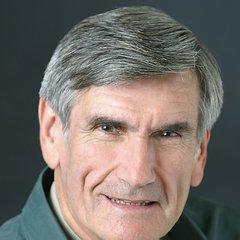
Marshall B. Rosenberg

Marshall B. Rosenberg Quotes

Psychologist

Filter quotes by topic

Famous Marshall B. Rosenberg Quotes

“If you are a czar or a king or a president or someone that wants to control those below them you do not want people to have a consciousness of life, of their needs. Because people do not make good slaves when they're connected to life... That's why in the public schools the primary objective is obedience to authority.”

“This objective of getting what we want from other people-or getting them to do what we want them to do-threatens the autonomy of people, their right to choose what they want to do. And whenever people feel that they're not free to choose what they want to do, they are likely to resist, even if they see the purpose in what we are asking and would ordinarily want to do it.”

“Please do as I requested, only if you can do so with the joy of a little child feeding a hungry duck. Please do not do as I request if there is any taint of fear of punishment if you don't. Please do not do as I request to buy my love, that, is hoping that I will love you more if you do. Please do not do as I request if you will feel guilty if you don't. Please do not do as I request if you will feel shameful. And certainly do not do as I request out of any sense of duty or obligation.”

“Very often, the way love is defined, it does violence to both people. It almost makes them a slave to the other. For example, if to be in love, or to be married, it means that I'm responsible for the other person's happiness, now we get into this guilt game, where if they're upset, I'm at fault. Soon, that makes the person we are closest to about as much fun to be around as a prolonged dental appointment.”

“Any evaluation which implies rightness or wrongness is a tragic, suicidal expression of an unmet need. Tragic, first because it decreases our likelihood of getting our need met! Even if we think it. And secondly, because it increases the likelihood of violence. That's why I'm suggesting any evaluation which implies rightness or wrongness is a tragic, suicidal expression of an unmet need. Say the need! Learn a need-consciousness.”

“If you have an image of someone cutting off a relationship, it's the cutting off that will lead to your suffering. If you see the action as their need being expressed, then the message is within them, not you. Any interpretation you put onto another person's message (such as passive-aggressive, withholding, etc.), you will pay for because of how you took it.”

“We never really know what we want until after we get it. If after we get it, it makes life more miserable, we know that isn't what we wanted. If it makes our life wonderful, we know this is a strategy which will meet out need. That's why Paul Tillich, the theologian says we need to sin courageously. You ask for what you want, hoping to meet your needs. If you get it and it makes life worse, you learn that this isn't what I want.”

“Two questions help us see why we are unlikely to get what we want by using punishment... The first question is: What do I want this person to do that's different from what he or she is currently doing? If we ask only this first question, punishment may seem effective because the threat or exercise of punitive force may well influence the person's behavior. However, with the second question, it becomes evident that punishment isn't likely to work: What do I want this person's reasons to be for doing what I'm asking?”

“If you think ahead to what to say next - like how to fix it or make the person feel better - BOOM! Off the board. You're into the future. Empathy requires staying with the energy that's here right now. Not using any technique. Just being present. When I have really connected to this energy, it's like I wasn't there. I call this "watching the magic show". In this presence, a very precious energy works through us that can heal anything, and this relieves me from my "fix-it" tendencies.”

“We recognize that real educational reform is essential if today's and tomorrow's children are to live in a more peaceful, just, and sustainable world.”

“If I'm using Nonviolent Communication I never, never, never hear what somebody thinks about me. Never hear what somebody thinks about you, you'll live longer. You'll enjoy life more. Hear the truth. The truth is that when somebody's telling you what's wrong with you, the truth is they have a need that isn't getting met. Hear that they're in pain. Don't hear the analysis.”

“Conflicts, even of long standing duration, can be resolved if we can just keep the flow of communication going in which people come out of their heads and stop criticizing and analyzing each other, and instead get in touch with their needs, and hear the needs of others, and realize the interdependence that we all have in relation to each other. We can't win at somebody else's expense. We can only fully be satisfied when the other person's needs are fulfilled as well as our own.”