Quotessence
Home / Authors / Parker J. Palmer
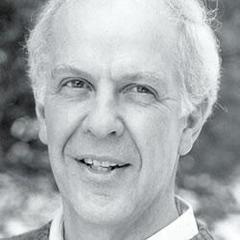
Parker J. Palmer

Parker J. Palmer Quotes

Author

Filter quotes by topic

Famous Parker J. Palmer Quotes

“People are always asking, "Is this person in front of me the same on the inside as he or she appears to be on the outside? Is there congruence between what's within that person and the words and actions I'm viewing and hearing externally?" Children ask that about their parents; students ask it about their teachers; parishioners ask it about their pastors and priests; employees ask it about their bosses; and in a democracy, citizens ask it about their political leaders.”

“I am very, very uneasy with churches that have basically said, "Well, since that's what people want and that's what sells, then were going to do our worship services like Hollywood productions. We're going to have a lot of bells and whistles. We're going to have high entertainment value, and it is going to have a lot of gloss and glitter."”

“There is a tradition that the church represents, without which we wouldn't have the church, that's all about diving deep beneath the surface of the culture and finding those timeless, eternal truths that the whole Christian enterprise is rooted in. And one of those is that you don't come to God at 180 miles an hour.”

“I understand that there are forms of entertainment that can make people weep or jazz them up so they feel like they have had an experience. But I also know that an hour later that's faded and you are back to the difficult realities of your own life. And we need to help people know how to go beyond those difficulties to a place where God dwells.”

“Even though kids may have planned for months for the trip to Disneyland, some may be feeling very homesick, very forlorn, or very marginalized by the group. Your capacity to perceive those kinds of situations and respond to them in a pastoral way is the stuff you are teaching. And even though the kids may appear to be ignoring you, they are very aware of what you are doing and how you are doing it. They are also very aware of what you are missing and not picking up on.”

“We can teach a good, formal lesson on forgiveness as a Christian virtue and all the doctrines that are attached to it. But to be in a real-life situation, a work camp or a trip or some other activity with young people where real forgiveness needs to happen, that's a different situation altogether. And that is where the deepest learning will occur.”

“If my life is any example, the work that youth workers are doing is very, very important. It tends to get marginalized in the church or seen as less important than being a senior minister in a large, prosperous congregation; but I don't believe that for a minute. I think this is absolutely critical work in the life of the church; and I think my path in life would have been much different if it hadn't been for my youth minister, Burt Randle, and a series of campus ministers in both college and graduate school.”

“In my own life, as winters turn into spring, I find it not only hard to cope with mud but also hard to credit the small harbingers of larger life to come, hard to hope until the outcome is secure. Spring teaches me to look more carefully for the green stems of possibility; for the intuitive hunch that may turn into a larger insight, for the glance or touch that may thaw a frozen relationship, for the stranger's act of kindness that makes the world seem hospitable again.”

“Our deepest calling is to grow into our own authentic self-hood, whether or not it conforms to some image of who we ought to be. As we do so, we will not only find the joy that every human being seeks--we will also find our path of authentic service in the world.”

“As a young man, I yearned for the day when, rooted in the experience that comes only with age, I could do my work fearlessly. But today, in my mid-sixties, I realize that I will feel fear from time to time for the rest of my life. I may never get rid of my fear. But . . . I can learn to walk into it and through it whenever it rises up . . . naming the inner force that triggers . . . fear . . . Naming our fears aloud . . . is the first step toward transcending them.”

“Mentors and apprentices are partners in an ancient human dance, and one of teaching's great rewards is the daily chance it gives us to get back on the dance floor. It is the dance of the spiraling generations, in which the old empower the young with their experience and the young empower the old with new life, reweaving the fabric of the human community as they touch and turn.”

“We must come together in ways that respect the solitude of the soul that avoid the unconscious violence we do when we try to save each other that evoke our capacity to hold another life without dishonoring its mystery never trying to coerce the other into meeting our own needs.”

“The academic bias against subjectivity not only forces our students to write poorly ("It is believed...," instead of, "I believe..."), it deforms their thinking about themselves and their world. In a single stroke, we delude our students into believing that bad prose turns opinions into facts and we alienate them from their own inner lives.”

“If we want to grow as teachers -- we must do something alien to academic culture: we must talk to each other about our inner lives -- risky stuff in a profession that fears the personal and seeks safety in the technical, the distant, the abstract.”

“I want to learn how to hold the paradoxical poles of my identity together, to embrace the profoundly opposite truths that my sense of self is deeply dependent on others dancing with me and that I still have a sense of self when no one wants to dance.”

“Like a wild animal, the soul is tough, resilient, resourceful, savvy, and self-sufficient: it knows how to survive in hard places. I learned about these qualities during my bouts with depression. In that deadly darkness, the faculties I had always depended on collapsed. My intellect was useless; my emotions were dead; my will was impotent; my ego was shattered. But from time to time, deep in the thickets of my inner wilderness, I could sense the presence of something that knew how to stay alive even when the rest of me wanted to die. That something was my tough and tenacious soul.”

“Perhaps, the answer is that my ravaged mind rails against the idea of God, but something deeper in me calls out as if God might answer. 'There are not foxholes,' I guess, and depression is the deepest and deadliest foxhole I've been in. It may be the 'dark night of the soul' that the mystics talk about but in depression it is not so much that one becomes lost in the dark as one becomes the dark.”

“Teaching, like any truly human activity, emerges from one's inwardness, for better or worse. As I teach I project the condition of my soul onto my students, my subject, and our way of being together. The entanglements I experience in the classroom are often no more or less than the convolutions of my inner life. Viewed from this angle, teaching holds a mirror to the soul. If I am willing to look in that mirror and not run from what I see, I have a chance to gain self-knowledge-and knowing myself is as crucial to good teaching as knowing my students and my subject.”

“Integrity requires that I discern what is integral to my selfhood, what fits and what does not-and that I choose life-giving ways of relating to the forces that converge within me: Do I welcome them or fear them, embrace them or reject them, move with them or against them? By choosing integrity, I become more whole, but wholeness does not mean perfection. It means becoming more real by acknowledging the whole of who I am.”