Quotessence
Home / Authors / Paul Feyerabend Books
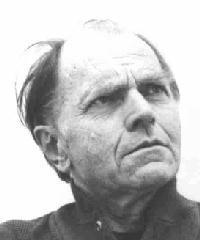
Paul Feyerabend

Paul Feyerabend Books

Philosopher

Against Method

A source page for quotes linked to Paul Feyerabend.
0 quotes

Related Quotes

“One might get the impression that I recommend a new methodology which replaces induction by counterinduction and uses a multiplicity of theories, metaphysical views, fairy tales, instead of the customary pair theory/observation. This impression would certainly be mistaken. My intention is not to replace one set of general rules by another such set: my intention is rather to convince the reader that all methodologies, even the most obvious ones, have their limits.”

“There is not a single rule, however plausible, and however firmly grounded in epistemology, that is not violated at some time or other. It becomes evident that such violations are not accidental events, they are not results of insufficient knowledge or of inattention which might have been avoided. On the contrary, we see that they are necessary for progress.”

“A scientist, an artist, a citizen is not like a child who needs papa methodology and mama rationality to give him security and direction, he can take care of himself, for he is the inventor not only of laws, theories, pictures, plays, forms of music, ways of dealing with his fellow man, institutions, but also entire world view, he is the inventor of entire forms of like.”

“The material which a scientist actually has at his disposal, his laws, his experimental results, his mathematical techniques, his epistemological prejudices, his attitude towards the absurd consequences of the theories which he accepts, is indeterminate in many ways, ambiguous, and never fully separated from the historical background . This material is always contaminated by principles which he does not know and which, if known, would be extremely hard to test.”

“There is no coherent knowledge , i.e. no uniform comprehensive account of the world and the events in it. There is no comprehensive truth that goes beyond an enumeration of details, but there are many pieces of information , obtained in different ways from different sources and collected for the benefit of the curious. The best way of presenting such knowledge is the list - and the oldest scientific works were indeed lists of facts, parts, coincidences, problems in several specialized domains.”

“If the world is an aggregate of relatively independent regions, then any assumption of universal laws is false and a demand for universal norms tyrannical: only brute force (or seductive deception) can then bend the different moralities so that they fit the prescriptions of a single ethical system. And indeed, the idea of universal laws of nature and society arose in connection with a life-and-death battle: the battle that gave Zeus the power over the Titans and all other gods and thus turned his laws into the laws of the universe.”

“Those who violate the rules of a language do not enter new territory; they leave the domain of meaningful discourse. Even facts in these circumstances dissolve, because they are shaped by the language and subjected to its limitations.”

“When Western civilization invaded the Near and Far East and what is now called the Third World it imposed its own ideas of a proper environment and a rewarding life. Doing this, it disrupted the delicate patterns of adaptation and created problems that had not existed before.”

“There is no "scientific worldview" just as there is no uniform enterprise "science" - except in the minds of metaphysicians, school masters, and scientists blinded by the achievements of their own particular niche... There is no objective principle that could direct us away from the supermarket "religion" or the supermarket "art" toward the more modern, and much more expensive supermarket "science." Besides, the search for such guidance would be in conflict with the idea of individual responsibility which allegedly is an important ingredient of a "rational" or scientific age.”

“So far Unitarian realism claiming to possess positive knowledge about Ultimate Reality has succeeded only by excluding large areas of phenomena or by declaring, without proof, that they could be reduced to basic theory, which, in this connection, means elementary particle physics.”

“Science is not sacrosanct. The mere fact that it exists, is admired, has results is not sufficient for making it a measure of excellence. Modern science arose from global objections against earlier views and rationalism itself, the idea that there are general rules and standards for conducting our affairs, affairs of knowledge included, arose from global objections to common sense.”

“Language became a colorless and as indistinct as the business suit which is now worm by everyone, by the scholar, by the businessman, by the professional killer. Being accustomed to a dry and dreary norm and sees in it an obvious sign of arrogance and aggression; viewing authority with almost religious awe he gets into a frenzy when he sees someone pluck the beard of his favorite prophet.”

“Confronted with such a variety most philosophers try to establish one approach to the exclusion of all others. As far as they are concerned there can only be one true way- and they want to find it. Thus normative philosophers argue that knowledge is a result of the application of certain rules, they propose rules which in their opinion constitute knowledge and reject what clashes with them.”

“Human paint, produce films and videos; they dance, dream and make music; they engage in political action, exchange goods, perform rituals, build houses start wars, act in plays, try to please patrons- and so on... They contain patterns, press the practitioners to "conform" and in this way mold their thought, their perception, their actions, and their discriminative abilities.”

“Knowledge is not a series of self-consistent theories that converges toward an ideal view; it is rather an ever increasing ocean of mutually incompatible (and perhaps even incommensurable) alternatives, each single theory, each fairy tale, each myth that is part of the collection forcing the others into greater articulation and all of them contributing, via this process of competition, to the development of our consciousness.”

“Science is much closer to myth than a scientific philosophy is prepared to admit. It is one of the many forms of thought that have been developed by man, and not necessarily the best. It is conspicuous, noisy, and impudent, but it is inherently superior only for those who have already decided in favour of a certain ideology, or who have accepted it without ever having examined its advantages and its limits.”