Quotessence
Home / Authors / Thomas Jefferson
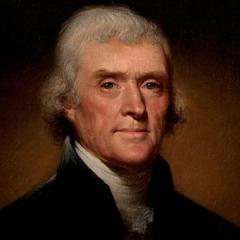
Thomas Jefferson

Thomas Jefferson Quotes

3rd U.S. President

Filter quotes by topic

Famous Thomas Jefferson Quotes

“When the representative body have lost the confidence of their constituents, when they have notoriously made sale of their most valuable rights, when they have assumed to themselves powers which the people never put into their hands, then indeed their continuing in office becomes dangerous to the state”

“But whatever be their degree of talent it is no measure of their rights. Because Sir Isaac Newton was superior to others in understanding, he was not therefore lord of the person or property of others. On this subject they are gaining daily in the opinions of nations, and hopeful advances are making towards their re- establishment on an equal footing with the other colors of the human family.”

“He has waged cruel war against human nature itself, violating it’s most sacred rights of life & liberty in the persons of a distant people who never offended him, captivating & carrying them into slavery in another hemisphere, or to incur miserable death in their transportation thither. this piratical warfare, the opprobrium of infidel powers, is the warfare of the christian king of Great Britain. determined to keep open a market where MEN should be bought & sold, he has prostituted his negative for suppressing every legislative attempt to prohibit or to restrain this execrable commerce...”

“To instruct the mass of our citizens in these, their rights, interests and duties, as men and citizens...this brings us to the point at which are to commence the higher branches of education . . . . To develop the reasoning faculties of our youth, enlarge their minds, cultivate their morals, and instill into them the precepts of virtue and order.”

“A right to property is founded in our natural wants, in the means with which we are endowed to satisfy these wants, and the right to what we acquire by those means without violating the similar rights of other sensible beings.”

“To take from one because it is thought that his own industry and that of his father's has acquired too much, in order to spare to others, who, or whose fathers have not exercised equal industry and skill, is to violate arbitrarily the first principle of association-the guarantee to every one of a free exercise of his industry and the fruits acquired by it.”

“May [our Declaration of Independence] be to the world, what I believe it will be (to some parts sooner, to others later, but finally to all), the signal of arousing men to burst the chains under which monkish ignorance and superstition had persuaded them to bind themselves, and to assume the blessings and security of self-government... All eyes are opened, or opening, to the rights of man.”

“It's only merit was in being the first publication which carried the claim of our rights their whole length, and asserted that there was no rightful link of connection between us and England but that of being under the same king.”

“Until we stop harming all other living beings, we are still savages.”

“The Declaration of Independence . . . [is the] declaratory charter of our rights, and the rights of man.”

“In America, no other distinction between man and man had ever been known but that of persons in office exercising powers by authority of the laws, and private individuals. Among these last, the poorest laborer stood on equal ground with the wealthiest millionaire, and generally on a more favored one whenever their rights seem to jar.”

“If, then, the control of the people over the organs of their government be the measure of its republicanism, and I confess I know no other measure, it must be agreed that our governments have much less of republicanism than ought to have been expected; in other words, that the people have less regular control over their agents, than their rights and their interests require.”

“I hold it that a little rebellion, now and then, is a good thing, and as necessary in the political world as storms are in the physical. Unsuccessful rebellions, indeed, generally establish the encroachments on the rights of the people, which have produced them. An observation of this truth should render honest republican governors so mild in their punishment of rebellions, as not to discourage them too much. It is medicine necessary for the sound health of government.”

“We hold these truths to be self-evident, that all men are created equal, that they are endowed by their Creator with certain inalienable rights, among these are life, liberty, and the pursuit of happiness, that to secure these rights governments are instituted among men. We...solemnly publish and declare, that these colonies are and of a right ought to be free and independent states...and for the support of this declaration, with a firm reliance on the protection of divine providence, we mutually pledge our lives, our fortunes, and our sacred honour.”

“The principles on which we engaged, of which the charter of our independence is the record, were sanctioned by the laws of our being, and we but obeyed them in pursuing undeviatingly the course they called for. It issued finally in that inestimable state of freedom which alone can ensure to man the enjoyment of his equal rights.”

“If we are made in some degree for others, yet in a greater are we made for ourselves. It were contrary to feeling and indeed ridiculous to suppose that a man had less rights in himself than one of his neighbors, or indeed all of them put together. This would be slavery, and not that liberty which the bill of rights has made inviolable, and for the preservation of which our government has been charged.”

“God has formed us moral agents... that we may promote the happiness of those with whom He has placed us in society, by acting honestly towards all, benevolently to those who fall within our way, respecting sacredly their rights, bodily and mental, and cherishing especially their freedom of conscience, as we value our own.”

“The people, especially when moderately instructed, are the only safe, because the only honest, depositaries of the public rights, and should therefore be introduced into the administration of them in every function to which they are sufficient; they will err sometimes and accidentally, but never designedly, and with a systematic and persevering purpose of overthrowing the free principles of the government.”

“The error seems not sufficiently eradicated, that the operations of the mind, as well as the acts of the body, are subject to the coercion of the laws. But our rulers can have authority over such natural rights only as we have submitted to them. The rights of conscience we never submitted, we could not submit. We are answerable for them to our God. The legitimate powers of government extend to such acts only as are injurious to others.”

“In the fevered state of our country, no good can ever result from any attempt to set one of these fiery zealots to rights, either in fact or principle. They are determined as to the facts they will believe, and the opinions on which they will act. Get by them, therefore, as you would by an angry bull; it is not for a man of sense to dispute the road with such an animal.”

“I see,... and with the deepest affliction, the rapid strides with which the federal branch of our government is advancing towards the usurpation of all the rights reserved to the States, and the consolidation in itself of all powers, foreign and domestic; and that, too, by constructions which, if legitimate, leave no limits to their power... It is but too evident that the three ruling branches of [the Federal government] are in combination to strip their colleagues, the State authorities, of the powers reserved by them, and to exercise themselves all functions foreign and domestic.”

“[The purpose of a written constitution is] to bind up the several branches of government by certain laws, which, when they transgress, their acts shall become nullities; to render unnecessary an appeal to the people, or in other words a rebellion, on every infraction of their rights, on the peril that their acquiescence shall be construed into an intention to surrender those rights.”