Quotessence
Home / Quotes / Quote by Judith Lewis Herman

Quote by Judith Lewis Herman

“The traumatic moment becomes encoded in an abnormal form of memory, which breaks spontaneously into consciouness, both as flashbacks during waking states and as traumatic nightmares during sleep. Small, seemingly insignificant reminders can also evoke these memories, which often return with all the vividness and emotional force of the original event. Thus, even normally safe environments may come to feel dangerous, for the survivor can never be assured that she will not encounter some reminder of the trauma.”

Quote by Judith Lewis Herman

Work

Author

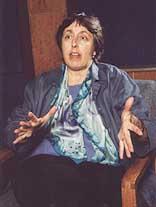
Judith Lewis Herman
Judith Lewis Herman

Judith Lewis Herman is an American author renowned for her work in the field of psychological trauma. Her writings delve deeply into the impact of post-traumatic stress disorder (PTSD) and the effects of traumatic experiences on individuals and society. more

You May Also Like

“When a person has a reaction to something in their environment, there’s a 90 second chemical process that happens in the body; after that, any remaining emotional response is just the person choosing to stay in that emotional loop. Something happens in the external world and chemicals are flushed through your body which puts it on full alert. For those chemicals to totally flush out of the body it takes less than 90 seconds. This means that for 90 seconds you can watch the process happening, you can feel it happening, and then you can watch it go away. After that, if you continue to feel fear, anger, and so on, you need to look at the thoughts that you’re thinking that are re-stimulating the circuitry that is resulting in you having this physiological response over and over again.”

“Hyperarousal causes traumatized people to become easily distressed by unexpected stimuli. Their tendency to be triggered into reliving traumatic memories illustrates how their perceptions have become excessively focused on the involuntary search for the similarities between the present and their traumatic past. As a consequence, many neutral experiences become reinterpreted as being associated with the traumatic past.”

“Also, look for “floating alters.” These are not deliberately created parts of the system, but alters that were accidentally split off at the same time as others.”

“For either of us, it's not a matter of what you believe in as much as it is of what you do. Tell me, Joseph, who is better? An agnostic who gives open-heartedly to charity and is a paragon of upstanding values or a very religious asshole who purports religion to contort and control? Sinning believers settled in their sinful ways in the comfort of the knowledge that their sins have been preemptively pardoned are infinitely worse than those who walk in doubt and seek not to harm anyone.”

“Because of dissociation, many victims are able to remember the abuse only when a certain object, smell, color, scene, or experience triggers a sudden, severe reaction. During a flashback one seems to see, feel, hear, smell, or taste something from the past as if it were actually happening in the present. In a visual flashback, you actually see the scene of your abuse, or you may see an object or image that reminds you or is symbolic of your abuse.”

“Most dissociative parts influence your experience from the inside rather than exert complete control, that is, through passive influence. * In fact, many parts never take complete control of a person, but are only experienced internally. * Frequent switching may be a sign of severe stress and inner conflict in most individuals.”

“Many psychologists use the term existential to describe the fact that all human beings are subject to painful events. These are the normal recurring afflictions that everyone suffers from time to time. Horrible world events, difficult choices, illnesses and periodic feelings go abject loneliness are common examples of existential pain. Existential calamities can be especially triggering for survivors, because we typically have so much family-of-origin calamity for them to trigger us into reliving.”

“In my personal recovery, mindfulness has helped me to become aware of my trauma responses and given me an anchor to stay present when I have been triggered. Being able to feel my triggers without reacting must be largely credited to learning to anchor myself in my body through mindful body scan meditation.”

“Dissociative Identity Disorder is borne out of trauma. Many individuals who survive severe trauma will later experience marked anxiety, which may or may not relate to triggers from the original trauma. Individuals with DID are highly likely to have a great deal of anxiety.”