Quotessence
Home / Authors / Arthur Schopenhauer Books
Arthur Schopenhauer

Arthur Schopenhauer Books

Philosopher

On Physiognomy

A source page for quotes linked to Arthur Schopenhauer.
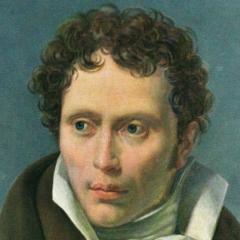
0 quotes

Über die Weiber

A source page for quotes linked to Arthur Schopenhauer.

0 quotes

Related Quotes

“Let me advise you, then, to form the habit to take some of your solitude with you into society, to learn to be to some extent alone even though you are in company; not to say at once what you think, and, on the other hand, not to attach too precise a meaning to what others say; rather, not ot expect much of them, either morally or intellectually, and to strenghten yourself in the feeling of indifference to their opinion, which is the surest way of always practicing a praiseworhty toleration. If you do that, you will not live so much with other people, though you may appear to move amongst them: your relation to them will be of a purely objective character. This precaution will keep you from too close contact with society, and therefore secure you from being contamined or even outraged by it.”

“Let me advise you, then, to form the habit to take some of your solitude with you into society, to learn to be to some extent alone even though you are in company; not to say at once what you think, and, on the other hand,, not to attach too preceise a meaning to what others say; rather, not ot expect much of them, either morally or intellectually, and to strenghten yourself in the feeling of indifference to their opinion, which is the surest way of always practicing a praiseworhty toleration. If you do that, you will not live so much with other people, though you may appear to move amongst them: your relation to them will be of a purely objective character. This precaution will keep you from too close contact with society, and therefore secure you from being contamined or even outraged by it.”

“And to this world, to this scene of tormented and agonised beings, who only continue to exist by devouring each other, in which, therefore, every ravenous beast is the living grave of thousands of others, and its self-maintenance is a chain of painful deaths; and in which the capacity for feeling pain increases with knowledge, and therefore reaches its highest degree in man, a degree which is the higher the more intelligent the man is; to this world it has been sought to apply the system of optimism, and demonstrate to us that it is the best of all possible worlds. The absurdity is glaring.”

“We must not even evade it, as the Indians do, by myths and meaningless words, such as reabsorption in Brahman, or the Nirvana of the Buddhists. On the contrary, we freely acknowledge that what remains after the complete abolition of the will is, for all who are still full of the will, assuredly nothing. But also conversely, to those in whom the will has turned and denied itself, this very real world with all its suns and galaxies, is—nothing”

“A person's being in love often furnishes comic, and sometimes even tragic, phenomena, both because, taken possession of by the spirit of the species, he is now ruled by it, and no longer belongs to himself; in this way his conduct becomes inappropriate to the individual. In the higher degrees of being in love, his thoughts are given such a poetical and sublime touch, even a transcendent and hyperphysical tendency, by virtue of which he appears wholly to lose sight of his real, very physical aim.”

“Why, then, does the man in love hang with complete abandon on the eyes of his chosen one, and is ready to make every sacrifice for her? Because it is his immortal part that longs for her; it is always the mortal part alone that longs for everything else. That eager or even ardent longing, directed to a particular woman, is therefore an immediate pledge of the indestructibility of the kernel of our true nature, and of its continued existence in the species. But to regard this continued existence as something trifling and insufficient is a mistake, which arises from the fact that, by the continued life of the species, we understand nothing more than the future existence of beings similar to, but in no respect identical with, ourselves; and this again because, starting from knowledge directed outwards, we take into consideration only the external form of the species, as we apprehend this in perception, and not its inner nature.”

“Further, the constitution of our consciousness is the ever present and lasting element in all we do or suffer; our individuality is persistently at work, more or less, at every moment of our life: all other influences are temporal, incidental, fleeting, and subject to every kind of chance and change. This is why Aristotle says: It is not wealth but character that lasts. And just for the same reason we can more easily bear a misfortune which comes to us entirely from without, than one which we have drawn upon ourselves; for fortune may always change, but not character. Therefore, subjective blessings — a noble nature, a capable head, a joyful temperament, bright spirits, a well-constituted, perfectly sound physique, in a word, mens sana in corpore sano, are the first and most important elements in happiness; so that we should be more intent on promoting and preserving such qualities than on the possession of external wealth and external honor.”

“So if you have to live amongst men, you must allow everyone the right to exist in accordance with the character he has, whatever it turns out to be: and all you should strive to do is to make use of this character in such a way as its kind and nature permit, rather than to hope for any alteration in it, or to condemn it off-hand for what it is. This is the true sense of the maxim--Live and let live. That, however, is a task which is difficult in proportion as it is right; and he is a happy man who can once for all avoid having to do with a great many of his fellow creatures.”

“One need only watch the way they behave at a concert, the opera, or the play; the childish simplicity, for instance, with which they keep on chattering during the finest passages in the greatest masterpieces. If it is true that the Greeks forbade women to go to the play, they acted in a right way; for they would at any rate be able to hear something. In our day it would be more appropriate to substitute taceat mulier in theatro for taceat mulier in ecclesia; and this might perhaps be put up in big letters on the curtain.”

“the origin of wickedness is the cliff upon which theism, just as much as pantheism, is wrecked; for both imply optimism. However, evil and sin, both in their terrible magnitude, cannot be disavowed; indeed, because of the promised punishments for the latter, the former is only further increased. Whence all this, in a world that is either itself a God or the well-intentioned work of a God?”

“If you have reason to suspect that a person is telling you a lie, look as though you believed every world he said. This will give him courage to go on; he will become vehement in his assertions, and in the end betray himself. Again, if you perceive that a person is trying to conceal something from you, but with only partial success, look at though you did not believe him, this opposition on you part will provoke him into leading out his reserve of truth and bringing the whole force of it to bear upon your incredulity.”

“It is the subject of the will, i.e., his own volition, which fills the consciousness of the singer, often as a released and satisfied desire ; (joy), but still oftener as an inhibited desire ( grief), always as an affect, a passion, a moved state of mind. Besides this, however, and along with it, by the sight of surrounding nature, the singer becomes conscious of himself as the subject of pure will-less knowing, whose unbroken blissful peace now appears, in contrast to the stress of desire, which-is always restricted and always needy. The feeling of this contrast, this alternation, is really what the song as a whole expresses and what principally constitutes the lyrical state. In it pure knowing comes to us as it were to deliver us from willing and its strain; we follow, but only for moments; willing, the remembrance of our own personal ends, tears us anew from peaceful contemplation; yet ever again the next beautiful environment in which pure will-less knowledge presents itself to us lures us away from willing. Therefore, in the song and the lyrical mood, willing (the personal interest of the ends) and pure perception of the environment are wonderfully mingled; connections between them are sought and imagined; the subjective mood, the affection of the will, imparts its own hue to the perceived environment, and vice versa. Genuine song is the expression of the whole of this mingled and divided state of mind.”

“The works of the poets, sculptors, and representative artists in general contain an unacknowledged treasure of profound wisdom; just because out of them the wisdom of the nature of things itself speaks, whose utterances they merely interpret by illustrations and purer repetitions. On this account, however, every one who reads the poem or looks at the picture must certainly contribute out of his own means to bring that wisdom to light; accordingly he comprehends only so much of it as his capacity and culture admit of; as in the deep sea each sailor only lets down the lead as far as the length of the line will allow. Before a picture, as before a prince, every one must stand, waiting to see whether and what it will speak to him; and, as in the case of a prince, so here he must not himself address it, for then he would only hear himself.”

“When we see that almost everything men devote their lives to attain, sparing no effort and encountering a thousand toils and dangers in the process, has, in the end, no further object than to raise themselves in the estimation of others; when we see that not only offices, titles, decorations, but also wealth, nay, even knowledge[1] and art, are striven for only to obtain, as the ultimate goal of all effort, greater respect from one's fellowmen,—is not this a lamentable proof of the extent to which human folly can go?”

“Hence we get the strange fact that everyone considers himself to be a priori quite free, even in his individual actions, and imagines he can at any moment enter upon a different way of life, which is equivalent to saying that he can become a different person. But a posteriori through experience, he finds to his that he is not free, but liable to necessity; that notwithstanding all his resolutions and reflections he does not change his conduct, and that from the beginning to the end of his life he must bear the same character that he himself condemns, and, as it were, must play to the end the part he has taken upon himself.”

“Men are like children, in that, if you spoil them, they become naughty. Therefore it is well not to be too indulgent or charitable with anyone. You may take it as a general rule that you will not lose a friend by refusing him a loan, but that you are very likely to do so by granting it; and, for similar reasons, you will not readily alienate people by being somewhat proud and careless in your behavior; but if you are very kind and complaisant towards them, you will often make them arrogant and intolerable, and so a breach will ensue.”

“For boundless compassion for all living beings is the firmest and most certain guarantee of moral good conduct and requires no casuistry. Whoever is filled with it will certainly injure no one, infringe on no one, do no one harm, rather, forbear everyone, forgive everyone, help everyone as much as he can, and all his actions will carry the imprint of justice and loving kindness.”

“It is really most absurd to wish to turn this scene of misery into a pleasure spot and set ourselves the goal of achieving pleasures and joys instead of freedom from pain, as so many do. Those who, with too gloomy a gaze, regard this world as a kind of hell and, accordingly, are only concerned with procuring a fireproof room in it, are much less mistaken. The fool runs after the pleasures of life and sees himself cheated; the sage avoids evils. But if even this should fail, then it is the fault of fate, not of his foolishness. However, insofar as he succeeds, he has not been cheated; for the evils that he evades are very real. Even if he should have gone too far in avoiding them and unnecessarily sacrificed enjoyments, nothing is really lost; for all pleasures are chimerical, and to mourn over missing out on them would be petty, indeed ridiculous.”

“All striving comes from lack, from a dissatisfaction with one's condition, and is thus suffering as long as it is not satisfied; but no satisfaction is lasting; instead, it is only the beginning of a new striving. We see striving everywhere inhibited in many ways, struggling everywhere; and thus always suffering; there is no final goal of striving, and therefore no bounds or end to suffering.”

“... we find a complete contradiction in our wishing to live without suffering, a contradiction that is therefore implied by the frequently used phrase “blessed life.” This will certainly be clear to the person who has fully grasped my discussion that follows. This contradiction is revealed in this ethic of pure reason itself by the fact that the Stoic is compelled to insert a recommendation of suicide in his guide to the blissful life (for this is what his ethics always remains). This is like the costly phial of poison to be found among the magnificent ornaments and apparel of oriental despots, and is for the case where the sufferings of the body, incapable of being philosophized away by any principles and syllogisms, are paramount and incurable. Thus its sole purpose, namely blessedness, is frustrated, and nothing remains as a means of escape from pain except death. But then death must be taken with unconcern, just as is any other medicine. Here a marked contrast is evident between the Stoic ethics and all those other ethical systems mentioned above. These ethical systems make virtue directly and in itself the aim and object, even with the most grievous sufferings, and will not allow a man to end his life in order to escape from suffering. But not one of them knew how to express the true reason for rejecting suicide, but they laboriously collected fictitious arguments of every kind. This true reason will appear in the fourth book in connexion with our discussion. But the above-mentioned contrast reveals and confirms just that essential difference to be found in the fundamental principle between the Stoa, really only a special form of eudaemonism, and the doctrines just mentioned, although both often agree in their results, and are apparently related. But the above-mentioned inner contradiction, with which the Stoic ethics is affected even in its fundamental idea, further shows itself in the fact that its ideal, the Stoic sage as represented by this ethical system, could never obtain life or inner poetical truth, but remains a wooden, stiff lay-figure with whom one can do nothing. He himself does not know where to go with his wisdom, and his perfect peace, contentment, and blessedness directly contradict the nature of mankind, and do not enable us to arrive at any perceptive representation thereof. Compared with him, how entirely different appear the overcomers of the world and voluntary penitents, who are revealed to us, and are actually produced, by the wisdom of India; how different even the Saviour of Christianity, that excellent form full of the depth of life, of the greatest poetical truth and highest significance, who stands before us with perfect virtue, holiness, and sublimity, yet in a state of supreme suffering.”

“All willing springs from lack, from deficiency, and thus from suffering. Fulfillment brings this to an end; yet for one wish that is fulfilled there remain at least ten that are denied. Further, desiring lasts a long time, demands and requests go on to infinity, fulfillment is short and meted out sparingly. But even the final satisfaction itself is only apparent; the wish fulfilled at once makes way for a new one; the former is a known delusion, the latter not as yet known. No attained object of willing can give satisfaction that lasts and no longer declines…Therefore, so long as our consciousness is filled by our will, so long as we are given up to the throng of desires with its constant hopes and fears, so long as we are the subject of willing, we never obtain lasting happiness or peace…”

“Boundless compassion for all living beings is the surest and most certain guarantee of pure moral conduct, and needs no casuistry. Whoever is filled with it will assuredly injure no one, do harm to no one, encroach on no man's rights; he will rather have regard for every one, forgive every one, help every one as far as he can, and all his actions will bear the stamp of justice and loving-kindness.”

“No man can see over his own height. Let me explain what I mean. You cannot see in another man any more than you have in yourself. Your own level strictly determines the extent to which he comes within your understanding. If your intelligence is unawakened, mental qualities in another, even though they be of the highest kind, will have no effect on you at all… his higher mental qualities will no more exist for you than colors exist for those who cannot see.”

“It is therefore worth noting, and indeed wonderful to see, how man, besides his life in the concrete, always lives a second life in the abstract. In the former he is abandoned to all the storms of reality and to the influence of the present; he must struggle, suffer, and die like the animal. But his life in the abstract, as it stands before his rational consciousness, is the calm reflection of his life in the concrete, and of the world in which he lives; it is precisely that reduced chart or plan previously mentioned. Here in the sphere of calm deliberation, what previously possessed him completely and moved him intensely appears to him cold, colourless, and, for the moment, foreign and strange; he is a mere spectator and observer. In respect of this withdrawal into reflection, he is like an actor who has played his part in one scene, and takes his place in the audience until he must appear again. In the audience he quietly looks on at whatever may happen, even though it be the preparation of his own death (in the play); but then he again goes on the stage, and acts and suffers as he must. From this double life proceeds that composure in man, so very different from the thoughtlessness of the animal.”

“For since the whole man is only the phenomenon of his will, nothing can be more perverse than to try, by means of reflection, to become something else than one is, for this is a direct contradiction of the will with itself. The imitation of the qualities and idiosyncrasies of others is much more shameful than to dress in other people's clothes; for it is the judgment of our own worthlessness pronounced by ourselves. Knowledge of our own mind and its capacities of every kind, and their unalterable limits, is in this respect the surest way to the attainment of the greatest possible contentment with ourselves.”