As good as Golda: the warmth and wisdom...
A source page for quotes linked to Golda Meir.
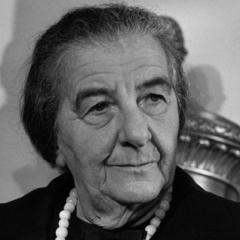
“Those who do not know how to weep with their whole heart don't know how to laugh either”
“How can we return the occupied territories? There is nobody to return them to.”
“We say peace and the echo comes back from the other side, war. We dont want wars even when we win.”
“Men are committing the rapes. Let them be put under curfew.”
“There was no such thing as Palestinians, they never existed.”
“We don't want wars even when we win.”
“How does it feel to be a woman minister? I don't know; I've never been a man minister.”
“You can get used to anything if you have to, even feeling perpetually guilty.”
“The only alternative to war is peace and the only road to peace is negotiations.”
“You can't improve on saying nothing.”
“Zionism and pessimism are not compatible.”
“Can we today measure devotion to husband and children by our indifference to everything else?”
“Israel itself is the strongest guarantee against another Holocaust.”
“The world hates a Jew who hits back. The world loves us only when we are to be pitied.”
“The deserts of the Middle East are in need of water, not bombers.”
“It is always much easier, I have discovered, to make people cry or gasp than to make them think.”
“I'm a slave to this leaf in a diary that lists what I must do, what I must say, every half hour.”