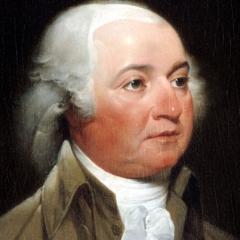
“We must not then depend alone upon the love of liberty in the soul of man for its preservation.”
Source: John Adams: Writings from the New Nation, 1784-1826
“It has ever been my hobby-horse to see rising in America an empire of liberty, and a prospect of two or three hundred millions of freemen, without one noble or one king among them. You say it is impossible. If I should agree with you in this, I would still say, let us try the experiment, and preserve our equality as long as we can. A better system of education for the common people might preserve them long from such artificial inequalities as are prejudicial to society, by confounding the natural distinctions of right and wrong, virtue and vice.”
Source: Works: with a life of the author
“[T]he liberty, the unalienable, indefeasible rights of men, the honor and dignity of human nature, the grandeur and glory of the public, and the universal happiness of individuals, were never so skillfully and successfully consulted as in that most excellent monument of human art, the common law of England.”
Source: The Works of John Adams, Second President of the United States: With a Life of the Author, Notes and Illustrations
“[A] republic . . . [is] a government, in which the property of the public, or people, and of every one of them was secure and protected by law . . . implies liberty; because property cannot be secured unless the man be at liberty to acquire, use or part with it, at his discretion, and unless he have his personal liberty of life and limb, motion and rest, for that purpose.”
Source: The Works of John Adams, Second President of the United States: With a Life of the Author, Notes and Illustrations
“Men must be ready, they must pride themselves and be happy to sacrifice their private pleasures, passions and interests, nay, their private friendships and dearest connections, when they stand in competition with the rights of society.”
Source: Warren-Adams Letters: Being Chiefly a Correspondence Among John Adams, Samuel Adams, and James Warren ... 1743-1814
“It already appears, that there must be in every society of men superiors and inferiors, because God has laid in the constitution and course of nature the foundations of the distinction.”
Source: A Defence of the Constitutions of Government of the United States of America
“The National defense is one of the cardinal duties of a statesman.”
“Thomas Jefferson survives.”
“What other form of government, indeed, can so well deserve our esteem and love?”
Source: Works: with a life of the author
“[J]udges, therefore, should be always men of learning and experience in the laws, of exemplary morals, great patience, calmness, coolness, and attention. Their minds should not be distracted with jarring interests; they should not be dependent upon any man, or body of men.”
Source: The Works of John Adams, Second President of the United States: With a Life of the Author, Notes and Illustrations
“A single assembly is liable to all the vices, follies, and frailties of an individual; subject to fits of humor, starts of passion, flights of enthusiasm, partialities, or prejudice, and consequently productive of hasty results and absurd judgments. And all these errors ought to be corrected and defects supplied by some controlling power.”
Source: The Political Writings of John Adams: Representative Selections
“A single assembly is apt to grow ambitious, and after a time will not hesitate to vote itself perpetual. This was one fault of the Long Parliament; but more remarkably of Holland, whose assembly first voted themselves from annual to septennial, then for life, and after a course of years, that all vacancies happening by death or otherwise, should be filled by themselves, without any application to constituents at all.”
Source: The Works of John Adams, Second President of the United States: With a Life of the Author, Notes and Illustrations
“The deliberate union of so great and various a people in such a place, is without all partiality or prejudice, if not the greatest exertion of human understanding, the greatest single effort of national deliberation that the world has ever seen.”
Source: The Works of John Adams Vol. 6: Defence of the Constitution IV, Discourses on Davila
“I will insist the Hebrews have [contributed] more to civilize men than any other nation. If I was an atheist and believed in blind eternal fate, I should still believe that fate had ordained the Jews to be the most essential instrument for civilizing the nations. They are the most glorious nation that ever inhabited this Earth. The Romans and their empire were but a bubble in comparison to the Jews. They have given religion to three-quarters of the globe and have influenced the affairs of mankind more and more happily than any other nation, ancient or modern.”
“[D]emocracy will soon degenerate into an anarchy, such an anarchy that every man will do what is right in his own eyes and no man's life or property or reputation or liberty will be secure, and every one of these will soon mould itself into a system of subordination of all the moral virtues and intellectual abilities, all the powers of wealth, beauty, wit and science, to the wanton pleasures, the capricious will, and the execrable cruelty of one or a very few.”
“As long as Property exists, it will accumulate in Individuals and Families. As long as Marriage exists, Knowledge, Property and Influence will accumulate in Families.”
Source: The Works of John Adams, Second President of the United States: With a Life of the Author, Notes and Illustrations
“Your Letters concerning Miss N. have given me as much Concern as they ought-not knowing the Character nor what to advise, but feeling all a Fathers Tenderness, longing to be at home that I might enquire and consider and take the Care I ought.”
“I am well pleased with what I hear of you: The principal Satisfaction I can expect in Life, in future will be in your good Behavior and that of my other Children. My Hopes from all of you are very agreable. God grant, I may not be disappointed.”
“I am quite content to come home and go to Farming, be a select Man, and owe no Man any Thing but good Will. There I can get a little health and teach my Boys to be Lawyers.”
“If my superiors shall permit me to come home, I hope it will be soon; if they mean I should stay abroad, I am not able to say what I shall do, until I know in what capacity. One thing is certain, that I will not live long without my family.”
“As good government is an empire of laws, how shall your laws be made? In a large society, inhabiting an extensive country, it is impossible that the whole should assemble to make laws. The first necessary step, then, is to depute power from the many to a few of the most wise and good.”
Source: The Works of John Adams, Second President of the United States: With a Life of the Author, Notes and Illustrations
“As unbalanced parties of every description can never tolerate a free inquiry of any kind, when employed against themselves, the license, and even the most temperate freedom of the press, soon excite resentment and revenge.”
Source: The Works of John Adams, Second President of the United States: With a Life of the Author, Notes and Illustrations
“There is no good government but what is republican. That the only valuable part of the British constitution is so; for the true idea of a republic is "an empire of laws, and not of men." That, as a republic is the best of governments, so that particular arrangement of the powers of society, or in other words, that form of government which is best contrived to secure an impartial and exact execution of the law, is the best of republics.”
“A representative assembly, although extremely well qualified, and absolutely necessary, as a branch of the legislative, is unfit to exercise the executive power, for want of two essential properties, secrecy and dispatch.”
Source: The Political Writings of John Adams: Representative Selections
“A question arises whether all the powers of government, legislative, executive, and judicial, shall be left in this body? I think a people cannot be long free, nor ever happy, whose government is in one Assembly.”
Source: The Works of John Adams, Second President of the United States: With a Life of the Author, Notes and Illustrations
“The Hebrews have done more to civilize men than any other nation: The doctrine of a supreme, intelligent sovereign of the universe, I believe to be the great essential principle of all morality, and consequently of all civilization.”
Source: The John Adams papers
“As to the history of the revolution, my ideas may be peculiar, perhaps singular. What do we mean by the revolution? The war? That was no part of the revolution; it was only an effect and consequence of it. The revolution was in the minds of the people, and this was effected from 1760 to 1775, in the course of fifteen years, before a drop of blood was shed at Lexington.”
Source: The Works of John Adams, Second President of the United States: With a Life of the Author, Notes and Illustrations
“When public virtue is gone, when the national spirit is fled the republic is lost in essence, though it may still exist in form”
Source: The Works of John Adams, Second President of the United States: With a Life of the Author, Notes and Illustrations
“We have no Constitution which functions in the absence of a moral people”
“The general principles on which the fathers achieved independence were the general principles of Christianity”
Source: The Works of John Adams, Second President of the United States: With a Life of the Author, Notes and Illustrations
“Children should be educated and instructed in the principles of freedom. Aristotle speaks plainly to this purpose, saying, 'that the institution of youth should be accommodated to that form of government under which they live; forasmuch as it makes exceedingly for the preservation of the present government, whatsoever it be.”
Source: The Works of John Adams, Second President of the United States: With a Life of the Author, Notes and Illustrations
“The people, when they have been unchecked, have been as unjust, tyrannical, brutal, barbarous, and cruel, as any king or senate possessed of uncontrollable power. The majority has eternally, and without one exception, usurped over the rights of the minority.”
Source: The Works of John Adams, Second President of the United States: With a Life of the Author, Notes and Illustrations
“The History of our Revolution will be one continued Lye from one End to the other. The Essence of the whole will be that Dr Franklins electrical Rod, Smote the Earth and out Spring General Washington. That Franklin electrified him with his Rod - and thence forward these two conducted all the Policy Negotiations Legislation and War.”
“The balance of power in a society accompanies the balance of property in land.”
Source: Works: with a life of the author
“If national pride is ever justifiable or excusable it is when it springs, not from power or riches, grandeur or glory, but from conviction of national innocence, information and benevolence.”
Source: Works: with a life of the author
“Did you ever see a portrait of a great man without perceiving strong traits of pain and anxiety?”
Source: The Works of John Adams, Second President of the United States: With a Life of the Author, Notes and Illustrations
“Modesty is a virtue that can never thrive in public.”
Source: Papers of John Adams
“Individuals have conquered themselves. Nations and large bodies of men, never.”
Source: The Political Writings of John Adams
“Mystery is made a convenient Cover for absurdity.”
“I have examined all religions, as well as my narrow sphere, my straightened means, and my busy life, would allow; and the result is that the Bible is the best Book in the world. It contains more philosophy than all the libraries I have seen.”
“Farther I could find it in my heart to wish that you had been at the head of a hundred thousand Israelites . . . & marching with them into Judea & making a conquest of that country & restoring your nation to the dominion of it. For I really wish the Jews again in Judea an independent nation.”
Source: John Adams: Writings from the New Nation, 1784-1826
“Can a free government possibly exist with the Roman Catholic religion?”
Source: The Works of John Adams, Second President of the United States: With a Life of the Author, Notes and Illustrations
“Have you considered that system of holy lies and pious frauds that has raged and triumphed for 1,500 years?”
“The human understanding is a revelation from its maker, which can never be disputed or doubted. There can be no scepticism, Pyrrhonism, or incredulity or infidelity here. No prophecies, no miracles are necessary to prove this celestical communication. This revelation has made it certain that two and one make three, and that one is not three nor can three be one. We can never be so certain of any prophecy, or the fulfilment of any prophecy, or of any miracle, or the design of any miracle, as we are from the revelation of nature, that is, nature's God, that two and two are equal to four.”
Source: The Works of John Adams, Second President of the United States: With a Life of the Author, Notes and Illustrations
“Politics are the divine science, after all.”
Source: Works: with a life of the author
“It's of more importance to community that innocence should be protected than it is that guilt should be punished”
Source: Legal Papers of John Adams
“No good government but what is republican... the very definition of a republic is 'an empire of laws, and not of men.'”
Source: The Works of John Adams, Second President of the United States: With a Life of the Author, Notes and Illustrations
“What a pity it is that our Congress had not known this discovery, and that Alexander Hamilton’s projects of raising an army of fifty thousand Men, ten thousand of them to be Cavalry and his projects of sedition Laws and Alien Laws and of new taxes to support his army, all arose from a superabundance of secretions which he could not find whores enough to draw off! and that the same vapours produced his Lyes and Slanders by which he totally destroyed his party forever and finally lost his Life in the field of Honor.”
Source: Old Family Letters: Copied from the Originals for Alexander Biddle... Series A-[B]
“There is but one element of government, and that is THE PEOPLE. From this element spring all governments. "For a nation to be free, it is only necessary that she wills it." For a nation to be slave, it is only necessary that she wills it.”
Source: The Works of John Adams, Second President of the United States: With a Life of the Author, Notes and Illustrations
“Public business must always be done by somebody. It will be done by somebody or other. If wise man decline, others will not; if honest man refuse it, others will not.”