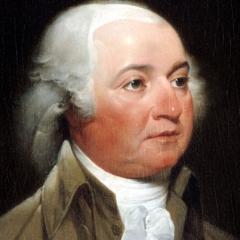
“It will be celebrated... with pomp and parade... bonfires and illuminations from one end of this continent to the other.”
“As the government of the United States is not, in any sense, founded on the Christian religion; as it has in itself no character of enmity against the laws, religion or tranquility of Musselmen [Muslims] ... it is declared ... that no pretext arising from religious opinion shall ever product an interruption of the harmony existing between the two countries.... The United States is not a Christian nation any more than it is a Jewish or a Mohammedan nation.”
“We shall, by and by, want a world of hemp more for our own consumption.”
“The proposition that the people are the best keepers of their own liberties is not true. They are the worst conceivable, they are no keepers at all; they can neither judge, act, think, or will, as a political body.”
“The only way to form an army to be confided in, was a systematic discipline, by which means all men may be made heroes.”
Source: The Works of John Adams, Second President of the United States: Autobiography (cont.) Diary. Notes of a debate in the Senate of the United States. Essays: On private revenge. On self-delusion. On private revenge. Dissertation on the canon and the feudal law. Instructions of the town of Braintree to their representative, 1765. The Earl of Clarendon to William Pym. Governor Winthrop to Governor Bradford. Instructions of the town of Boston to their representatives, 1768. Instructions of the town of
“The real fabric of American society is not all those flags you see on people's cars...it's in the Bill of Rights and in our constitutional form of government.”
“Ambition is the subtlest beast of the intellectual and moral field. It is wonderfully adroit in concealing itself from its owner.”
“I drink no cider, but feast on Philadelphia beer.”
“We Recognize No Sovereign but God, and no King but Jesus!”
“Grief drives men into habits of serious reflection, sharpens the understanding, and softens the heart”
Source: John Adams: Writings from the New Nation, 1784-1826
“A lawyer once told a jury that the person his client stood accused of having killed was about to walk through the courtroom door. When the jurors looked startled, the lawyer asserted that if those jurors had wondered, even for one second that the victim might appear, that belief constituted enough reasonable doubt for them to find his client innocent.”
“The Declaration of Independence laid the cornerstone of human government upon the first precepts of Christianity.”
“The general principles on which the fathers achieved independence were the general principles of Christianity. I will avow that I then believed, and now believe, that those general principles of Christianity are as eternal and immutable as the existence and attributes of God.”
Source: The Works of John Adams Vol. 10: Letters and State Papers 1811 - 1825
“I have examined all religions, and the result is that the Bible is the best book in the world.”
“The Christian religion is, above all the religions that ever prevailed or existed in ancient or modern times, the religion of wisdom, virtue, equity and humanity.”
Source: The Works of John Adams, Second President of the United States: With a Life of the Author, Notes and Illustrations
“As the safety and prosperity of nations ultimately and essentially depend on the protection and the blessing of Almighty God, and the national acknowledgment of this truth is not only an indispensable duty which the people owe to Him.”
Source: The Works of John Adams, Second President of the United States: With a Life of the Author, Notes and Illustrations
“Nothing is more dreaded than the national government meddling with religion.”
Source: Old Family Letters: Copied from the Originals for Alexander Biddle... Series A-[B]
“Let the pulpit resound with the doctrines and sentiments of religious liberty... Let us hear the dignity of his [man's] nature, and the noble rank he holds among the works of God... Let it be known, that British liberties are not the grants of princes or parliaments.”
“Let every sluice of knowledge be opened and set a-flowing.”
Source: The Works of John Adams, Second President of the United States: With a Life of the Author, Notes and Illustrations
“Liberty, once lost, is lost forever.”
Source: The Book of Abigail and John: Selected Letters of the Adams Family, 1762-1784
“Power always sincerely, conscientiously, de très bon foi, believes itself right. Power always thinks it has a great soul and vast views, beyond the comprehension of the weak.”
Source: The Adams-Jefferson Letters: The Complete Correspondence Between Thomas Jefferson and Abigail and John Adams. 1812-1826
“The law no passion can disturb. 'Tis void of desire and fear, lust and anger. 'Tis mens sine affectu, written reason, retaining some measure of the divine perfection. It does not enjoin that which pleases a weak, frail man, but, without any regard to persons, commands that which is good and punishes evil in all, whether rich or poor, high or low.”
Source: The Works of John Adams, Second President of the United States: With a Life of the Author, Notes and Illustrations
“But how has it happened that millions of fables, tales, legends have been blended with both Jewish and Christian revelation that have made them the most bloody religion that ever existed?”
Source: The Works of John Adams, Second President of the United States: With a Life of the Author, Notes and Illustrations
“Without religion this world would be something not fit to be mentioned in polite company, I mean Hell.”
Source: The Works of John Adams, Second President of the United States: With a Life of the Author, Notes and Illustrations
“To believe all men honest is folly. To believe none is something worse.”
“Virtue is not always amiable.”
Source: The Works of John Adams, Second President of the United States: Autobiography (cont.) Diary. Notes of a debate in the Senate of the United States. Essays: On private revenge. On self-delusion. On private revenge. Dissertation on the canon and the feudal law. Instructions of the town of Braintree to their representative, 1765. The Earl of Clarendon to William Pym. Governor Winthrop to Governor Bradford. Instructions of the town of Boston to their representatives, 1768. Instructions of the town of
“The form of government which communicates ease, comfort, security, or, in one word, happiness, to the greatest number of persons, and in the greatest degree, is the best.”
Source: The Political Writings of John Adams: Representative Selections
“Riches attract attention, consideration, and congratulations of mankind.”
“Suppose a nation in some distant region should take the Bible for their only law book, and every member should regulate his conduct by the precepts there exhibited. What a Utopia! What a paradise this region would be.”
Source: The Portable John Adams
“Wisdom and knowledge, as well as virtue, diffused generally among the body of the people being necessary for the preservation of their rights and liberties; and as these depend on spreading the opportunities and advantages of education in various parts of the country, and among the different orders of the people, it shall be the duty of legislators and magistrates in all future periods of this commonwealth to cherish the interests of literature and the sciences.”
Source: The Works of John Adams, Second President of the United States: With a Life of the Author, Notes and Illustrations
“Pray how does your asparagus perform?”
Source: The Book of Abigail and John: Selected Letters of the Adams Family, 1762-1784
“I pray Heaven to bestow the best of Blessings on this House and on all that shall hereafter inhabit it. May none but honest and wise Men ever rule under this roof.”
Source: Letters of John Adams: Addressed to His Wife
“The rich, the well-born, and the able, acquire an influence among the people that will soon be too much for simple honesty and plain sense, in a house of representatives. The most illustrious of them must, therefore, be separated from the mass, and placed by themselves in a senate; this is, to all honest and useful intents, an ostracism.”
Source: The Political Writings of John Adams: Representative Selections
“I Pray Heaven to bestow the best of blessing on this house, and on ALL that shall hereafter inhabit it. May none but honest and wise men ever rule under this roof!”
“The only foundation of a free Constitution, is pure Virtue, and if this cannot be inspired into our People, in a great Measure, than they have it now. They may change their Rulers, and the forms of Government, but they will not obtain a lasting Liberty.”
“Liberty, according to my metaphysics, is an intellectual quality, an attribute that belongs not to fate nor chance. Neither possesses it, neither is capable of it. There is nothing moral or immoral in the idea of it. The definition of it is a self-determining power in an intellectual agent. It implies thought and choice and power; it can elect between objects, indifferent in point of morality, neither morally good nor morally evil.”
Source: The Political Writings of John Adams: Representative Selections
“The moment the idea is admitted into society that property is not as sacred as the law of God, and that there is not a force of law and public justice to protect it, anarchy and tyranny commence.”
Source: The Works of John Adams, Second President of the United States: With a Life of the Author, Notes and Illustrations
“Let them revere nothing but religion, morality and liberty.”
Source: The Letters of John and Abigail Adams
“[You have Rights] antecedent to all earthly governments: Rights, that cannot be repealed or restrained by human laws; Rights, derived from the Great Legislator of the universe.”
Source: The Works of John Adams Vol. 3: Autobiography, Diary, Notes of a Debate in the Senate, Essays
“Were I to define the British constitution, therefore, I should say, it is a limited monarchy, or a mixture of the three forms of government commonly known in the schools, reserving as much of the monarchical splendor, the aristocratical independency, and the democratical freedom, as are necessary that each of these powers may have a control, both in legislation and execution, over the other two, for the preservation of the subject's liberty.”
Source: The Works of John Adams, Second President of the United States: With a Life of the Author, Notes and Illustrations
“Liberty can no more exist without virtue and independence than the body can live and move without a soul.”
Source: Novanglus and Massachusettensis; or, political essays, published in ... 1774 and 1775, on the principal points of controversy, between Great Britain and her colonies; the former by John Adams ... the latter by Jonathan Sewall [or rather, Daniel Leonard] ... To which are added a number of letters lately written by President Adams to the Hon. William Tudor, etc
“Public virtue cannot exist in a nation without private, and public virtue is the only foundation of republics.”
Source: Warren-Adams Letters: Being Chiefly a Correspondence Among John Adams, Samuel Adams, and James Warren ... 1743-1814
“[I]t is religion and morality alone which can establish the principles upon which freedom can securely stand. The only foundation of a free constitution is pure virtue.”
Source: The Works of John Adams, Second President of the United States: With a Life of the Author, Notes and Illustrations
“Honor is truly sacred, but holds a lower rank in the scale of moral excellence than virtue. Indeed the former is part of the latter, and consequently has not equal pretensions to support a frame of government productive of human happiness.”
Source: The Political Writings of John Adams: Representative Selections
“Mankind will in time discover that unbridled majorities are as tyrannical and cruel as unlimited despots.”
“Every measure of prudence, therefore, ought to be assumed for the eventual total extirpation of slavery from the United States ... I have, throughout my whole life, held the practice of slavery in ... abhorrence.”
Source: John Adams, the writer: a treasury of letters, diaries, and public documents
“Negro slavery is an evil of colossal magnitude.”
Source: Rivoluzioni e Costituzioni
“Slavery is a foul contagion in the human character.”
“The whole people must take upon themselves the education of the whole people, and must be willing to bear the expenses of it. There should not be a district of one mile square, without a school in it, not founded by a charitable individual, but maintained at the public expense of the people themselves.”
Source: The Works [of] John Adams, Second President of the United States: Official letters, messages, and public papers. Correspondence
“In vain are Schools, Academies, and Universities instituted, if loose Principles and licentious habits are impressed upon Children in their earliest years . . . . The Vices and Examples of the Parents cannot be concealed from the Children. How is it possible that Children can have any just Sense of the sacred Obligations of Morality or Religion if, from their earliest Infancy, they learn their Mothers live in habitual Infidelity to their fathers, and their fathers in as constant Infidelity to their Mothers.”
Source: The Portable John Adams