Quotessence
Home / Authors / Julian Barnes
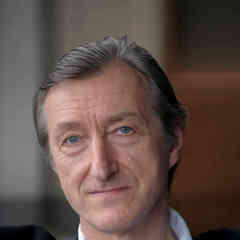
Julian Barnes

Julian Barnes Quotes

Writer

Filter quotes by topic

Famous Julian Barnes Quotes

“Con quale frequenza raccontiamo la storia della nostra vita? Aggiustandola, migliorandola, applicandovi tagli strategici? E più avanti si va negli anni, Meno corriamo il rischio che qualcuno intorno a noi ci possa contestare quella versione dei fatti, ricordandoci che la nostra vita non è la nostra vita, ma solo la storia che ne abbiamo raccontato. Agli altri, ma soprattutto noi stessi. da "Il senso di una fine”

“Quando si è giovani-parlo per me almeno-si vogliono provare sentimenti simili a quelli di cui leggiamo nei libri. Passioni che ti sconvolgono la vita, che creano e definiscono una realtà nuova. Più tardi, mi pare, vogliamo dai sentimenti qualcosa di più pratico e modesto: che siano di sostegno alla nostra vita per come è diventata e si manifesta. Vogliamo che ci garantiscano che va tutto bene. E che c'è di male in questo? da "Il senso di una fine”

“Il tempo però... ah, come può trascinarci alla deriva confonderci le idee. Credevamo di aver raggiunto la maturità quando ci 'eravamo soltanto messi in salvo, al sicuro. Fantasticavamo sul nostro senso di responsabilità, non riconoscendolo per quello che era, e cioè vigliaccheria. Ciò che abbiamo chiamato realismo si è rivelato un modo per evitare le cose, ben più che affrontarle. Già, il tempo ci riserva... Il tempo necessario a farci percepire le nostre più salve risoluzioni come traballanti, le nostre certezze come capricci momentanei. da "Il senso di una fine”

“And what percentage of people take up the option to die off?’ She looked at me, her glance telling me to be calm. ‘Oh, a hundred per cent, of course. Over many thousands of years, calculated by old time, of course. But yes, everyone takes the option, sooner or later.’ ‘So it’s just like the first time round? You always die in the end?’ ‘Yes, except don’t forget the quality of life here is much better. People die when they decide they’ve had enough, not before. The second time round it’s altogether more satisfying because it’s willed.’ She paused, then added, ‘As I say, we cater for what people want.’ I hadn’t been blaming her. I’m not that sort. I just wanted to find out how the system worked. ‘So … even people, religious people, who come here to worship God throughout eternity … they end up throwing in the towel after a few years, hundred years, thousand years?’ ‘Certainly. As I said, there are still a few Old Heaveners around, but their numbers are diminishing all the time.”

“Life is like invading Russia. A blitz start, massed shakos, plumes dancing like a flustered henhouse; a period of svelte progress recorded in ebullient despatches as the enemy falls back; then the beginning of a long, morale-sapping trudge with rations getting shorter and the first snowflakes upon your face. The enemy burns Moscow and you yield to General January, whose fingernails are very icicles. Bitter retreat. Harrying Cossacks. Eventually you fall beneath a boy-gunner's grapeshot while crossing some Polish river not even marked on your general's map.”

“The imagination doesn't crop annually like a reliable fruit tree. The writer has to gather whatever's there: sometimes too much, sometimes too little, sometimes nothing at all. And in the years of glut there is always a slatted wooden tray in some cool, dark attic, which the writer nervously visits from time to time; and yes, oh dear, while he's been hard at work downstairs, up in the attic there are puckering skins, warning spots, a sudden brown collapse and the sprouting of snowflakes. What can he do about it?”

“You can't have a novel without real, believable people, and once you get into either too theoretical a novel or too philosophical a novel, you get into the dangers that the French novel has discovered in the past 50 or 60 years. And you get into a sort of aridity. No, you have to have real, identifiable people to whom the reader reacts in a way as if they were real people.”

“I'm interested in such things as the difference between how we perceive the world and what the world turns out to be. The difference is between the stories we tell others and the stories we tell ourselves. There is a wonderful Russian saying, which I use as the epigraph of one of my novels, which goes, He lies like an eyewitness. Which is very sly, clever and true.”

“Sometimes you find the panel, but it doesn’t open; sometimes it opens, and your gaze meets nothing but a mouse skeleton. But at least you’ve looked. That’s the real distinction between people: not between those who have secrets and those who don’t, but between those who want to know everything and those who don’t. This search is a sign of love I maintain.”