Quotessence
Home / Authors / Konrad Lorenz Books
Konrad Lorenz

Konrad Lorenz Books

Zoologist

On aggression

A source page for quotes linked to Konrad Lorenz.
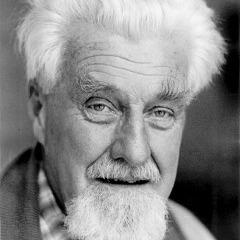
0 quotes

Man Meets Dog

A source page for quotes linked to Konrad Lorenz.

0 quotes

ON AGRESSION

A source page for quotes linked to Konrad Lorenz.

0 quotes

On aggressión

A source page for quotes linked to Konrad Lorenz.

0 quotes

Related Quotes

“Третье великое препятствие человеческого самопознания — по крайней мере в нашей западной культуре — это наследие идеалистической философии. Она делит мир на две части: мир вещей, который идеалистическое мышление считает в принципе индифферентным в отношении ценностей, и мир человеческого внутреннего закона, который один лишь заслуживает признания ценности. Такое деление замечательно оправдывает эгоцентризм человека, оно идёт навстречу его антипатии к собственной зависимости от законов природы — и потому нет ничего удивительного в том, что оно так глубоко вросло в общественное сознание. Насколько глубоко — об этом можно судить по тому, как изменилось в нашем немецком языке значение слов «идеалист» и «материалист»; первоначально они означали лишь философскую установку, а сегодня содержат и моральную оценку. Необходимо уяснить себе, насколько привычно стало, в нашем западном мышлении, уравнивать понятия «доступное научному исследованию» и «в принципе оценочно-индифферентное». Меня легко обвинить, будто я выступаю против этих трех препятствий человеческого самопознания лишь потому, что они противоречат моим собственным научным и философским воззрениям, — я должен здесь предостеречь от подобных обвинений. Я выступаю не как закоренелый дарвинист против неприятия эволюционного учения, и не как профессиональный исследователь причин — против беспричинного чувства ценности, и не как убеждённый материалист — против идеализма. У меня есть другие основания. Сейчас естествоиспытателей часто упрекают в том, будто они накликают на человечество ужасные напасти и приписывают ему слишком большую власть над природой. Этот упрёк был бы оправдан, если бы учёным можно было поставить в вину, что они не сделали предметом своего изучения и самого человека. Потому что опасность для современного человечества происходит не столько из его способности властвовать над физическими процессами, сколько из его неспособности разумно направлять процессы социальные. Однако в основе этой неспособности лежит именно непонимание причин, которое является — как я хотел бы показать — непосредственным следствием тех самых помех к самопознанию.”

“All too willingly man sees himself as the centre of the universe, as something not belonging to the rest of nature but standing apart as a different and higher being. Many people cling to this error and remain deaf to the wisest command ever given by a sage, the famous "Know thyself" inscribed in the temple of Delphi.”

“The attitude of the true scientist towards the real limits of human understanding was unforgettably impressed on me in early youth by the obviously unpremeditated words of a great biologist; Alfred Kuhn finished a lecture to the Austrian Academy of Science with Goethe 's words, "It is the greatest joy of the man of thought to have explored the explorable and then calmly to revere the inexplorable." After the last word he hesitated, raised his hand in repudiation and cried, above the applause, "No, not calmly, gentlemen; not calmly!”

“Nothing can better express the feelings of the scientist towards the great unity of the laws of nature than in Immanuel Kant's words: "Two things fill the mind with ever new and increasing awe: the stars above me and the moral law within me."... Would he, who did not yet know of the evolution of the world of organisms, be shocked that we consider the moral law within us not as something given, a priori, but as something which has arisen by natural evolution, just like the laws of the heavens?”

“The rushed existence into which industrialized, commercialized man has precipitated himself is actually a good example of an inexpedient development caused entirely by competition between members of the same species. Human beings of today are attacked by so-called manager diseases, high blood pressure, renal atrophy, gastric ulcers, and torturing neuroses: they succumb to barbarism because they have no more time for cultural interests.”

“All the advantages that man has gained from his ever-deepening understanding of the natural world that surrounds him, his technological, chemical and medical progress, all of which should seem to alleviate human suffering... tends instead to favor humanity's destruction.”

“I believe-and human psychologists, particularly psychoanalysts should test this-that present-day civilized man suffers from insufficient discharge of his aggressive drive. It is more than probable that the evil effects of the human aggressive drives, explained by Sigmund Freud as the results of a special death wish, simply derive from the fact that in prehistoric times intra-specific selection bred into man a measure of aggression drive for which in the social order today he finds no adequate outlet.”

“The distance at which all shooting weapons take effect screens the killer against the stimulus sensation which would otherwise activate his killing inhibitions. The deep, emotional layers of our personality simply do not register the fact that the crooking of the finger to release a shot tears the entrails of another man.”

“All living beings have received their weapons through the same process of evolution that moulded their impulses and inhibitions; for the structural plan of the body and the system of behaviour of a species are parts of the same whole.... Wordsworth is right: there is only one being in possession of weapons which do not grow on his body and of whose working plan, therefore, the instincts of his species know nothing and in the usage of which he has no correspondingly adequate inhibition.”

“The appeal of the cat lies in the very fact that she has formed no close bond with [man], that she has the uncompromising independence of a tiger or a leopard while she is hunting in his stables and barns: that she still remains mysterious and remote when she is rubbing herself gently against the legs of her mistress or purring contentedly in front of the fire.”

“If you confine yourself to this Skinnerian technique, you study nothing but the learning apparatus and you leave out everything that is different in octopi, crustaceans, insects and vertebrates. In other words, you leave out everything that makes a pigeon a pigeon, a rat a rat, a man a man, and, above all, a healthy man healthy and a sick man sick.”

“The competition between human beings destroys with cold and diabolic brutality... Under the pressure of this competitive fury we have not only forgotten what is useful to humanity as a whole, but even that which is good and advantageous to the individual. [...] One asks, which is more damaging to modern humanity: the thirst for money or consuming haste... in either case, fear plays a very important role: the fear of being overtaken by one's competitors, the fear of becoming poor, the fear of making wrong decisions or the fear of not being up to snuff...”

“Visualize yourself confronted with the task of killing, one after the other, a cabbage, a fly, a fish, a lizard, a guinea pig, a cat, a dog, a monkey and a baby chimpanzee. In the unlikely case that you should experience no greater inhibitions in killing the chimpanzee than in destroying the cabbage or the fly, my advice to you is to commit suicide at your earliest possible convenience, because you are a weird monstrosity and a public danger.”