Quotessence
Home / Authors / Stephen Jay Gould
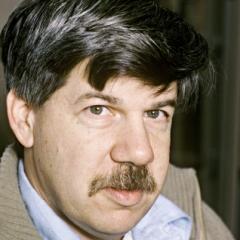
Stephen Jay Gould

Stephen Jay Gould Quotes

Paleontologist

Filter quotes by topic

Famous Stephen Jay Gould Quotes

“International Socialist Review Issue 24, July–August 2002 Stephen Jay Gould: Dialectical Biologist by Phil Gasper Every major newspaper carried an obituary of Gould after his death, praising his scientific accomplishments. But most said nothing about another important aspect of Gould’s life–his radical politics. Gould was a red diaper baby. His maternal grandparents were Jewish immigrants who worked in Manhattan’s garment sweatshops in the early years of the last century, just blocks from the horrific Triangle Shirtwaist fire that killed 146 workers in 1911. "I grew up in a family of Jewish immigrant garment workers," Gould wrote, "and this holocaust (in the literal meaning of a thorough sacrifice by burning)…set their views and helped to define their futures."4 Gould’s parents were New York leftists, probably in or around the Communist Party in the 1930s, and he once boasted that he had learned his Marxism "literally at [my] daddy’s knee.”

“I had learned that a dexterous, opposable thumb stood among the hallmarks of human success. We had maintained, even exaggerated, this important flexibility of our primate forebears, while most mammals had sacrificed it in specializing their digits. Carnivores run, stab, and scratch. My cat may manipulate me psychologically, but he'll never type or play the piano.”

“The extreme rarity of transitional forms in the fossil record persists as a trade secret of Paleontology. Evolutionary trees that adorn our textbooks have data only at the tips and nodes of their branches; the rest is inference, however reasonable, not the evidence of fossils.”

“Throughout his last half-dozen books, for example, Arthur Koestler has been conducting a campaign against his own misunderstanding of Darwinism. He hopes to find some ordering force, constraining evolution to certain directions and overriding the influence of natural selection. [...] Darwinism is not the theory of capricious change that Koestler imagines. Random variation may be the raw material of change, but natural selection builds good design by rejecting most variants while accepting and accumulating the few that improve adaptation to local environments.”

“[T]ruly grand and powerful theories [...] do not and cannot rest upon single observations. Evolution is an inference from thousands of independent sources, the only conceptual structure that can make unified sense of all this disparate information. The failure of a particular claim usually records a local error, not the bankruptcy of a central theory. [...] If I mistakenly identify your father's brother as your own dad, you don't become genealogically rootless and created de novo. You still have a father; we just haven't located him properly.”

“Darwinian evolution may be the most truthful and powerful idea ever generated by Western Science, but if we continue to illustrate our conviction with an indefensible, unsupported, entirely speculative, and basically rather silly story, then we are clothing a thing of beauty in rags - and we should be ashamed, "for the apparel oft proclaims the man.”

“Each worldview was a cultural product, but evolution is true and separate creation is not. [...] Worldviews are social constructions, and they channel the search for facts. But facts are found and knowledge progresses, however fitfully. Fact and theory are intertwined, and all great scientists understand the interaction.”

“Iconography becomes even more revealing when processes or concepts, rather than objects, must be depicted for the constraint of a definite "thing" cedes directly to the imagination. How can we draw "evolution" or "social organization," not to mention the more mundane "digestion" or "self-interest," without portraying more of a mental structure than a physical reality? If we wish to trace the history of ideas, iconography becomes a candid camera trained upon the scholar's mind.”

“The vigorous branching of life's tree, and not the accumulating valor of mythical marches to progress, lies behind the persistence and expansion of organic diversity in our tough and constantly stressful world. And if we do not grasp the fundamental nature of branching as the key to life's passage across the geological stage, we will never understand evolution aright.”

“A complete theory of evolution must acknowledge a balance between "external" forces of environment imposing selection for local adaptation and "internal" forces representing constraints of inheritance and development. Vavilov placed too much emphasis on internal constraints and downgraded the power of selection. But Western Darwinians have erred equally in practically ignoring (while acknowledging in theory) the limits placed on selection by structure and development what Vavilov and the older biologists would have called "laws of form.”

“Evolution is an obstacle course not a freeway; the correct analogue for long-term success is a distant punt receiver evading legions of would-be tacklers in an oddly zigzagged path toward a goal, not a horse thundering down the flat.”

“No one supposed that dinoflagellates might actively kill fish as an evolved response for their own specific advantage, including a potential nutritional benefit for the algal cells. And yet the dinoflagellates do seem to be killing and eating fishes in a manner suggesting active evolution for this most peculiar reversal.”

“The history of life is more adequately represented by a picture of 'punctuated equilibria' than by the notion of phyletic gradualism. The history of evolution is not one of stately unfolding, but a story of homeostatic equilibria, disturbed only 'rarely' (i.e. rather often in the fullness of time) by rapid and episodic events of speciation.”

“Darwin's principle of natural selection leads to the prediction that the proper way to analyze any evolutionary development is to see the new features as adaptive to environments. And that's a perfectly good principle. The problem is that there are many evolutionary biologists who view everything that happens in evolution as directly evolved for adaptive benefit. And that just doesn't work. Whenever you build a structure for adaptive reasons, the structure is going to exhibit properties that have nothing to do with adaptation. They're just side consequences.”

“We are here because one odd group of fishes had a peculiar fin anatomy that could transform into legs for terrestrial creatures; because the earth never froze entirely during an ice age; because a small and tenuous species, arising in Africa a quarter of a million years ago, has managed, so far, to survive by hook and by crook. We may yearn for a ‘higher answer’– but none exists”

“Still, our creationist incubi, who would never let facts spoil a favorite argument, refuse to yield, and continue to assert the absence of all transitional forms by ignoring those that have been found, and continuing to taunt us with admittedly frequent examples of absence.”

“The myriad valleys could have arisen anywhere on the landscape. The current positions are quite accidental. If we could repeat the experiment, we might obtain no valleys at all, or a completely different system. Yet we now stand at the shore line contemplating the fine spacing of valleys and their even contact with the sea. How easy it is to be misled and to assume that no other landscape could possibly have arisen.”

“In their recently aborted struggle to inject Genesis literalism into science classrooms, fundamentalist groups followed their usual opportunistic strategy of arguing two contradictory sides of a question when a supposed rhetorical advantage could be extracted from each.”

“Einstein's theory of gravitation replaced Newton's, but apples did not suspend themselves in mid-air, pending the outcome. And humans evolved from apelike ancestors whether they did so by Darwin's proposed mechanism or by some other yet to be discovered.”

“Speciation does not necessarily promote evolutionary change; rather, speciation 'gathers in' and guards evolutionary change by locking and stabilization for sufficient geological time within a Darwinian individual of the appropriate scale. If a change in a local population does not gain such protection, it becomes-to borrow Dawkins's metaphor at a macroevolutionary scale-a transient duststorm in the desert of time, a passing cloud without borders, integrity, or even the capacity to act as a unit of selection, in the panorama of life's phylogeny.”

“Since we proposed punctuated equilibria to explain trends, it is infuriating to be quoted again and again by creationists-whether through design or stupidity, I do not know-as admitting that the fossil record includes no transitional forms. Transitional forms are generally lacking at the species level, but they are abundant between larger groups.”

“The literal record was not a hopelessly and imperfect fraction of truly insensible gradation within large populations but an accurate reflection of the actual process identified by evolutionists as the chief motor of biological change. The theory of punctuated equilibrium was, in its initial formulation, little more than this insight adumbrated.”

“Evolution has encountered no intellectual trouble; no new arguments have been offered. Creationism is a home-grown phenomenon of American sociocultural history-a splinter movement ... who believe that every word in the Bible must be literally true, whatever such a claim might mean.”