Filter quotes by topic
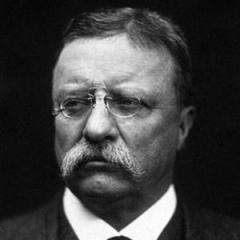
Famous Theodore Roosevelt Quotes
Source: The Works of Theodore Roosevelt
Source: History as Literature and Other Essays
Source: Theodore Roosevelt on Bravery: Lessons from the Most Courageous Leader of the Twentieth Century
Source: The Strenuous Life: Essays and Addresses
Source: The Bully Pulpit: A Teddy Roosevelt Book of Quotations
Source: Theodore Roosevelt Cyclopedia
Source: Letters of Theodore Roosevelt: The big stick, 1905-1909
Source: The Bully Pulpit: A Teddy Roosevelt Book of Quotations
“No people ever yet benefited by riches if their prosperity corrupted their virtue.”
Source: Theodore Roosevelt Cyclopedia
Source: In the Words of Theodore Roosevelt: Quotations from the Man in the Arena
Source: Theodore Roosevelt on Bravery: Lessons from the Most Courageous Leader of the Twentieth Century
Source: The Works of Theodore Roosevelt: American ideals, with a biographical sketch by F. V. Greene. Administration
Source: Autobiography of Theodore Roosevelt
Source: The Strenuous Life: Essays and Addresses
Source: The Strenuous Life: Essays and Addresses
Source: Bully!
Source: Works: The strenuous life
Source: Theodore Roosevelt Cyclopedia
Source: The Strenuous Life: Essays and Addresses
“If I have to choose between peace and righteousness, I'll choose righteousness.”
Source: The Strenuous Life: Essays and Addresses
Source: Letters of Theodore Roosevelt: The days of Armageddon, 1900-1914
“Oh, if only I could be President and Congress, too, just for ten minutes.”
Source: Theodore Roosevelt on Bravery: Lessons from the Most Courageous Leader of the Twentieth Century
Source: Theodore Roosevelt on Bravery: Lessons from the Most Courageous Leader of the Twentieth Century
“Don't hit at all if it is honorably possible to avoid hitting; but never hit soft.”
Source: Theodore Roosevelt on Bravery: Lessons from the Most Courageous Leader of the Twentieth Century
Source: Theodore Roosevelt on Bravery: Lessons from the Most Courageous Leader of the Twentieth Century
Source: African and European Addresses
Source: Bully!
“Each one must do his part if we wish to show that the nation is worthy of its good fortune.”
Source: Theodore Roosevelt on Bravery: Lessons from the Most Courageous Leader of the Twentieth Century
“If given the choice between Righteousness and Peace, I choose Righteousness.”