Quotessence
Home / Authors / Thomas Szasz Books
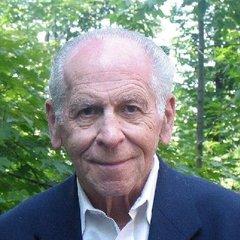
Thomas Szasz

Thomas Szasz Books

Psychiatrist

The second sin

A source page for quotes linked to Thomas Szasz.
0 quotes

Heresies

A source page for quotes linked to Thomas Szasz.

0 quotes

Related Quotes

“Electric shock treatment is paradigmatic of the interventions of Institutional Psychiatry; based on force and fraud, and justified by "medical necessity," the prime purpose of psychiatric treatments — whether utilizing drugs, electricity, surgery or confinement, especially if imposed on unconsenting clients-is to authenticate the subject as a "patient," the psychiatrist as a "doctor," and the intervention as a form of "treatment." The cost of this fictionalization runs high: it requires the sacrifice of the patient as a person; of the psychiatrist as a critical thinker and moral agent; and of the legal system as a protector of the citizen from the abuse of state power.”

“The primary problem with modern psychiatry is its reduction of mental illness to bodily dysfunction. Objectification of those identified as mentally ill, by insisting on the somatic nature of their illness, may apparently simplify matters and help protect those trying to provide care from the pain experienced by those needing support. But psychiatric assessment too often fails to appreciate personal and social precursors of mental illness by avoiding or not taking account of such psychosocial considerations. Mainstream psychiatry acts on the somatic hypothesis of mental illness to the detriment of understanding people's problems.”

“For Jews, the Messiah has never come; for Christians, He has come but once; for modern man, He appears and disappears with increasing rapidity. The saviors of modern man, the "scientists" who promise salvation through the "discoveries" of ethology and sociology, psychology and psychiatry, and all the other bogus religions, issue forth periodically, as if selected by some Messiah-of-the-Month Club.”

“If, nevertheless, textbooks of pharmacology legitimately contain a chapter on drug abuse and drug addiction, then, by the same token, textbooks of gynecology and urology should contain a chapter on prostitution; textbooks of physiology, a chapter on perversion; textbooks of genetics, a chapter on the racial inferiority of Jews and Negroes.”

“The great shift... is the movement away from the value-laden languages of... the "humanities," and toward the ostensibly value-neutral languages of the "sciences." This attempt to escape from, or to deny, valuation is... especially important in psychology... and the so-called social sciences. Indeed, one could go so far as to say that the specialized languages of these disciplines serve virtually no other purpose than to conceal valuation behind an ostensibly scientific and therefore nonvaluational semantic screen.”

“As the dominant social ethic changed from a religious to a secular one, the problem of heresy disappeared, and the problem of madness arose and became of great social significance. In the next chapter I shall examine the creation of social deviants, and shall show that as formerly priests had manufactured heretics, so physicians, as the new guardians of social conduct and morality, began to manufacture madmen.”

“We shall therefore compare the concept of homosexuality as heresy, prevalent in the days of the witch-hunts, with the concept of homosexuality as mental illness, prevalent today.”

“The Christian ethic did not raise the worth of female life much above the Jewish: nor did the clinical ethic raise it much above the clerical. This is why most of those identified as witches by male inquisitors were women; and why most of those diagnosed as hysterics by male psychiatrists were also women.”

“In English-speaking countries, the connection between heresy and homosexuality is expressed through the use of a single word to denote both concepts: buggery. ... Webster's Unabridged Dictionary (Third Edition) defines "buggery" as "heresy, sodomy.”

“There is a fundamental similarity between the persecution of individuals who engage in consenting homosexual activity in private, or who ingest, inject, or smoke various substances that alter their feelings and thoughts - and the traditional persecution of men for their religion... What all of these persecutions have in common is that the victims are harassed by the majority not because they engage in overtly aggressive or destructive acts... but because their conduct or appearance offends a group intolerant to and threatened by human differences.”

“As the base rhetorician uses language to increase his own power, to produce converts to his own cause, and to create loyal followers of his own person - so the noble rhetorician uses language to wean men away from their inclination to depend on authority, to encourage them to think and speak clearly, and to teach them to be their own masters.”

“Like Karl Kraus [Wittgenstein], was seldom pleased by what he saw of the institutions of men, and the idiom of the passerby mostly offended his ear - particularly when they happened to speak philosophically; and like Karl Kraus, he suspected that the institutions could not but be corrupt if the idiom of the race was confused, presumptuous, and vacuous, a fabric of nonsense, untruth, deception, and self-deception.”

“By pretending that convention is Nature, that disobeying a personal prohibition is a medical illness, they establish themselves as agents of social control and at the same time disguise their punitive interventions in the semantic and social trappings of medical practice.”

“The disease concept of homosexuality as with the disease concept of all so-called mental illnesses, such as alcoholism, drug addiction, or suicide conceals the fact that homosexuals are a group of medically stigmatized and socially persecuted individuals. ... Their anguished cries of protest are drowned out by the rhetoric of therapy just as the rhetoric of salvation drowned out the [cries] of heretics.”

“So long as men denounce each other as mentally sick (homosexual, addicted, insane, and so forth) so that the madman can always be considered the Other, never the Self mental illness will remain an easily exploitable concept, and Coercive Psychiatry a flourishing institution.”

“The two greatest enemies of the individual in the modern world are communism and psychiatry. Each wages a relentless war against that which makes a person an individual: communism against the ownership of property, psychiatry against the ownership of the self (mind and body). Communists criminalize the autonomous use of capital and labor, and harshly punish those who "traffic" in the black market, especially in foreign currencies. Psychiatrists criminalize the autonomous use of the self, and harshly punish those who "traffic" in self-abuse, especially in self-medication and self-destruction.”

“When the psychiatrist approves of a person's actions, he judges that person to have acted with "free choice"; when he disapproves,he judges him to have acted without "free choice." It is small wonder that people find "free choice" a confusing idea: "free choice" appears to refer to what the person being judged (often called the "patient") does, whereas it is actually what the person making the judgment (often a psychiatrist or other mental health worker) thinks.”

“If someone does something we disapprove of, we regard him as bad if we believe we can deter him from persisting in his conduct, but we regard him as mad if we believe we cannot. In either case, the crucial issue is our control of the other: the more we lose control over him, and the more he assumes control over himself, the more, in case of conflict, we are likely to consider him mad rather than just bad.”

“Autonomy... is freedom to develop one's self - to increase one's knowledge, improve one's skills, and achieve responsibility for one's conduct. And it is freedom to lead one's own life, to choose among alternative courses of action so long as no injury to others results.”

“After generations of living under medical tutelage, which provides us with protection (albeit illusory) against "dangerous drugs", we have failed to cultivate the self-reliance and self-discipline we must possess as competent adults surrounded by the fruits of our pharmacological-technological age.”

“The stupid neither forgive nor forget; the naive forgive and forget; the wise forgive but do not forget.”