Quotessence
Home / Authors / Jean Baudrillard
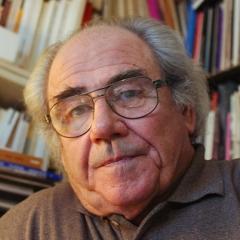
Jean Baudrillard

Jean Baudrillard Quotes

Philosopher

Filter quotes by topic

Famous Jean Baudrillard Quotes

“This heat in the belly which remains after the evisceration and freezing of bodies can be nothing other than the jealousy of the living for the dead. Our jealousy for the object is that of miserable subjects for what has passed living into a perfection which is beyond us. Man's jealousy of woman, that more than sexual heat, that heat of passion, is born of a desire for what has been torn from him and reincarnated elsewhere in the other sex - and is it not indeed diabolical? - and which sneers at him from there like the hypostasis of the best of himself. Consoling signs. After the fear of victory, which causes the sportsman to fail at the last gasp, after the fear of power - the fear of wielding power - which even the political class shows many signs of, falling in this way into the loneliness of the long-distance runner, we now see science beset by weakness. Reaching the end of the course, this flat-footed idol is also frightened of its shadow.”

“We are always distant in some way, in some particular, from our sorrow. Only hysteria can create total sorrow, but even this, once it is articulated, is no longer so bad as it was before. For the same reason, absolute happiness is impossible and those who speak of it must be regarded as hypocrites. In the wretchedness of his New Delhi room, weeping hot tears (no doubt more for the personal offence he had suffered than for the lost object), S . still finds the strength to photograph his telephone. Since it is the main virtue of the sexual act to raise the body to that exceptional state which is nudity, it is superfluous if that nudity has now become something obvious. That is why love is only beautiful with a shy body, a sex which makes a play of its shyness. That is why it is only really beautiful the first time. A negative judgement gives you more satisfaction than praise, provided it smacks of jealousy.”

“The silence of metaphor accompanies the act of cruelty, as for example with the cannibalistic Japanese who moved directly from the metaphor of love to devouring that marvellous Dutch girl. Or the woman who made a present of her eye to the man who said he was so in love with her gaze. The effacement of metaphor is characteristic of the object and its cruelty. Words are left with only a literal, material tenor. They are no longer signs in a language. This is the silence of pure objectality.”

“If there is a species which is more maltreated than children, then it must be their toys, which they handle in an incredibly off-hand manner (how long will it be before someone starts a society for the protection of battered and maltreated objects?). Toys are thus the end point in that long chain in which all the conditions of despotic high-handedness are in play which enchain beings one to another, from one species to another - from cruel divinities to their sacrificial victims, from masters to slaves, from adults to children, and from children to their objects. This is actually the only strong symbolic chain, the one through which a victim of the whim of a superior power passes it on to an inferior species, the whole process ending with someone taking it out on a powerless simulacrum, like a toy - and beginning no doubt with an all-powerful simulacrum, like the masked divinities which men themselves invent to justify this wretched chain.”

“The automatic carriage-return on the typewriter, electronic central locking of cars: these are the things that count. The rest is just theory and literature. Space is what prevents everything from being in the same place. Language is what prevents everything from meaning the same thing. My hand, separated from me, dreams it is holding a breast. Nothing fills a hand better than a breast. Stereotype of a sadistic tenderness. This journal develops, as its title indicates, over the course of time. However it is haunted by something which preceded it, the secret underlying event.”

“Revolutionary theory also enshrined the living utopian hope that the State would wither away, and that the political sphere would negate itself as such, in the apotheosis of a finally transparent social realm. None of this has come to pass. The political sphere has disappeared, sure enough - but so far from doing so by means of a self-transcendence into the strictly social realm, it has carried that realm into oblivion with it. We are now in the transpolitical sphere; in other words, we have reached the zero point of politics, a stage which also implies the reproduction of politics, its endless simulation. For everything that has not successfully transcended itself can only fall prey to revivals without end. So politics will never finish disappearing - nor will it allow anything else to emerge in its place. A kind of hysteresis of the political reigns. Art has likewise failed to realize the utopian aesthetic of modern times, to transcend itself and become an ideal form of life. (In earlier times, of course, art had no need of self-transcendence, no need to become a totality, for such a totality already existed - in the shape of religion.) Instead of being subsumed in a transcendent ideality, art has been dissolved within a general aestheticization of everyday life, giving way to a pure circulation of images, a transaesthetics of banality. Indeed, art took this route even before capital, for if the decisive political event was the strategic crisis of 1929, whereby capital debouched into the era of mass trans politics, the crucial moment for art was undoubtedly that of Dada and Duchamp, that moment when art, by renouncing its own aesthetic rules of the game, debouched into the transaesthetic era of the banality of the image. Nor has the promised sexual utopia materialized. This was to have consisted in the self-negation of sex as a separate activity and its self-realization as total life. The partisans of sexual liberation continue to dream this dream of desire as a totality fulfilled within each of us, masculine and feminine at once, this dream of sexuality as an assumption of desire beyond the difference between the sexes. In point of fact sexual liberation has succeeded only in helping sexuality achieve autonomy as an undifferentiated circulation of the signs of sex. Although we are certainly in transition towards a transsexual state of affairs, this has nothing to do with a revolution of life through sex - and everything to do with a confusion and promiscuity that open the door to virtual indifference (in all senses of the word) in the sexual realm.”

“Prohibitions themselves are no longer transcendent. Once upon a time they were signified to us from on high by laws that came from a far-off region - perhaps, here again, an Island of Prohibitions, ruled over by a divinity concerned for our fate. But today they too have been internalized; they are produced by the brain. It is we who produce them; they are secretions of the individual unconscious. They no longer have any grandeur, nor, in the end, do they even have any charm. They either disappear purely and simply (it is forbidden to forbid), or become once again, paradoxically, objects of nostalgia, objects of desire - where once they separated us from the accomplishment of desire.”

“A society like the Italian, the very disorder of which renders the action of the State useless and ridiculous, is not without its charm and helps us to grasp this political truth: the principal task of the State today is to justify its own existence. To do so, it has to annihilate society's capacity to survive by itself. Surreptitiously undermining all forms of spontaneous regulation, deregulating, desocializing, breaking down the traditional mechanisms of bodies and antibodies, in order to substitute its artificial mechanisms - such is the strategy of a State locked in a subtle struggle with society - exactly like medicine, which lives off the destruction of natural defences and their replacement by artificial ones. In Rome, Niccolini manages to counter the obsessive fear of terrorism with a cultural revival. To the Romans who no longer dare go out in the evenings he offers festivals, performances, poetry galas. He brings culture down into the street. He combats the terrorist festival with the cultural, advertising festival. He will be criticized for wasteful expenditure, but the only way to fight terrorism is not to create 'solid' institutions, but to put upon the stage a culture that is as sacrificial, eccentric, and ephemeral as the terrorist acts themselves. One festival against the other. If terrorism is a sort of murderous advertising campaign which keeps our imagination on tenterhooks, it can be countered only by a piece of even more effective advertising.”

“After the sacrifice of value, after the sacrifice of representation, after the sacrifice of reality, the West is now characterized by the deliberate sacrifice of everything through which a human being keeps some value in his or her own eyes. The terrorists' potlatch against the West is their own death. Our potlatch is indignity, immodesty, obscenity, degradation and abjection. This is the movement of our culture - where the stakes keep rising. Our truth is always on the side of unveiling, desublimation, reductive analysis - the truth of the repressed -- exhibition, avowal, nudity - nothing is true unless it is desecrated, objectified, stripped of its aura, or dragged onstage.”

“When the night is as long as the day, then the storms of the equinox begin to get up, when artificial light is as strong as the violence of the sun, then the passion for gambling is unleashed, when two women equal each other in your mind, then the equinox of pleasure begins. For some, life is interminable, and what is interminable no longer makes sense. How are they to find time to live? For others, life is over right from the outset. It has ended before it has begun. It unfolds on a sort of abstract strip, without any temporal dimension. In this way, some lives sacrifice their own ends uselessly, and lose even the memory of their origins. If there were a secret, no one, not even the person who knew it, would be able to divulge it. We must keep watching, from the depths of a definitive silence, for the definitive event.”

“The totality constituted by Good and Evil together transcends us, but we should accept it totally. There can be no intelligence of things so long as this fundamental rule is ignored. The illusion that the two can be distinguished in order to promote one or the other is absurd. (This applies to the proponents of evil for evil's sake as much as to anyone else, for they will end up doing good.) All kinds of events are out there, impossible to predict. They have already occurred, or are just about to heave into view. All we can do is train our searchlight, as it were, and keep our telescopic lens on this virtual world in the hope that some of those events will be obliging enough to allow themselves to be captured. Theory can be no more than this: a trap set in the hope that reality will be naive enough to fall into it. The essential thing is to point the searchlight the right way. Unfortunately, we don't know which way that is. We can only comb the sky. In most instances the events are so far away, metaphysically speaking, that they merely cause a slight phosphorescence on the screen. They have to be developed and enlarged, like photographs. Not in order to discover their meaning, however: they are not logograms, but holograms. They can no more be explained than the fixed spectrum of a star or the variations of red. To capture such strange events, theory itself must be remade as something strange: as a perfect crime, or as a strange attractor.”

“In this hysterical phase, it was, so to speak, the femininity of man which projected itself on to woman and shaped her as an ideal figure in his image. In Romantic love, the aim was not now to conquer the woman, to seduce her, but to create her from the inside, to invent her, in some cases as achieved Utopian vision, as idealized woman , in others as femme fatale, as star - another hysterical, supernatural metaphor. The Romantic Eros can be credited with having invented this ideal of harmony, of loving fusion, this ideal of an almost incestuous form of twin beings — the woman as projective resurrection of the same, who assumes her supernatural form only as ideal of the same, an artefact doomed henceforth to l'amour or, in other words, to a pathos of the ideal resemblance of beings and sexes - a pathetic confusion which substitutes for the dual otherness of seduction. The whole mechanics of the erotic changes meaning, for the erotic attraction which previously arose out of otherness, out of the strangeness of the Other, now finds its stimulus in sameness - in similarity and resemblance. Auto-eroticism, incest? No . Rather a hypostasis of the Same. Of the same eyeing up the other, investing itself in the other, alienating itself in the other - but the other is only ever the ephemeral form of a difference which brings me closer to me. This indeed is why, with Romantic love and all its current spin-offs, sexuality becomes connected with death: it is because it becomes connected with incest and its destiny - even in banalized form (for we are no longer speaking of mythic, tragic incest here; with modern eroticism we are dealing with a secondary incestuous form - of the protection of the same in the image of the other - which amounts to a confusion and corruption of all images). We have here then, in the end, the invention of a femininity which renders woman superfluous. The invention of a difference which is merely a roundabout copulation with its double. And which, at bottom, renders any encounter with otherness impossible (it would be interesting to know whether there was not any hysterical quid pro quo from the feminine in the construction of a virile, phallic mythology; feminism being one such example of the hystericization of the masculine in woman, of the hysterical projection of her masculinity in the exact image of the hysterical projection by man of his femininity into a mythical image of woman).”

“The media represents world that is more real than reality that we can experience. People lose the ability to distinguish between reality and fantasy. They also begin to engage with the fantasy without realizing what it really is. They seek happiness and fulfilment through the simulacra of reality, e.g. media and avoid the contact/interaction with the real world. (Note: This quote is fake and does not appear in Simulacra and Simulation. I tried to delete it, but the system doesn't allow that because this quote has "too many fans" lol.)”

“The same acting-out, the same loss of distance and the same fall into the real threatens thought too, as soon as it crosses the demarcation line which is that of its impossible exchange with truth, as soon as it comes to act out truth. Thought must at all costs keep itself from reality, from the real projection of ideas and their translation into acts. The Overman and the Eternal Return are, in this way, visions and they have the sovereignty of a hypothesis. If we try to turn them into acts or faits accomplis, they become monstrous and ridiculous. The same goes for less visionary perspectives, such as biogenetic experimentation on the human species: as a hypothesis, this opens up all kinds of metaphysical and anthropological questions. But if we move from potential mutation to real projection (as Peter Sloterdijk does in his Menschenpark project), we lose all philosophical distance; and thought, in mingling with the real course of things, offers merely a false alternative to the operation of the system. Thought must refrain from instructing, or being instructed by, a future reality, for, in that game, it will always fall into the trap of a system that holds the monopoly of reality. And this is not a philosophical choice. It is, for thought, a life-and-death question.”

“Such is the paradox of all thought which disputes the validity of the real: when it sees itself robbed of its own concept. Events, bereft of meaning in themselves, steal meaning from us. They adapt to the most fantastical hypotheses, just as natural species and viruses adapt to the most hostile environments. They have an extraordinary mimetic capacity: no longer is it theories which adapt to events, but the reverse. And, in so doing, they mystify us, for a theory which is verified is no longer a theory. It's terrifying to see the idea coincide with the reality. These are the death-throes of the concept. The epiphany of the real is the twilight of its concept. We have lost that lead which ideas had over the world, that distance which meant that an idea remained an idea. Thought has to be exceptional, anticipatory and at the margin -- has to be the projected shadow of future events. Today, we are lagging behind events. They may sometimes give the impression of receding; in fact, they passed us long ago. The simulated disorder of things has moved faster than we have. The reality effect has succumbed to acceleration --anamorphosis of speed. Events, in their being, are never behind themselves, are always out ahead of their meaning. Hence the delay of interpretation, which is now merely the retrospective form of the unforeseeable event.”

“We shall never know whether thought is an imposture, and that is providential. 'The people is, in some cases, so enlightened that it is no longer indifferent to anything' (Montesquieu). That is indeed the end point: when there is no longer anything about which there is nothing to say. Verdict of a Chinese writer on a monstrous tree that is at once a blackberry and a bamboo: 'any disorder appearing in nature is the sign of a hidden disorder in the administration of the Empire ... Order restored in nature clearly indicates satisfaction in heaven.' Our current blossoming of monsters and clones, hybrids and chimeras, our systematic mixing of mores and cultures, sexes and genes, cannot but attest to an irremediable disorder in the highest spheres of the Empire.”

“Thinking takes on first a conceptual, metaphorical form. Then a subjective, affective form. Then an animal, instinctive form. Then a reflex, automatic form. At that point, it is simply a function equivalent to the circulation of the blood and artificial respiration. Writing is the living alternative to the worst of what it says . There was a dramaturgy of art and language: transfiguring the real into lyricism and violence, giving history a heroic, bloodstained ending. It seems today that art and language have the opposite function of making everything conform to ordinariness: without end and without resolution.”

“Lichtenberg speaks somewhere of the 'freedom to think, without danger, for the truth'. By this he doubtless understands the right of speaking the truth without the danger of being thrown into prison by the monarch. But if, by removing a comma, we read, instead, the freedom to think 'without danger for the truth', things become much more interesting. For then it becomes a question of the capacity to think without imperilling truth (without risk of unveiling it). It is no longer the freedom of thought at odds with power, but the truth itself at odds with the freedom to think. The whole relationship between thought and truth is at issue. There is a profound difference between the thought that wants to make truth shine out and the thought that wants to keep it secret. But you can also wish for both at the same time.”

“The conscious decision to make a movement corresponds to an electrical event in the brain that happens 200 to 300 milliseconds after the beginning of the movement.' 'The experience of free determination of the will is nothing but an awareness of past events projected into the future' (Atlan). This precession of the act over the will, of the movement over the decision is interesting. It is the very question of thought: is there, in thought itself, something that precedes thought? More broadly, it is the question of the world: is there, before the Big Bang, something that precedes the world? This enquiry is essentially metaphysical. No point falling back on 'neuronal electricity'!”

“Somewhere, we all mourn this stripped reality, this residual existence, this total disillusion. And there is, within this entire story of the Loft, a collective work of mourning. But a mourning which is part of the solidarity between the criminals themselves that we all are - the murderers of this crime perpetrated against real life, and the wallowing confession made to the screen, which in some ways becomes our literal confessional (the confessional is one of the key sites of Loft Story). Here we see our true mental corruption - in the consumption of this deception and mourning which becomes a contradictory source of pleasure. In any case, nevertheless, the disavowal of this experimental masquerade is reflected in the deadly boredom that emanates from it.”

“Despairing of an aim, salvation or an ideal, we invent for ourselves the easiest solution: happiness. Here again we begin with utopia - the ideal of happiness - and end in achieved happiness, the highest stage of happiness. The same abreaction to integral happiness as to integral reality or freedom: these are all unbearable. In the end, it is the opposite form of misfortune, the victim ideology, that triumphs. Being incapable of accepting thought (the idea that the world thinks us, the intelligence of evil), we invent the easiest solution, the technical solution: Artificial Intelligence. The highest stage of intelligence: integral knowledge. This time the rejection will arise perhaps from a resistance on the part of things themselves to their digital transparency or from a failure of the system in the form of a major accident. Against all the sovereign hypotheses are ranged the easiest solutions. And all the easiest solutions lead to catastrophe.”

“In fact, the child is no longer a child. Children are substitute beings, who are losing their natural otherness and entering upon a satellite existence on the artificial orbit of sameness. They will find it increasingly difficult to detach themselves; to find, not their identity and their autonomy — as they are constantly being told they must — but their distance and their strangeness. The more genetic heredity is foregrounded, the more the symbolic heritage disappears. Even the Oedipal drama is not played out any longer. There is no longer any resolution of childhood, since the psychical and symbolic conditions of childhood no longer even exist. Childhood is losing even the chance of surpassing and denying itself as such. It is disappearing as a phase in the metamorphosis of the human being. At the same time as it is losing this distinctive spirit of its own and its singularity, it is becoming a sort of dark continent. For otherness inevitably re-emerges, but differently, in the form of a vast, shady complicity on the part of a generation which is at last free from adult attention, but is no longer minded to grow up. An endless, purposeless adolescence, which is acquiring autonomy with no reference to the Other, acquiring it for itself — and turning, in some cases violently, against the Other, against the adult with whom it now has no sense either of descendance or solidarity. This is no longer a symbolic break, but a pure and simple rejection, which may find expression in a lethal 'acting out' . And it is not even 'acting out' , since that still presupposes the irruption of the phantasm into a real world , whereas here we are dealing with an infantile, quasi-hallucinatory state which reaches back before the reality principle. Moreover, this pre-reality-principle, infantile state coincides strangely with the world of virtual reality, our adult media world, the post-reality-principle world, in which the real and the virtual merge.”

“Laughter itself is more often than not a vital abreaction to the disgust we feel for the monstrous mixing and promiscuity that confront us. But for all that we may gag on the absence of differentiation, it still fascinates us. We love to mix everything up, even if it simultaneously repels us. The reaction whereby the organism seeks to preserve its symbolic integrity is a vital one, even if the price paid is life itself (as in the rejection of a transplanted heart). Why would bodies not resist the arbitrary swapping of organs and cells? Also: why do cells, in cancer, refuse to carry out their assigned functions?”

“Thus every individual category is subject to contamination, substitution is possible between any sphere and any other: there is a total confusion of types. Sex is no longer located in sex itself, but elsewhere - everywhere else, in fact. Politics is no longer restricted to the political sphere, but infects every sphere economics, science, art, sport ... Sport itself, meanwhile, is no longer located in sport as such, but instead in business, in sex, in politics, in the general style of performance. All these domains are affected by sport's criteria of 'excellence', effort and record-breaking, as by its childish notion of self-transcendence. Each category thus passes through a phase transition during which its essence is diluted in homeopathic doses, infinitesimal relative to the total solution, until it finally disappears, leaving a trace so small as to be indiscernible, like the 'memory of water' .”

“A gene segment has no more need of an imaginary mediation in order to reproduce than does an earthworm, any segment of which can reproduce autonomously as an entire worm. Any cell of an American chief executive officer likewise suffices to produce a new chief executive officer. Similarly, any portion of a hologram may become the matrix of a new complete hologram: each discrete portion of the original hologram contains all the information needed for reproduction (though a slight loss of definition may occur). This is how the totality is eliminated. If all information is contained in each of its parts, the whole loses its significance. This means the end of the body also, the end of that unique object which we call the body, whose secret is precisely that it cannot be broken down into an accumulation of cells because it is an indivisible configuration - as witness the very fact that it is sexed. Paradoxically, cloning is destined to continue producing sexed beings indefinitely - clones must, of course, remain identical to their model - even as it turns sex itself into a useless function; not that sex was ever a function: on the contrary, it is what makes a body a body, something which transcends all that body's diverse functions. Sex (or death) is something that transcends the entirety of the information that can be collected concerning a given body. The genetic formula, by contrast, contains all such information, but cannot transcend it. It must therefore find its own autonomous path to reproduction, independently of sexuality and death.”

“What we ourselves have fallen victim to -- and by no means allegorically -- is a virus destructive of otherness. And we may predict that -- even more than in the case of AIDS -- no science will be able to protect us from this viral pathology which, by dint of antibodies and immune strategies, aims at the extinction, pure and simple, of the other. Though, for the moment, this virus does not affect the biological reproduction of the species, it affects an even more fundamental function, that of the symbolic reproduction of the other, favouring, rather, a cloned, asexual reproduction of the species-less individual. For to be deprived of the other is to be deprived of sex, and to be deprived of sex is to be deprived of symbolic belonging to any species whatsoever.”

“However, there are other, more political forms for these tendencies hostile to Western models. All of these countries that we want to acculturate by force with the principles of political and economic rationality, with the global market and democracy, with a universal principle and a history that is not their own, of which they have neither the ends nor the means - all of these countries which make up the rest of the world - they give us the impression (in Brazil for example) that they will never be accultured to this exogenous model of calculation and growth, that they are deeply allergic to it. And in fact do we, Westerners, masters of the world, still have its ends and means? Do we still measure up to this universal undertaking of mastery that now seems to surpass us in every domain and function like a trap of which we are the first victims?”

“The non-event is not when nothing happens. It is, rather, the realm of perpetual change, of a ceaseless updating, of an incessant succession in real time, which produces this general equivalence, this indifference, this banality that characterizes the zero degree of the event. A perpetual escalation that is also the escalation of growth - or of fashion, which is pre-eminently the field of compulsive change and built-in obsolescence. The ascendancy of models gives rise to a culture of difference that puts an end to any historical continuity. Instead of unfolding as part of a history, things have begun to succeed each other in the void. A profusion of language and images before which we are defenceless, reduced to the same powerlessness, to the same paralysis as we might show on the approach of war. It isn't a question of disinformation or brainwashing. It was a naIve error on the part of the FBI to attempt to create a Disinformation Agency for purposes of managed manipulation - a wholly useless undertaking, since disinformation comes from the very profusion of information, from its incantation, its looped repetition, which creates an empty perceptual field, a space shattered as though by a neutron bomb or by one of those devices that sucks in all the oxygen from the area of impact. It's a space where everything is pre-neutralized, including war, by the precession of images and commentaries, but this is perhaps because there is at bottom nothing to say about something that unfolds, like this war, to a relentless scenario, without a glimmer of uncertainty regarding the final outcome.”

“There is something worse than being unmasked: not being unmasked. Thus the crime will have kept on leaving clues, and illusion itself cannot bear to remain illusion. It is constantly prostituting itself to the world and actualizing itself in full view. Thinking is as difficult as walking in the snow without leaving tracks. Or else you have to go back over your tracks step by step, like the child in The Shining, pursued by his father in the labyrinth of ice. Political power exists only because we want absolutely none of it. And the political sphere is there only to mask this defection on our part by a trompe-l'oeil system of representation. But life, such as it is, we want too. And force, potency. That too we want, irresistibly. But perhaps less deeply than we want its opposite.”

“The champions of the digital adopt an absurd line of argument (absurd in the sense of Freud's story of the kettle): 1. It is a revolution, an absolute advance. 2. At any rate, we have no choice, the process is irreversible. But it must be one or the other: if it is inevitable, there's no point representing it as an ideal dimension. And if it's destined to win out, there's no point claiming it is best. Any form of irony or offhandedness about one's own ideas is wounding to one's interlocutor.”

“The most beautiful of all photographs are those taken of savages in their natural surroundings. The savage is always confronting death, and he confronts the lens in exactly the same manner. He does not ham it up, nor is he indifferent. He always poses; he faces up to the camera. His achievement is to transform this technical operation into a face-to-face confrontation with death. This is what makes these pictures such powerful and intense photographic objects. As soon as the lens fails to capture this pose, this provocative obscenity of the object facing death, as soon as the subject begins to collude with the lens, and the photographer too becomes subjective, the 'great game' of photography is over. Exoticism is dead. Today it is very hard indeed to find a subject - or even an object - that does not collude with the camera lens. The only trick here, generally speaking, is to be ignorant of how one's subjects live. This gives them a certain aura of mystery, a savagery, which the successful picture captures. It also captures a gleam of ingenuity, of fatality, in their faces, betraying the fact that they do not know who they are or how they live. A glow of impotence and awe that is completely lacking in our tribes of worldly, devious, fashion-conscious and self-regarding people, always well-versed in the subject of themselves - and hence devoid of all mystery. For such people the camera is merciless.”

“In other words, the double's imaginary power and resonance - the level upon which the subject's simultaneous estrangement from himself and intimacy with himself are played out - depends upon its lack of material being, upon the fact that the double is and remains a phantasy. Everyone may dream - and everyone no doubt does dream all his life long - of a perfect duplicate, or perfect multiple copies, of his own being; but the strength of such copies lies precisely in their dream quality, and is lost as soon as any attempt is made to force dream into reality. The same is true of the (primal) scene of seduction, which is effective only so long as it is a phantasy, something re-remembered - so long as it is never real. Ours is the only period ever to have sought to exorcize this phantasy (along with others) - that is, to turn it into flesh and blood, to transform the operation of the double from a subtle interplay involving death and the Other into the bland eternity of the Same.”

“For one can no more live without leaving tracks than one can without casting a shadow. S., as his eminence grise, is stealing his tracks, and he cannot fail to sense the magic to which he is being subjected. He is being photographed incessantly. The photograph here has neither a voyeuristic nor an archival function. Its simple message has the form: at this location, at such and such a time, in this particular light, someone was present. But at the same time it conveys the following: there was no point in being here, in such and such a place, and at such and such a time - and in fact no one was here; I was the one who followed him, and I can assure you that no one was here. It is of no interest to know that someone is leading a double life. It is the tailing itself that supplies the other with a double life. The most ordinary of lives may be transfigured in this way; likewise, the most extraordinary of lives may be rendered trite. In any case, life thus succumbs to a strange attraction.”

“When an event and the broadcasting of that event in real time are too close together, the event is rendered undecidable and virtual; it is stripped of its historical dimension and removed from memory. We are in a generalized feedback effect. Wherever a mingling of this kind - a collision of poles - occurs, then the vital tension is discharged. Even in 'reality TV' where, in the live telling of the story, the immediate televisual acting, we see the confusion of existence and its double. There is no separation any longer, no emptiness, no absence: you enter the screen and the visual image unimpeded. You enter life itself as though walking on to a screen. You slip on your own life like a data suit.”

“The cinema today: end or impossibility of ending? Most current films, through the bloody drift of their content, the weakness of their plots and their technological trumpery – useless high-tech – reveal an extraordinary contempt on the part of film-makers for the tools of their own trade, for their own profession: a supreme contempt for the image itself, which is prostituted to any special effect whatsoever; and, consequently, contempt for the viewer, who is called upon to figure as impotent voyeur of this prostitution of images, of this promiscuity of all forms beneath the alibi of violence. There is in fact no real violence in this, nothing of a theatre of cruelty, but merely a second-level irony, the knowing wink of quotation, which no longer has anything to do with cinematic culture, but derives from the resentment that culture feels towards itself, that culture which precisely cannot manage to come to an end and is becoming infinitely debased - a debasement being raised to the power of an aesthetic and spiritual commodity, bitter and obsolescent, which we consume as a 'work of art' with the same complicity with which we savour the debasement of the political class. The sabotaging of the image by the image professionals is akin to the sabotaging of the political by the politicians themselves.”

“There is no point in building. There is no more real estate, no more life annuities. There are no more concessions in perpetuity in any cultural cemeteries. Isn’t it better that way? When a meteorite breaks up in space, it is the dazzling trace of its end which stands out. With a celestial body in orbit, it is the ellipse that is the most precious. No ancestors, no heritage, no heirs, no capital. For centuries we have had to accumulate. It is equally obvious that we have to squander everything in a single generation. The future belongs to those who have accumulated everything, then unburdened themselves of it in a single lifetime. You have to move quickly. Ten years to soak up a culture, twenty years to expel it, spew it out ( this part always takes longer). Nothing is interesting unless it passes through the entire cycle of the symbolic murder of culture.”